The retail sector is changing at a high rate. The customers want to receive quicker services, individualized experiences, and smooth shopping both in a physical and online store. In response to these expectations, businesses have to be proficient in handling inventory, sales, customer information as well as supply chains. In this point of time comes a Retail ERP solution (Enterprise Resource Planning). Their integrated nature simplifies the processes and lowers expenses and boosts overall efficiency.
This blog will discuss how retail ERP solutions can be used to simplify business operations and enable businesses to succeed in the long-term.
Data Management is centralized.
Scattered data is one of the greatest issues that retailers have to deal with. The data on sales can be registered in a single system, whereas inventory data can be registered in a different system. Such disconnection usually translates into delays, mistakes and ineffective decision-making.
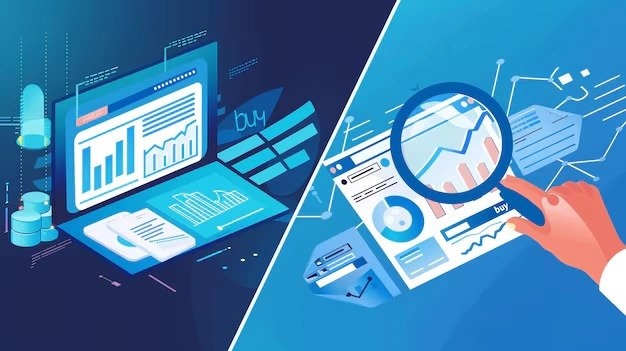
Retail ERP system combines sales, inventory, procurement and finance data of various departments in a single or multiple systems. Real-time access to accurate and up to date information enables a business to track performance, establish trends, and make faster decisions. This will remove redundancy of efforts and will be a guarantee of uniformity of all the operations.
Efficient Inventory Management
The key to retail is inventory management. Excessive stocking creates wastage of resources where lack of stocking creates loss of sales and unsatisfied customers. ERP systems also offer instant inventory monitoring and this assists businesses in keeping the correct stock.
It is easier to track the stock movement because of features like automated reordering, demand forecasting, and barcode scanning. It also allows retailers to see how quickly a product is moving, and change their purchasing policies. This is not only cost-saving, but it also guarantees the customers what they require when they require it.
Streamlined Sales and Point-of-Sale Integration
When it comes to retailing, both in-store and online sales experience must be an easy process. ERP systems are directly linked with point-of-sale (POS) systems with all sales being registered in real-time. This enhances correctness in invoicing, minimizes mistakes in manual entry and offers immediate access to sales information.
In the case of multi-channel retailers, ERP will provide consistency between online and offline selling channels. Shoppers have access to an integrated shopping experience as they shop either in-store, via a web site or through an app. Meanwhile, retailers are able to monitor the cross-channel sales performance easily.
Better Supply Chain Co-ordination.
The retailing firms depend on the suppliers and logistics partners. Unless there is a coordination, a shortage of stocks and delays will be unavoidable. Retail ERP solutions enhance the visibility of the supply chain, through monitoring of orders, shipments as well as vendor performance.
The automated workflows alert managers on the shortage of stocks and assist them in ordering the products in time. This minimizes lead times and provides a consistent supply of products. Furthermore, the ERP system in UAE enable companies to analyze the performance of their suppliers and can negotiate more desirable conditions, which eventually enhances relations with suppliers.
Enhanced Financial Management
Managing money is usually complicated when it comes to retailing and this involves a lot of transactions, payment of suppliers and returns. ERP system incorporates both financial as well as day-to-day management. All the sales, purchases and expenses are updated automatically in the accounting module and therefore, no manual entries would be necessary.
The retailers have the built-in reporting tools that enables them to produce balance sheets, income statements and cash flow reports, on the spot. This gives a sharp financial outlook and assists in making a sound economic judgment on pricing, promotions, or investments.
Automation and Time Savings
Paper-based processes are time-consuming and they might cause mistakes. Retail ERP automates business processes like order processing, stock updates, invoice generation and payroll. The employees will take less time on repetitive activities and will concentrate on serving the customers or on planning.
Automation is also less expensive, more accurate and guarantees faster turnaround times in routine processes.
Conclusion
Retail ERP solutions are not another luxury anymore, but are mandatory equipment of business that want to remain competitive. ERP software changes the way retail works by centralizing information, better managing inventory levels, improving sales channel interactions, improving customer experiences and providing strong analytics.
Retailers are able to cut down on cost, improve efficiency and provide superior service to their customers, with streamlined processes as well as improved visibility. Not only are we talking about the fact that investing in a strong retail ERP solution would enable the company to enhance its operations, but it would also guarantee future growth and success.