A weld line looks clean until the finishing wheel starts chattering, burning the edge, or dying halfway through a batch. That is where the Flap Wheel stops being a small purchase item and becomes a production-risk decision. Indian workshops, fabrication units, repair teams, and distributors trust local suppliers because surface finishing is not a “buy anything and adjust later” category.
The India coated abrasives market is projected at 6.3% CAGR from 2025 to 2035, and flap wheels are listed among key product types. That demand is not coming from hobby use. It comes from metalworking, automotive, construction, and maintenance floors where one wrong grit can waste labour, power, and delivery time.
Flap Wheel Specification Buyers Should Not Guess
The Spec Detail Most Buyers Skip
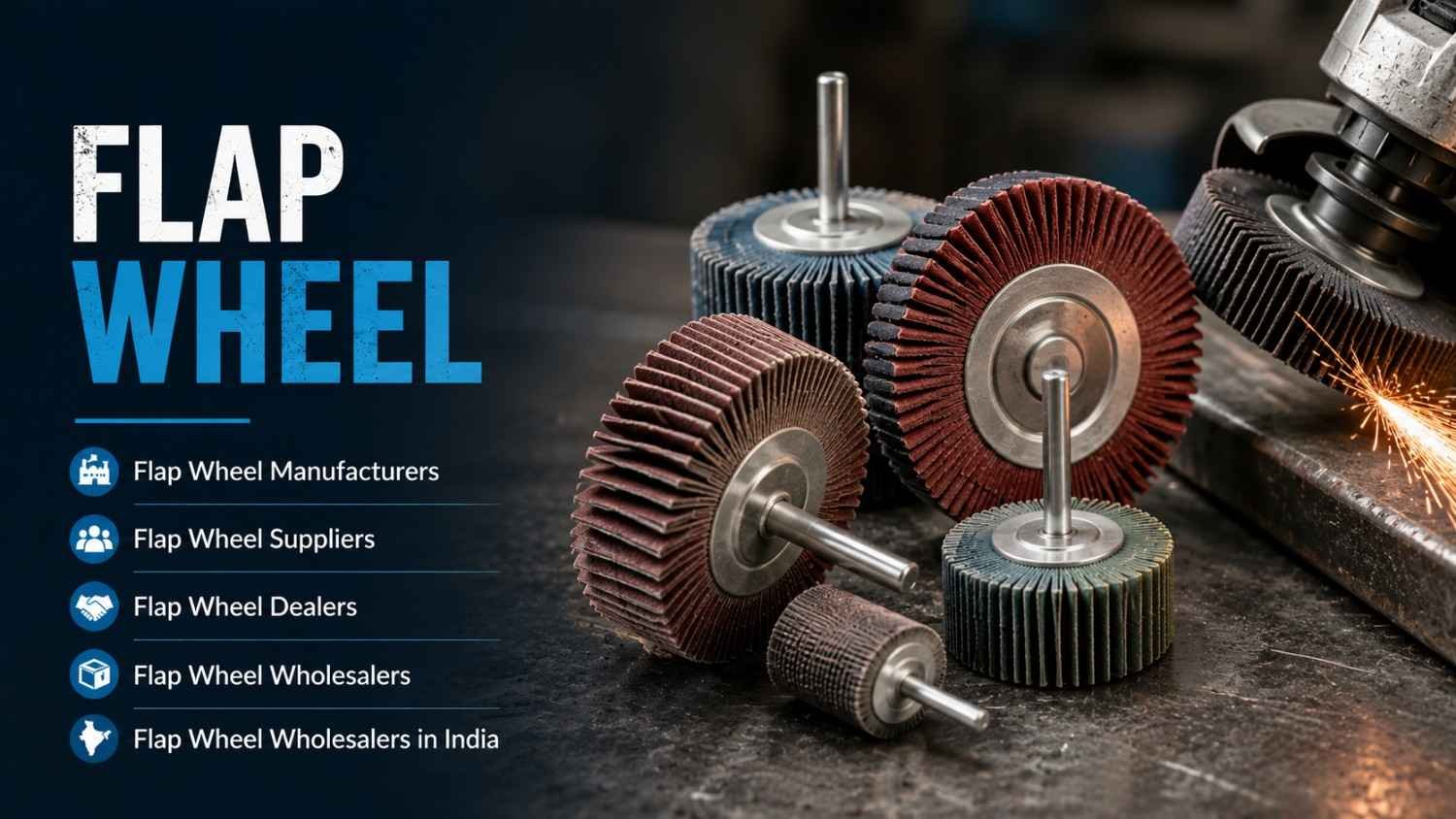
A proper Flap Wheel order starts with diameter, grit, abrasive material, backing, and application. Ultra Touch lists flap wheel variants such as Flexible Flap Wheel, Blue Series Flap Wheel, Metal Cap Flap Wheel, Standard Flap Wheel, and Fibre Disc, with 4 inch, 5 inch, and 7 inch diameters. Available grit sizes include 24, 36, 60, 80, 100, 120, 220, and 320, with premium aluminum oxide and 22.23 mm center hole support for standard grinder mounting.
Here’s the overlooked part: grit number is not just “rough” or “smooth.” Norton’s technical guide notes that grit size strongly affects both stock removal and surface finish, and that higher grit numbers mean smaller grain size. A buyer asking only for “medium finishing wheel” is inviting mismatch. Bad suppliers love vague orders because vague orders make rejection harder later.
How to Judge Flap Wheel Suppliers Before Bulk Buying
Five Checks That Expose Weak Vendors Fast
- Ask for exact grit recommendation: A good answer connects grit to material, weld height, and finish target. A bad answer is “60 or 80 chalega,” because that usually means they are selling stock, not solving the job.
- Check product range: Reliable Flap Wheel Suppliers should offer usable sizes like 4, 5, and 7 inch options. A bad answer is pushing one size for every grinder because it protects their inventory, not your operators.
- Confirm backing type: Fiberglass and metal cap options behave differently under pressure. A bad supplier avoids this discussion because backing failure is harder to explain after the wheel breaks down early.
- Ask about packing and batch consistency: For dealers, 200 pieces with mixed finish quality becomes 200 complaints. A bad answer is “factory packing only,” with no clarity on batch marking.
- Test before locking MOQ: Most buyers skip trial runs because they want a quick rate. That is lazy procurement. Test 24, 60, and 120 grit on your actual material before finalizing a monthly order.
Benefits That Protect Buyer Margin
Why Industrial Buyers Stay With Proven Flap Wheel Suppliers
Good Flap Wheel Suppliers protect your margin in small, unglamorous ways. First, consistent grain distribution reduces rework, especially on weld blending and rust removal. Second, correct grit selection cuts operator time because the wheel reaches the finish faster. Third, stable supply prevents emergency buying at higher local rates.
And yet, price-only buying still happens.
Fourth, Indian sourcing helps wholesalers and distributors keep shorter replenishment cycles instead of waiting on uncertain imports. Fifth, better packaging reduces edge damage during transport, which matters when dealers are shipping mixed tool orders. Sixth, application guidance helps procurement teams avoid overbuying fine grits when coarse stock removal is the real job.
A cheap wheel that lasts half as long is not cheaper.
Availability Across India Is a Supply Chain Advantage
Why Local Stock Beats Last-Minute Import Dependence
For Flap Wheel Wholesalers in India, availability is not just about having cartons in a warehouse. India’s coated abrasives market is tied closely to manufacturing, repair, maintenance, construction, and metalworking demand. That means buyers in fabrication hubs need regular movement, not one-time supply.
Flap Wheel Manufacturers and Flap Wheel Dealers in India also understand mixed demand better: a retailer may need 4 inch 80 grit this week, while a fabrication buyer wants 7 inch 36 grit for heavier weld cleaning. Which means location becomes a margin decision. Shorter domestic supply routes reduce stockouts, freight surprises, and slow-moving wrong inventory.
Built Around Practical Industrial Buying
What We’ve Learned From Real Flap Wheel Orders
We work with buyers who care about finish quality, repeat supply, and sensible pricing. Our focus is simple: we help customers select the right Flap Wheel by material, grit size, diameter, and application instead of letting them guess from a catalogue.
We have seen buyers reject a full batch over vibration complaints when the actual issue was wrong grinder pressure and grit selection. We now ask for application details before suggesting bulk quantity. That small step saves arguments later.
Our product range supports grinding, blending, deburring, and surface finishing for mild steel, stainless steel, alloy steel, and metal surfaces. Ultra Touch lists professional and industrial use across 4, 5, and 7 inch flap wheel options.
Ultra Touch Bulk Enquiry Process
We reply to serious B2B enquiries within 24 working hours. For MOQ, we share the practical quantity after checking size, grit, and location because dealer orders and factory orders do not move the same way.
Send us these details: material type, wheel diameter, grit size, expected monthly quantity, delivery city, and whether you need dealer packing or industrial bulk supply. We will suggest the right Flap Wheel option and pricing through Ultra Touch without wasting your time on unclear quotations.
Conclusion
A Flap Wheel is trusted only when it gives the same cut, finish, and life across repeat orders. Indian industries value suppliers who understand stock pressure, finishing quality, and dealer margins together. The next phase of abrasive buying will belong to suppliers who can prove consistency before the buyer places the second order.
FAQs
Why is Flap Wheel selection important for industrial buyers?
Wrong grit wastes time fast. A 24 grit wheel removes stock aggressively, while 220 or 320 grit is meant for finer finishing. If the job is weld cleaning, do not buy only by price.
How do Flap Wheel Manufacturers support bulk buyers?
Good Flap Wheel Manufacturers give size, grit, backing, and application clarity before dispatch. Some may not keep every grit ready at all times, so confirm stock before promising delivery to your customer.
What should Flap Wheel Suppliers mention in a quotation?
A clean quote from Flap Wheel Suppliers should mention diameter, grit, abrasive material, packing, quantity, delivery timeline, and GST terms. If the quote only says “flap wheel assorted,” push back.
Are Flap Wheel Dealers useful for small repeat orders?
Yes, Flap Wheel Dealers are useful when the buyer needs smaller quantities, mixed grits, or faster local access. The caveat is simple: dealers must still supply genuine, batch-consistent stock.
Do Flap Wheel Wholesalers in India offer better margins?
Flap Wheel Wholesalers in India can offer better landed cost when the buyer has regular movement. But margin disappears if you stock the wrong grit mix, so plan demand before buying bulk.
How many times should a buyer test before finalizing Flap Wheel Suppliers?
Test at least 2–3 grit options on the actual job surface. A sample on clean mild steel will not tell you how the wheel behaves on welded, painted, or rusted material.
Can Flap Wheel Dealers and suppliers serve both fabrication and retail markets?
Yes, Flap Wheel Dealers and suppliers can serve both, but the order mix changes. Fabrication buyers usually need repeat grit consistency; retail buyers need variety, display-ready packing, and faster replenishment.