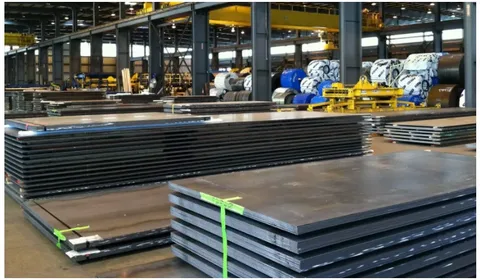
Boiler steel plates are specialized carbon or alloy steel plates used in boilers, pressure vessels, heat exchangers, and other equipment operating under pressure. Pressure equipment requires materials capable of handling internal pressure, temperature variations, and long-term service conditions. Engineers rely on high-strength boiler steel plates to maintain structural stability. This section briefly reviews the key properties, physical benefits, industrial applications, testing standards, and material selection factors.
What Are Boiler Steel Plates?
These are steel plates manufactured for pressure-retaining and elevated-temperature applications according to specific material standards. Buyers specify boiler-quality steel plates and pressure vessel steel plates to meet strict industrial requirements. These plates are selected based on required strength, toughness, weldability, temperature capability, and the actual service environment. The exact grade and specification depend directly on the equipment design and applicable pressure vessel codes. Steel mills tightly control the chemical composition during melting. The material must align with the intended fabrication method perfectly.
Why Are Boiler Steel Plates Important for Pressure Equipment?
Pressure equipment stores or processes fluids and gases under internal pressure. The consequences of inadequate material selection include permanent deformation, cracking, leakage, and reduced equipment reliability. Controlled mechanical properties and material quality are important for safe fabrication. Selecting materials that meet relevant design and regulatory requirements keeps operations running safely. The correct steel grade prevents unexpected downtime and supports long-term equipment function in harsh industrial settings. Proper material verification stops structural failures before they happen.
Key Properties of Boiler Quality Steel Plates
High Strength
Tensile and yield strength help resist internal pressure and structural loads. The required strength depends completely on the equipment design and the selected grade. Plates must handle specific load limits.
Good Weldability
Pressure equipment often requires extensive welding. Selecting suitable welding procedures and consumables prevents weak joints. Proper weldability means the material can be joined securely without losing structural integrity near welds.
Good Toughness
Toughness provides resistance to brittle fracture in pressure applications. These toughness requirements may become particularly important at lower operating temperatures. The steel must absorb impact and resist sudden mechanical stress.
Temperature Resistance
These plates are suitable for elevated-temperature applications within the limits of the selected grade and design code. Not all boiler steel grades are suitable for the same temperature range.
Uniform Mechanical Properties
Consistency in thickness, strength, and material quality prevents weak spots in the fabricated equipment. Uniform properties across the entire plate dictate that the vessel will react predictably to internal pressure.
Pressure-Handling Capability
Pressure resistance depends on the complete equipment design. This includes plate thickness, geometry, weld quality, design temperature, and the applicable code, not the plate alone. The assembled system determines limits.
Common Types and Grades of Boiler Steel Plates
Different pressure vessel and boiler plate grades are used depending on applicable standards. Common grades include ASTM A516 Grade 60, ASTM A516 Grade 65, and ASTM A516 Grade 70. European specifications use EN 10028 pressure vessel steel grades. Other project-specific boiler and pressure vessel grades exist for custom fabrication jobs. Each grade has different mechanical properties and service suitability. One grade is never universally best. The plant requirements dictate the choice.
Applications of Pressure Vessel Steel Plates
Industrial Boilers
Pressure vessel steel plates are used to build heavy industrial boiler shells and drums. They also form headers and pressure-retaining sections. The plates withstand constant heat and steam pressure.
Pressure Vessels
Storage vessels and process vessels rely heavily on these steel plates. Gas vessels and chemical processing equipment require strong containment. The plates prevent leaks and maintain internal pressure safely.
Heat Exchangers
Heat exchanger shells and pressure-containing sections are fabricated using these specific materials. Selected fabricated components handle heat transfer between different process fluids. The steel must resist constant thermal stress.
Petrochemical Equipment
Process vessels and storage systems in petrochemical plants use this steel. Refinery equipment handles aggressive chemical processing. The steel plates provide a secure boundary for volatile and highly pressurized substances.
Power Generation
Boiler components and pressure systems in power plants demand specific steel grades. Thermal process equipment operates under intense heat. The selected steel maintains shape and strength during continuous generation cycles.
Oil and Gas Industry
Field separators, pressure vessels, and site storage equipment use specialized steel plates. The oil and gas sector processes raw materials under extreme pressure. The steel contains these processes safely.
How to Choose the Right Boiler Steel Plate
Engineers determine the design pressure first before ordering materials. You must check the operating temperature limits for the system. Select the required plate thickness based on structural calculations. Plant managers evaluate the service environment for potential corrosion. Check the required mechanical properties against test certificates. Consider welding requirements for the fabrication stage. Verify applicable standards from local and international design codes. Always request testing and certification records to prove compliance before accepting the material delivery.
Fabrication Considerations for Boiler Quality Steel Plates
Fabricators handle plate cutting and edge preparation before assembly begins. Thermal cutting is common. Forming and rolling requirements dictate how shells and vessel sections are shaped into cylinders. Every structural joint must have qualified welding procedures. Operators will pre-heat and post-weld heat treat as required by the grade, thickness, and code. The importance of non-destructive testing and inspection for the detection of internal defects is emphasised.
Conclusion
Boiler steel plates provide the necessary strength, toughness and weldability for pressure equipment. They are found in boilers, pressure vessels, heat exchangers, petrochemical equipment, and power-generating systems. Material selection shall take into consideration pressure, temperature, corrosion, plate thickness, fabrication, and applicable codes. Certified pressure vessel steel plates selected in accordance with engineering and regulatory requirements are important to reliable pressure equipment performance in heavy industrial operations.
Tags : Boiler Steel Plates