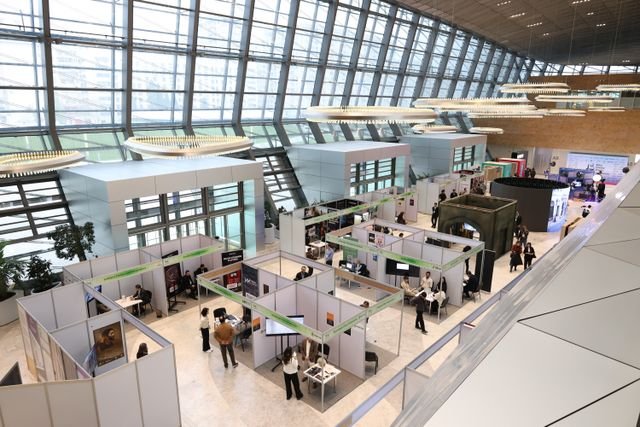
Live events and exhibits are changing fast. Technological advances, shifting audience expectations, and fresh engagement strategies are all pushing the industry in new directions — sometimes simultaneously. Event planners and venue operators can't afford to ignore what's coming. Attendance numbers, participant experience, overall success — all of it hangs on staying current. Beyond the traditional formats, organizers are finding genuinely inventive ways to reach people both in the room and far outside it.
1. Hybrid and Virtual Event Integration
Hybrid and virtual components aren't a novelty anymore. They're the baseline. Distance, health limitations, a packed calendar that won't budge — these are real barriers that once simply cut people out. Now they don't have to. Organizers have figured out that running hybrid formats keeps global audiences engaged without gutting the value of showing up in person. And the tech side? Cheaper and more capable than it used to be. Small-budget productions can pull off seamless hybrid setups that once required serious resources. That door is open to almost anyone now.
2. Personalization and Data-Driven Experiences
Generic event experiences are losing ground. Attendees want agendas built around their actual interests — not a one-size schedule handed to everyone at check-in. Advanced registration systems and pre-event data collection make it possible to recommend relevant sessions, flag useful networking matches, and tailor the whole experience to what each person came for. Speakers benefit from this shift too. So do exhibitors. Tighter audience targeting puts their message in front of people already primed to care about it — not random foot traffic. Personalization has quietly become one of the sharpest differentiators in a crowded events market.
3. Sustainability and Responsible Event Practices
Environmental responsibility isn't a side conversation anymore — it runs through every stage of event planning. Attendees notice. Single-use plastics, excess waste, unchecked carbon footprints — these things register, and they influence decisions about whether to participate at all. Practical moves like sourcing from eco-conscious vendors, enrolling in verified carbon offset programs, and working with venues that have invested in renewable energy all signal genuine commitment. So does talking about it openly. Communicating your sustainability efforts to potential attendees isn't just PR; it reinforces that your values and theirs are aligned.
4. Interactive Technology and Immersive Experiences
Passive observation is out. Attendees want to touch, explore, and interact — not just watch. Augmented reality overlays, virtual reality installations, interactive digital displays — these tools are reshaping what a live exhibit can actually do. Product demos become something you experience rather than something you're told about. Virtual environments can extend your physical footprint in ways a booth simply can't. Exhibitors working with compact spaces often rely on high-quality trade show displays to punch above their weight visually and communicate their brand with clarity in a tight area. The return on immersive tech tends to show up in engagement metrics, attendee satisfaction scores, and exhibitor feedback — measurably, not just anecdotally.
5. Mental Health and Wellness Focus
Conferences and exhibitions are exhausting. That's not a complaint — it's just true. Smart event planners are finally designing around that reality. Quiet rooms for decompression, genuinely healthy food options, sessions addressing stress and mental wellness — these aren't fringe additions anymore. They're becoming standard. Booth environments that feel welcoming and low-pressure contribute to the same culture of care, nudging attendees toward more comfortable, sustained engagement throughout the day. People who feel looked after participate more fully. Simple as that.
Conclusion
These five trends aren't isolated from each other. They're interconnected signals of a deeper shift in how people want to connect, learn, and share physical and digital space. Hybrid integration, personalization, sustainability, immersive technology, wellness — together they sketch the outline of a more evolved event landscape. Adapting to them takes investment and honest attention to what your attendees actually need. The events that hold up over the coming years won't just be the ones that adopted every new tool — they'll be the ones that implemented these shifts in ways that felt true to what they were actually trying to do.
Tags : .....