What Is Reshaping the Role of Diesel Generators in India’s Power Infrastructure?
By Adam Williamson 06-09-2026 25
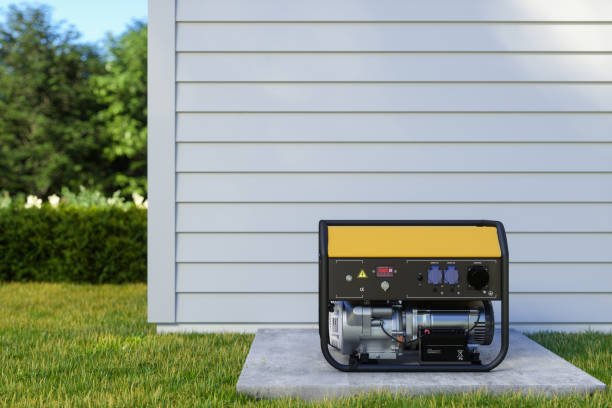
Reliable electricity has become essential for businesses, institutions, infrastructure projects, and other facilities where interruptions can quickly affect operations. Diesel generators continue to play an important role by providing dependable backup, prime, and continuous power when grid electricity is unavailable or insufficient. According to a Vyansa Intelligence report, the India diesel generator market was valued at USD 1.43 Billion in 2025 and is projected to reach USD 2.03 Billion by 2032, registering a CAGR of 5.19% during 2026-2032.
Reliability Remains Central to Generator Demand
The role of diesel generators is closely connected to the need for operational continuity. For commercial and industrial users, an electricity interruption can affect equipment, production schedules, communications, refrigeration, information systems, and customer-facing operations. A dependable backup system therefore becomes part of broader power-continuity planning rather than simply an emergency asset.
In this report, the India diesel generator industry can be understood through several applications, including standby power, prime and continuous power, and peak shaving. These applications demonstrate how generator requirements vary according to operating conditions and the level of power reliability required.
Standby systems remain particularly relevant where generators are expected to activate during grid disruptions. Prime and continuous power, meanwhile, serves situations where generators may operate for longer periods and support facilities with limited or inconsistent access to grid electricity.
Infrastructure Development Supports Equipment Requirements
India’s infrastructure and industrial development creates a wide range of environments where reliable onsite power can be important. Construction projects, manufacturing facilities, logistics operations, transportation infrastructure, healthcare facilities, commercial buildings, and institutional establishments can all require power systems that remain available when grid supply is interrupted.
This makes diesel generators part of a wider infrastructure ecosystem. For temporary projects, generators can provide electricity during construction or commissioning. For established facilities, they can act as backup systems that protect essential operations.
From an industry analysis perspective, this diversity of applications is important because demand is not dependent on a single end-user category. Different users have different requirements concerning generator capacity, operating duration, installation conditions, maintenance, fuel management, and service support.
Higher Reliability Is Changing Product Expectations
Customers are increasingly evaluating generators beyond their basic ability to produce electricity. Reliability, fuel efficiency, emissions performance, monitoring capabilities, service support, and operational flexibility can influence purchasing decisions.
This creates opportunities for manufacturers to differentiate their products through technology and lifecycle support. Digital monitoring can help users track generator performance, while intelligent controls can improve visibility into operating conditions and maintenance requirements.
Hybrid configurations that combine diesel generation with battery storage are also becoming relevant to the broader power-management discussion. Such systems can provide users with greater flexibility by combining conventional generation with energy-storage capabilities.
The direction of product development therefore extends beyond the traditional standalone generator. Buyers are increasingly interested in solutions that can integrate with wider energy-management strategies while maintaining dependable backup capability.
Emission Compliance Is Becoming More Important
Environmental requirements represent another important consideration for the diesel generator industry in India. Generator manufacturers and users must increasingly account for emissions, noise, installation conditions, and applicable regulatory requirements.
The Central Pollution Control Board maintains regulations and compliance requirements covering generator sets, including emissions and noise considerations. Its guidance highlights diesel generator sets as a specific equipment category subject to environmental requirements.
For manufacturers, compliance can influence engine technology, product design, certification, and equipment configuration. For customers, regulatory requirements can affect purchasing decisions, installation planning, maintenance practices, and the overall cost of ownership.
This means environmental performance is becoming an increasingly important part of the value proposition surrounding diesel generators.
Data-Intensive Facilities Need Dependable Backup
The expansion of digital infrastructure is also influencing how organisations think about backup power. Facilities that depend heavily on information technology require reliable electricity to maintain servers, communications, cooling systems, security infrastructure, and other critical equipment.
For these users, a generator is not simply an optional backup device. It can form part of a broader power-resilience architecture in which reliability, response time, monitoring, maintenance, and redundancy are closely connected.
The latest market analysis therefore points toward a more sophisticated relationship between generator equipment and facility-level power management. Customers may increasingly evaluate generator systems according to how effectively they integrate with their broader electrical infrastructure.
Service and Lifecycle Support Matter
Equipment procurement is only one part of the diesel generator lifecycle. Installation, commissioning, preventive maintenance, spare-parts availability, technical support, inspections, and timely servicing can all influence long-term equipment performance.
This is particularly important for users operating generators in demanding environments or relying on them for critical applications. Service networks and technical expertise can therefore become important differentiators alongside the generator itself.
For manufacturers and distributors, this creates an opportunity to build stronger relationships with customers through maintenance contracts, monitoring solutions, technical assistance, and lifecycle support.
What Lies Ahead for India’s Diesel Generator Industry?
The India diesel generator industry is evolving around a combination of reliability requirements, infrastructure activity, technological development, environmental compliance, and changing customer expectations. Diesel generators continue to provide a practical solution where dependable electricity is essential, while newer technologies are gradually expanding the capabilities of conventional power systems.
A detailed market insight also shows why manufacturers need to balance performance with efficiency, compliance, flexibility, and serviceability. Customers are no longer evaluating generators solely on power output. Their expectations increasingly encompass the complete operating ecosystem surrounding the equipment.
As businesses and institutions place greater emphasis on continuity and resilient power infrastructure, diesel generators are likely to remain relevant across a broad range of applications. At the same time, technology and regulatory requirements will continue encouraging manufacturers to develop cleaner, smarter, and more integrated solutions.
For businesses assessing this sector, the India diesel generator market research report provides a useful framework for understanding the changing demand environment, application areas, product requirements, and competitive dynamics.