Uzbekistan doesn’t ease you into its history. It drops you straight into it.
One minute you’re standing in a quiet square. The next, you’re staring at blue-tiled madrasas that once sat at the center of global trade, politics, and religion. The Silk Road here isn’t an abstract idea. It’s physical. Heavy. Still very present.
Most travelers come with a list of cities and a rough route. That’s smart. But what often goes wrong is trying to move too fast, treating these cities like museum stops instead of living places.
Here are the Silk Road cities in Uzbekistan that actually deserve your time, and how to experience them without rushing past what matters.
Samarkand – Grand, Dramatic, Unavoidable
Samarkand is the city everyone imagines before they arrive. And yes, it really is that impressive.
Registan Square alone justifies the trip. You can’t prepare yourself for the scale. Or the color. Or how the light changes the tiles throughout the day. I’ve stood there early in the morning with almost no one around, and again at night when the square feels theatrical. Both moments feel completely different.
But Samarkand isn’t only about monuments. Most people miss the quieter streets just outside the historic core. Walk ten minutes away and the city becomes local again. Bakeries. Courtyards. Kids playing football between apartment blocks.
Spend at least two full days here. One is never enough. This is where rushed Uzbekistan Tour itineraries often fall short.
Bukhara – The City That Feels Lived In
If Samarkand impresses, Bukhara settles you.
This city feels older in a different way. Less dramatic, more continuous. The historic center is compact, walkable, and full of life. Tea houses spill into courtyards. Locals linger. Nothing feels staged.
Bukhara rewards slow travel. Sit down. Order tea. Watch people pass. That’s part of the experience.
Most travelers don’t realize how much history is layered here. Mosques, madrasas, trading domes, caravanserais. All within a short walk. You don’t need to chase sights. They find you.
Two nights is the minimum. Three is better.
Khiva – Perfectly Preserved, Almost Too Perfect
Khiva feels like a film set. And that’s both its strength and its weakness.
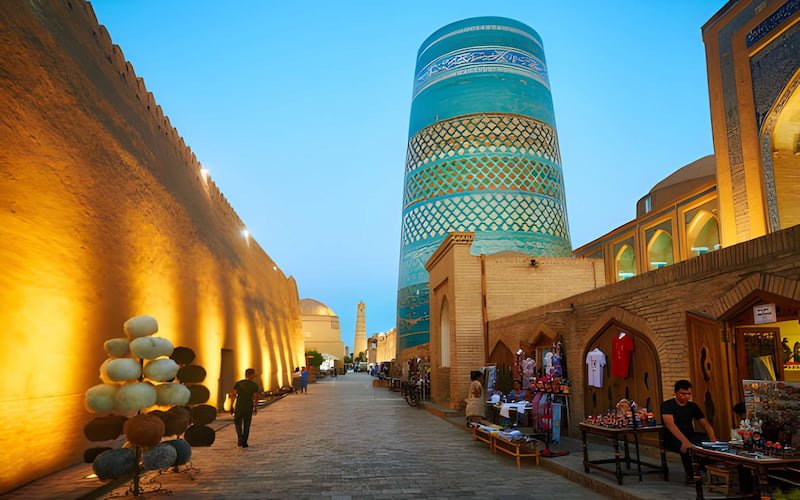
The inner city, Itchan Kala, is incredibly well preserved. Mud-brick walls. Minarets. Narrow alleys. At sunrise or after sunset, it’s magical. Quiet. Atmospheric.
During the day, it can feel crowded and a bit performative. Shops selling the same souvenirs. Tour groups moving in clusters. This is where trips often go wrong.
The solution is simple: stay overnight inside or just outside the walls. Early morning and late evening are when Khiva feels real again.
One or two nights is enough. Don’t rush it, but don’t overstay either.
Tashkent – Modern, Underrated, Necessary
Many travelers treat Tashkent as a transit stop. That’s a mistake.
Yes, it’s modern. Yes, it feels very different from the other Silk Road cities. But that contrast is important. Tashkent shows you where Uzbekistan is now, not just where it’s been.
The metro stations alone are worth your attention. Each one feels like a small art project. Beyond that, you’ll find wide boulevards, markets, and cafés where young Uzbeks hang out late into the night.
Give Tashkent at least a full day. Two if you want to slow down. It adds context to everything else you see.
Shakhrisabz – Powerful, But Often Rushed
Shakhrisabz is best known as the birthplace of Timur. And that history carries weight.
The ruins here feel monumental, even incomplete. Wide spaces. Broken arches. A sense of ambition that once reached far beyond this city.
Most people visit on a rushed day trip from Samarkand. That’s understandable, but it limits the experience. The drive itself is scenic, especially over the mountains.
If you can, spend a night. The city calms down after sunset, and you’ll have space to reflect instead of just photograph.
Nukus – For the Curious, Not the Casual
Nukus isn’t on every Silk Road list. And that’s fine.
It’s remote. Less polished. More challenging. But it’s also home to one of Central Asia’s most unexpected museums and offers insight into a part of Uzbekistan many visitors never see.
This is not a must for everyone. But if you like going beyond the obvious route, Nukus adds depth to an Uzbekistan Tour.
How to Connect the Cities Without Burning Out
Uzbekistan looks large on the map. In practice, the train network makes moving between major cities fairly efficient.
The mistake is packing too much into too little time. Overnight trains sound efficient but can leave you exhausted. Early departures add up.
Build in rest days. Especially after Samarkand and Bukhara. These cities are visually and emotionally dense.
How Many Cities Should You Visit?
For a first trip, four cities is ideal. Five is doable. More than that, and you’ll start blending experiences together.
A strong route looks like this:
Tashkent → Samarkand → Bukhara → Khiva
Anything beyond that depends on your interests and energy.
Conclusion: Let the Silk Road Unfold Slowly
Uzbekistan’s Silk Road cities aren’t meant to be rushed through. Each one offers a different rhythm, mood, and perspective on history.
A well-planned Uzbekistan Tour balances iconic landmarks with unstructured time. Walk without purpose. Sit longer than planned. Wander beyond the obvious.
If you give these cities time, they give you something rare in modern travel: the feeling that history isn’t finished yet.
FAQs
1. Which Silk Road city is the most beautiful in Uzbekistan?
Samarkand is the most visually striking, but many travelers prefer the atmosphere of Bukhara.
2. How many days do I need in Uzbekistan?
Seven to ten days is ideal for a first visit covering major cities.
3. Is it easy to travel between cities?
Yes. Trains are efficient and comfortable between major destinations.
4. Is Uzbekistan safe for travelers?
Yes. It’s generally very safe, even for solo travelers.
5. Can I visit Uzbekistan independently or should I book a tour?
Both work well. Tours help with logistics; independent travel offers more flexibility.