The White-Glove Journey: When Your Car is a Member of the Family
By Book Auto Transport 20-01-2026 39
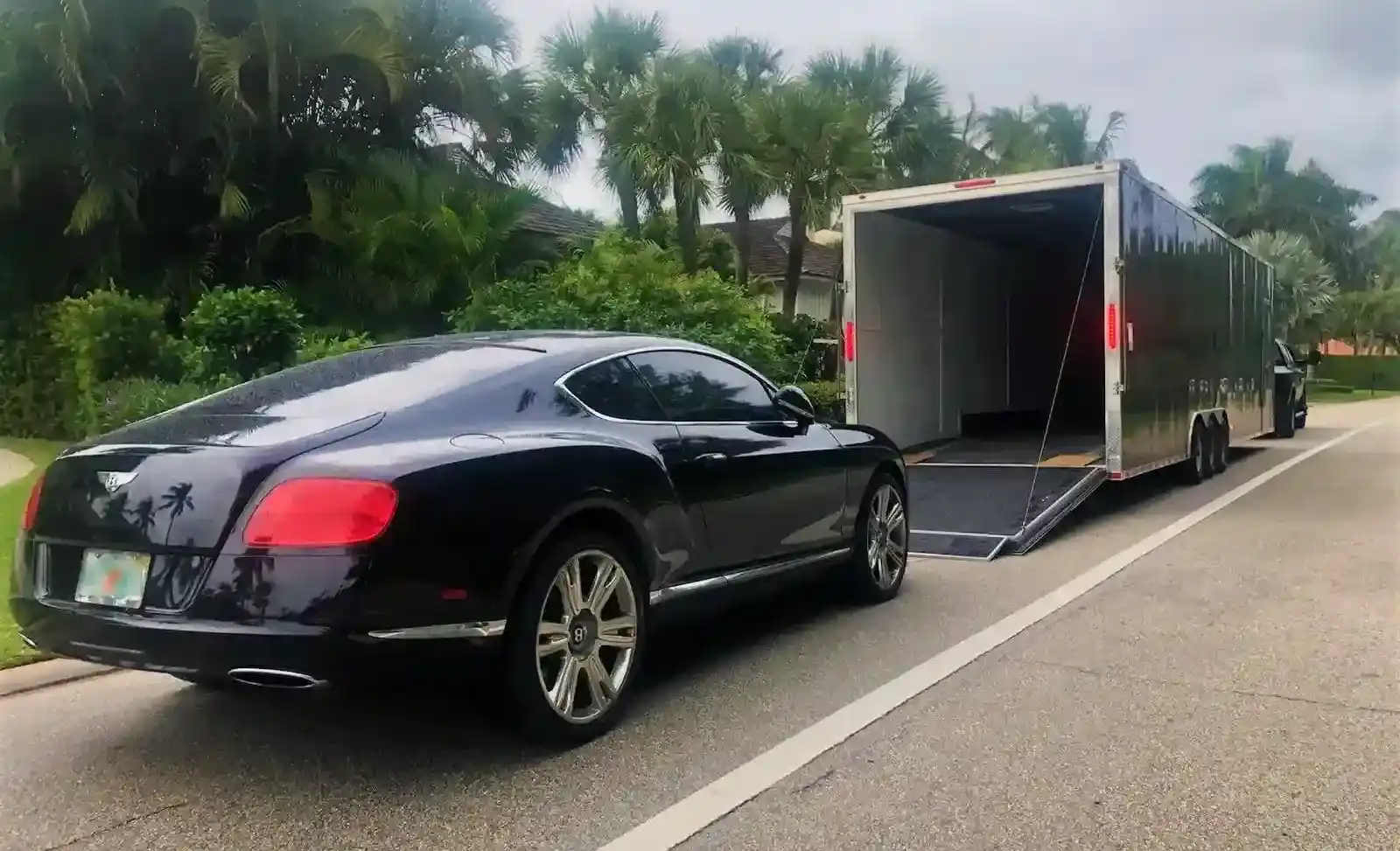
You hold your breath as the email loads. You've been searching for six months. There it is, gleaming in a photograph from a garage in Ohio: the car. Maybe it's the Porsche 911 you promised yourself at 40. Maybe it's the vintage Jaguar E-Type that's haunted your dreams since you were a kid. Your heart pounds. You call, you negotiate, you wire the money. Then, the dealer says the words that turn your excitement cold: "Okay, so how do you want it shipped?"
Suddenly, you're not a collector. You're a logistics manager facing a nightmare. Your dream car is 2,000 miles away, and every image of a standard car hauler—rusted ramps, crowded decks, highway grime—flashes through your mind. This isn't shipping a Honda Civic. This is Exotic Auto Transport. And getting it wrong isn't an option. It's the difference between a dream realized and a heartbreak delivered.
A Standard Trailer is a Wooden Rollercoaster for a Ballet Dancer
Think about the anatomy of your dream car. Its front lip skims the pavement like a whisper. Its paint is a mirror, a $20,000 lacquer job thinner than a sheet of paper. Its doors are vast, fragile sculptures. Now, imagine that car climbing a steep, shuddering metal ramp onto a crowded trailer, its undercarriage screaming in protest. Picture it strapped down next to a work truck leaking fluids, exposed to every rock, dust storm, and seagull between Ohio and California. This isn't hyperbole. It's what happens when you trust a masterpiece to a system built for commodities. Exotic Auto Transport exists because these machines are artists, not appliances. They require a gallery, not a freight car.
The Day the White Gloves Showed Up
For my father's restored 1963 Corvette Split-Window, we hired specialists. The truck that arrived wasn't a truck. It was a single-car, white, enclosed trailer so pristine it looked like a surgical unit. The driver, an older gentleman named Walter, stepped out in crisp pants and clean shoes. He didn't have a clipboard; he had an iPad with a digital inspection report. He didn't just look at the car; he studied it. He measured the ground clearance with a ruler. He felt the paint with the back of his hand. He placed soft, felt-lined chocks by the tires. Loading the car was a silent, 45-minute ballet of hydraulic lifts and gentle winches. He didn't "ship" the car. He curated it into its mobile gallery. My father, a man of few words, just nodded and said, "They know."
You're Not Paying for Miles. You're Paying for Sleep.
Let's talk about the real cost. The quote made me gulp. It was four times the price of a standard open carrier. But my father, who had spent three years and his retirement fund on that Corvette, didn't blink. "What's the number for a sleepless night?" he asked. He wasn't paying for gasoline and tires. He was paying for Walter. He was paying for the GPS tracker we could watch 24/7. He was paying for the climate control that would keep the old leather from drying out in the Nevada desert. He was paying for the "all-risk" insurance that covered everything from a collision to a scratch from a stray strap. He was buying the ability to sleep soundly while his life's passion crossed the continent. That peace of mind? That's the real service. The car's arrival is just the proof you paid for it.
The Booking Process is a Vetting, Not a Sale
To Book Auto Transport for a car like this, you don't just get a quote. You get interviewed. A reputable firm will ask you for 30 photos. They'll ask about the car's exact ride height, the type of paint, any known fluid leaks. They will explain their driver training, their trailer maintenance schedule, their insurance binders. They will offer references you can actually call. When you talk to them, you should feel like you're talking to a museum curator or a master watchmaker—someone whose obsession with details matches your own. If they answer the phone "Shipping Department," hang up. You need to hear, "Classic and Exotic Transport, this is James." That specificity is everything.
The Agony and Ecstasy of the Live Tracker
Walter gave us a login. For five days, my father's iPad sat on the kitchen table, displaying a map with a single, glowing dot. It was our shared heartbeat. We'd watch it, stationary for the night in a secure yard in Kansas. We'd watch it moving steadily across Colorado. That little dot was more than a dot. It was a covenant. It was the digital manifestation of a promise being kept. We'd call each other: "It's past Denver." It was absurd, and it was the most reassuring $100 we never directly paid for.
The Garage Door Rises: A Moment of Truth
The delivery was set for 8 AM on a Saturday. We were in the driveway by 7. When Walter's trailer turned onto our street, it was utterly silent. No diesel roar. Just a faint hum. He backed in with the careful precision of a man who has done this ten thousand times. The trailer doors opened, the liftgate descended, and there it was. Not just the car, but the same car. No new film of dirt. No ominous drip. Just our car, home. Walter handed my father the keys. No triumphant fanfare. Just a simple, "She's perfect. A pleasure." The invoice, when it came, didn't feel like a bill. It felt like a receipt for a promise that was delivered in full.
Your Dream Deserves a Guardian, Not a Hauler
If you are standing at this cliff's edge, staring at the chasm between your dream car and your driveway, remember this: the journey is the first chapter of your stewardship. Do not let it be written by chance. Do not let a random driver be the author of your car's most vulnerable moment. Seek out the specialists. Ask the hard questions. Pay for the white gloves. Book Auto Transport with the people who use words like "curated" and "conservation." Protect your passion with the fervor it deserves. Because when that garage door finally closes on your dream, safe and sound, you'll understand. The cost wasn't for the trip. It was for the triumph.