Imagine this. You are sipping a cup of tea that you created. The blend is yours. The name is yours. The brand is a reflection of your taste and vision. You think, "This could be a business." Then you imagine the complexities of sourcing, licensing and marketing. The dream feels distant, reserved for large corporations with deep pockets. Whether you are looking for how to start a tea business or how to start a tea company as a distributor. It might seem very high competition, thin margins, complex logistics or massive upfront costs. What if I told you that starting your own tea brand is one of the most accessible food businesses to launch today? You do not need a warehouse or a massive loan. You can begin from your kitchen table. This guide is your roadmap. We will walk through the straightforward, low investment path to turning your passion for tea into a real, functioning brand. Let us begin.
Step One: Find Your Focus in the Vast World of Tea
Before you search for where to buy loose leaf green tea, pause. The first step is not sourcing. It is defining. The tea market is vast. Your success lies in specificity. Ask yourself these simple questions.
- What kind of tea do I truly love? Is it a strong morning black tea, a soothing herbal chamomile or a vibrant green tea?
- Who will I serve? Busy professionals needing an afternoon boost? Wellness enthusiasts seeking organic herbal blends? Students looking for affordable quality?
- What is my story? Maybe you want to share the traditional teas of your heritage. Perhaps you are creating modern blends for iced teas.
This is your foundation. Instead of trying to sell every type of tea, start with one signature line. Three to five unique blends are perfect. A focused "black tea collection" or a "wellness herbal trio" is easier to brand, package and explain to your first customers than a sprawling catalog.
Step Two: Understanding Your Source: The Global Tea Landscape
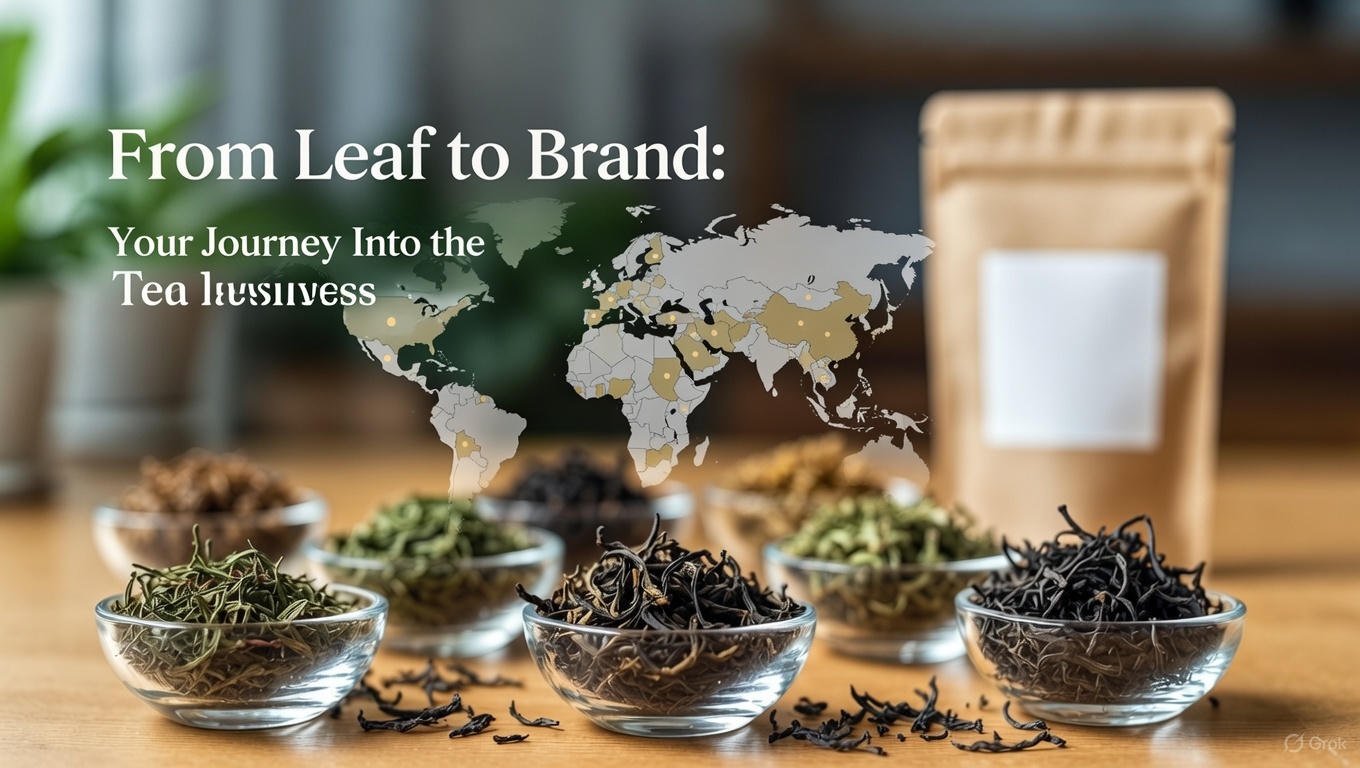
A little knowledge builds confidence. When you learn that China is the highest tea producing country in the world, followed by India and Kenya, you understand where quality flows from. This is not just trivia. It informs your sourcing. A supplier specializing in Chinese green teas will have different expertise than one focused on Indian Assam. Your goal is not to import directly from these countries yet. That comes later. For now, understand that quality tea is globally accessible. Your job is to find the bridge: the wholesale tea suppliers and private label partners who have already built those global connections.
Step Three: The Simple Guide to Sourcing Tea
This is where your business becomes tangible. You need to find your tea. If you are searching online then look for reputed tea manufacturers, wholesale tea suppliers and private label tea are your key search phrases. How to navigate them:
Private Label Tea
This is the golden key for startups. A private label tea manufacturer already has curated teas. You select from their catalog, design your label and they ship the finished, branded product to you. It requires a slightly higher minimum order but saves you from handling raw tea and packaging. It is a fantastic all in one solution.
Wholesale Tea Suppliers
These companies sell loose leaf tea in bulk. You buy the tea by the pound or kilo, then handle packaging and branding separately. This often has a lower initial cost and offers more flexibility for custom blending.
What to Look For in a Supplier:
Minimum Order Quantity (MOQ): This is a very important consideration to look for in a supplier. Always look for a supplier offering low MOQs which can be best if as low as one kilogram per blend. This allows you to start small. Quality and Certifications: Look for supplier holding certification and quality assurance. Request samples. Never buy tea you have not tasted. Support: A good supplier for startups will answer your questions about tea origins, blending and shelf life. Start by researching a few tea marketplace platforms online. These are websites that aggregate multiple wholesalers. They allow you to compare prices and MOQs easily from one dashboard.
Step Four: Branding and Packaging Made Simple
You have your tea. Now it needs a face and a home. Do not overcomplicate this.
Branding
Design a simple, clean logo. Which can be easily recognizable at the first single glance Canva is a great, affordable tool for this. Your brand story is simply why you started. Share it in a few sentences on your website or packaging.
Packaging
This is where your product comes to life. For beginners, the custom printed packaging does not need to be expensive tins. Consider custom zip lock mylar bags. They are a game changer for startups.
Affordable
They have very low minimum order quantities, often just 100 bags.
Effective
Mylar is excellent at blocking light, moisture and air, keeping your tea fresh.
Professional
You can have your logo and design printed directly on them. They look professional and are perfectly functional for your first hundred customers.
Look for suppliers of affordable tea packaging for startups
You will find many options for these custom printed bags, simple cardboard boxes and biodegradable inner wrappers. Function and freshness come first. Beautiful design can evolve.
Step Five: The Numbers: Pricing for Profit
Understanding your "profit margin in tea business" is what makes it a business, not a hobby. A simple formula is:
- Wholesale Cost + Packaging Cost + Labor/Time = Your Cost
- Your Cost x 2 (or 2.5) = Your Retail Price
Example: Just do a quick maths that if a tea bag costs you $2 and packaging costs $0.50. Then it will cost you $2.50. Now if you sell it at $5.00, it will give you a 50% gross profit margin. This means $2.50 profit per bag. If you are selling online. This profit margin allows for platform fee with marketing costs and your time.
Step Six: Your First Sales and Marketing Strategy
Your "tea brand marketing strategy" starts with one word: community. You do not need a massive advertising budget.
Start with Social Media
Choose one platform you enjoy. Instagram is visual for beautiful tea photos. Facebook is great for local community groups. Share your journey. Post about your sourcing day, your packaging arrival, the story behind each blend. Be the face of your brand.
Go Local
Find nearby local coffee shops, bookstores, etc.Try to partner with them and offer a profit or commission. Attend a local farmers market or craft fair. The face to face feedback is invaluable.
Simple Online Presence
Set up a basic Shopify or Square Online store. It is your digital business card. You can even start by taking orders via Instagram Direct Messages to test demand.
Step Seven: The Path to Growth
You have made your first sales. Congratulations. Now, listen and adapt.
What blend is selling fastest? Consider making it your flagship.
What packaging feedback did you get? Use it to improve.
Which sales channel is easiest? Double down on it.
Reinvest your early profits. Buy a larger batch of your best selling tea to get a better wholesale price.
Invest in a more sophisticated custom packaging solution like printed boxes.
Slowly expand your line based on what your customers ask for.
Brewing Your Future, One Cup at a Time
Starting your tea brand is an exciting business but it requires a carefully designed strategy. The goal of this low investment model is to learn, adapt and grow without the paralyzing risk of debt. You are not building a giant corporation on day one. Build a loyal customer base by beautifully packaged and carefully sourced to give your customers that amazing cup of tea. The global tea market is valued around $17-30 billion in 2024/2025. Further, projected to reach $24-$55 billion by the early 2030s. The US tea market is experiencing a steady growth ranging between $10.3 billion to $13.6 billion. Start by choosing your focus. Find a supportive supplier. Package your tea simply and well. Tell your story to the people around you. The journey from a dream to a steaming cup in a customer's hand is simpler than it seems. Your kettle is boiling. It is time to begin.