Should Business Partners Without Employees Choose Small Business or Individual Health Insurance?
By rajdeep Singh 13-04-2026 160
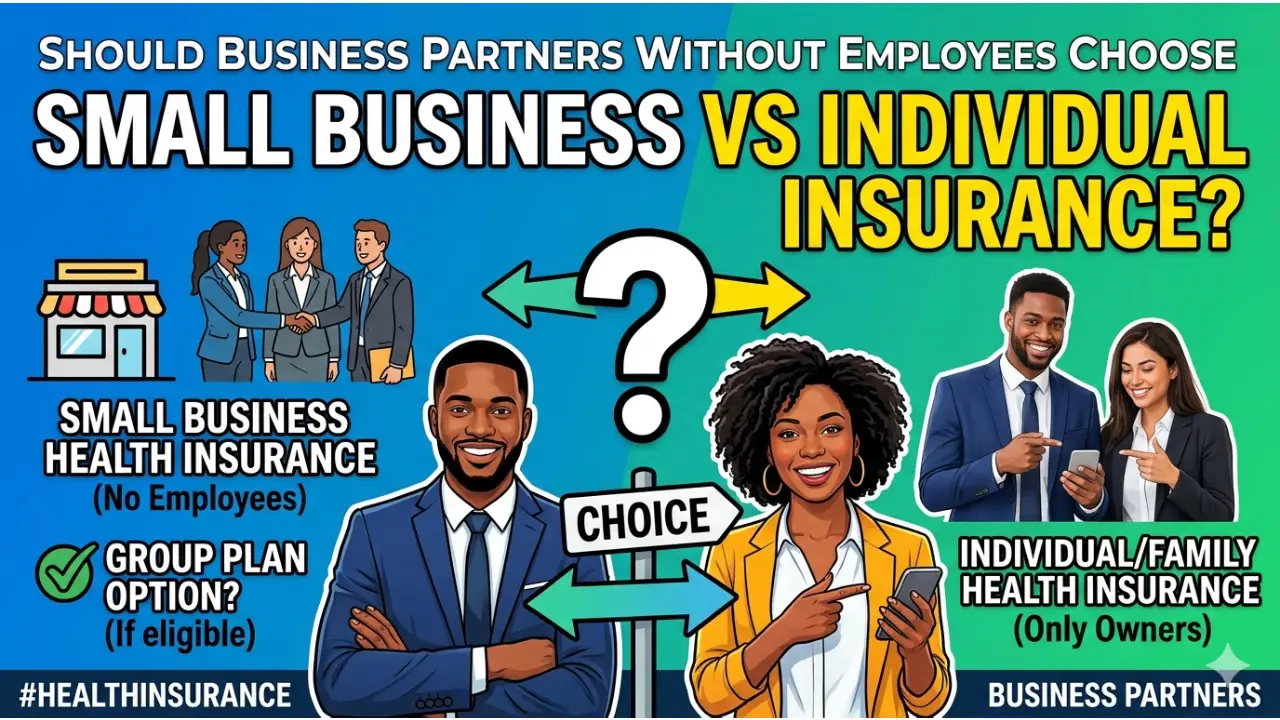
Health coverage is a vital consideration for all individuals, but it becomes especially important when you are a business owner. For business partners who run a small enterprise without employees, deciding between individual health insurance and group health insurance can be confusing. Both options have advantages and drawbacks, and the decision you make can have financial and practical implications for your business and personal wellbeing. In this comprehensive article, we will explore the differences between individual and group plans, the specific needs of business partners, cost considerations, flexibility, tax implications, and how to choose the best policy based on current data and industry trends.
What Is Individual Health Insurance?
Individual health insurance refers to coverage purchased for a single person. It protects the insured against medical expenses arising from hospitalization, surgeries, and sometimes even outpatient treatments depending on the policy. Individuals customize their coverage based on their health history, age, and budget. Policies differ in terms of sum insured, waiting periods for pre-existing conditions, network hospitals, and additional benefits.
For independent business owners or partners with no employees, individual health insurance ensures that each partner has personal financial protection against rising medical costs. These policies are tailored to individual needs, and benefits can vary widely between insurers.
What Is Group Health Insurance?
Group health insurance is coverage provided to a group of people under a single insurance contract. Typically, employers purchase group plans for their employees. Although these plans are primarily designed for larger teams, some insurers allow small groups — including business partners — to opt for a group health plan. Unlike individual policies, group plans often do not require detailed medical underwriting for each member, which can make them accessible even for those with health conditions.
Group plans commonly offer uniform coverage for all members, with the sum insured and benefits decided by the insurer and the policyholder. Premiums are calculated based on group size, average age of members, and the overall risk profile of the group.
Why Health Coverage Matters for Business Partners
Business partners without employees face unique risks. Unlike salaried professionals whose employers often provide health insurance benefits, business owners must secure their health protection independently. Without coverage, unexpected medical expenses can drain personal savings and even affect business operations. In India and globally, medical costs are rising, and hospitalization due to accidents, illnesses, or chronic conditions can impose significant financial strain.
Choosing the right health insurance strategy not only protects your personal finances but also allows you to focus on running and growing your business without the looming fear of medical emergencies.
Cost Comparison: Individual Health Insurance vs Group Health Insurance
One of the most important considerations when choosing between individual and group plans is cost. For business partners without employees, group health insurance may appear more cost-efficient initially. Group plans typically provide coverage at lower premiums per person because risk is spread across all members, and insurers often offer discounts for group buying.
However, group insurance for a very small set of members (such as just two partners) may not always yield significant cost savings. When only a couple of individuals are covered, the cost differential between group and individual plans may be minimal. In some cases, individual health insurance plans could offer similar or even lower premiums, especially if you choose basic coverage without many add-ons.
Another cost factor is premium variation due to age and health conditions. Group health insurance often does not individually rate each member based on personal health history. This can benefit older or less-healthy partners but may cost younger or healthier partners more than if they chose individual plans tailored to their health profile.
Coverage and Benefits Comparison
Group health insurance generally offers standard benefits like inpatient hospitalization, pre- and post-hospitalization expenses, and ambulance fees. Some group plans may also provide additional features such as maternity benefits or wellness programs. However, group policies can come with limitations, such as sub-limits on specific treatments, fixed benefit structures, and fewer customization options for individual needs.
Individual health insurance plans offer more flexibility in customizing coverage. You can choose higher sum insured limits, add riders like critical illness cover, personal accident cover, or maternity benefits, and select a suite of benefits that suit your personal health profile. If one partner has a chronic condition or ongoing medical needs, an individual plan may provide better tailored coverage.
Group plans may also limit portability and personal choice. When you change your business structure, add or remove partners, or decide to work with a different insurer, transitioning out of a group policy can be more complex than managing individual plans.
Waiting Periods and Pre-Existing Conditions
One advantage often associated with group health insurance is relaxed underwriting for pre-existing conditions. Many group plans provide coverage without imposing waiting periods for such conditions. This can be especially beneficial if a partner has existing health issues that could trigger standard waiting periods (typically 2–4 years) in individual health insurance.
Individual plans do impose waiting periods for pre-existing conditions. However, recent regulatory changes and competitive market offerings have encouraged insurers to offer more inclusive plans with shorter waiting periods, health check-ups, and wellness benefits.
For business partners who are relatively young and in good health, health insurance may be more advantageous and economically sensible. For those with existing health conditions, group health insurance could offer immediate coverage without waiting periods.
Tax Implications and Financial Planning
Health insurance premiums qualify for tax deductions under Indian tax laws, specifically Section 80D of the Income Tax Act. Both individual and group health insurance premiums are eligible for deductions, but the structure differs slightly. For individuals, you can claim up to ₹25,000 in deductions for self and family coverage, with an additional ₹25,000 for parents (₹50,000 if parents are senior citizens). For group health insurance, the deductions apply to premiums paid by the business.
Business partners must plan their taxes strategically. For example, if partners draw salaries from the business, they can claim deductions on individual policies. Alternatively, if the business pays group plan premiums as an expense, these can be deducted from business income, potentially lowering the taxable profits.
Tax planning should be part of insurance decision-making because it influences long-term financial impact. Consulting a financial advisor can help you optimize deductions while ensuring adequate coverage.
Flexibility and Portability Matters
Individual health insurance policies are portable — you can switch insurers or plans while retaining benefits like waiting periods already served. This means that if you are unhappy with your coverage or find a better premium elsewhere, you can port your policy without losing accrued benefits.
Group health insurance plans, on the other hand, may not offer the same degree of portability. Coverage is tied to the group contract and changes in business structure can complicate continuity of coverage. If one partner leaves the business or if the business dissolves, individual plans continue uninterrupted while group coverage may terminate or require conversion to individual plans, often with new waiting periods.
Case Scenarios: Which Option Works Best?
Scenario 1: Young, Healthy Partners
If both partners are young, in good health, and free of pre-existing conditions, choosing individual health insurance plans may be the most flexible and cost-effective choice. This allows customized coverage, tax deductions at the individual level, and portability with minimal complexity.
Scenario 2: One Partner with Health Concerns
If one partner has a pre-existing condition, a group health insurance plan that does not require waiting periods could provide immediate assurance. In such a situation, combining group coverage for both partners with individual riders for enhanced benefits might be a balanced strategy.
Scenario 3: High Coverage Needs or Future Planning
Partners planning for family expansion, chronic disease management, or high medical cost risk may benefit from a hybrid strategy — combining comprehensive individual health insurance plans with a supplemental group plan. This can offer both personalization and shared financial protection.
Conclusion
Deciding between individual health insurance and group health insurance is not always straightforward for business partners without employees. Both options have significant benefits and unique limitations. Individual plans offer flexibility, customization, portability, and personalized pricing. Group plans can be cost-effective, offer relaxed underwriting, and provide shared risk coverage.
The right choice depends on your age, health profile, financial goals, and long-term plans. For many small business partners, a balanced strategy that uses individual health insurance for personalized protection, combined with a group plan that fills coverage gaps, may offer the best of both worlds. Regardless of your choice, securing adequate health coverage is crucial in today’s healthcare landscape where medical bills can disrupt personal and business finances. Thoughtful planning, regular policy reviews, and consulting with insurance professionals can help ensure that you and your partner remain protected against health uncertainties now and in the future.