Seasia Infotech Releases Insights on Healthcare App Development Costs for New York's Growing Healthcare Industry
By Harris Anderson 21-05-2026 133
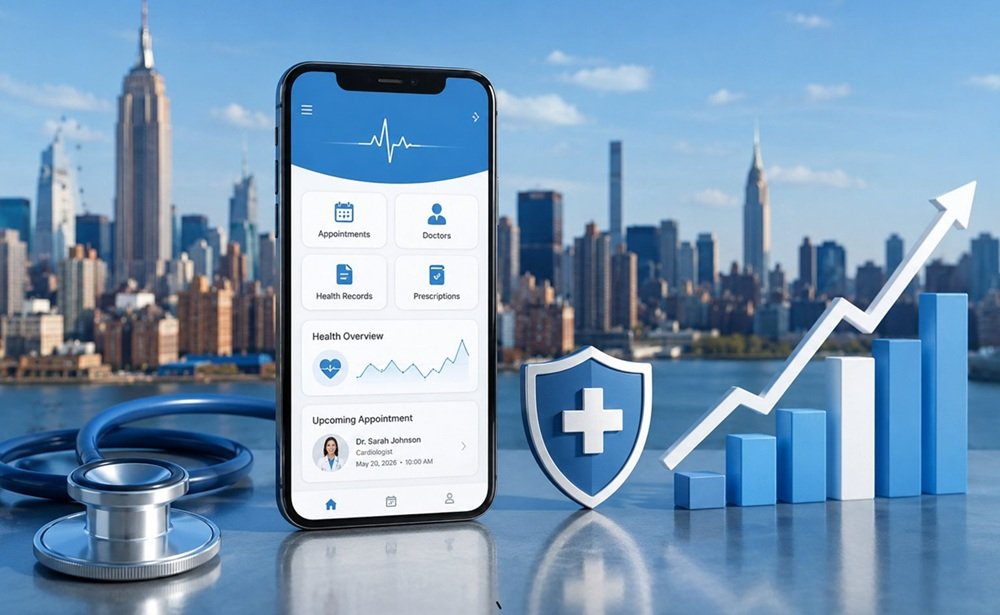
New report highlights key factors influencing healthcare app development cost and how digital health solutions are shaping the future of healthcare in New York City.
Healthcare providers in New York are moving faster on digital adoption, but many are still entering app development conversations with one unanswered question: what will this actually cost us?
Seasia Infotech has released new insights on healthcare app development cost, aimed at helping hospitals, private clinics, health-tech startups, and care providers understand what drives pricing before they commit to building a healthcare application.
A Burning Concern
The company’s report comes at a time when healthcare organizations are under growing pressure to improve patient access, reduce administrative delays, and make care delivery more convenient. In New York, where patients often navigate busy hospitals, specialist networks, urgent care providers, and private practices, the demand for faster digital healthcare experiences continues to rise.
But the cost of building a healthcare app is rarely straightforward.
A simple appointment booking app may require basic user registration, scheduling, notifications, and admin controls. A more advanced healthcare platform may include virtual consultations, patient records, secure chat, e-prescriptions, payment processing, remote patient monitoring, wearable device integration, analytics dashboards, and AI-powered assistance.
That difference in scope can completely change the budget.
“Many healthcare businesses come in asking for an app, but what they actually need is a secure, connected system that supports patients, providers, and internal teams,” said RP Singh, Group CEO of Seasia Infotech. “The cost depends less on the word ‘app’ and more on the workflows, compliance requirements, integrations, and long-term goals behind it.”
Factors Influencing Healthcare App Development Cost
According to Seasia Infotech, the biggest factors influencing healthcare app development cost include feature complexity, regulatory requirements, platform choice, UI/UX depth, backend architecture, third-party integrations, testing needs, and post-launch maintenance.
Compliance remains one of the most important cost drivers. Healthcare applications often deal with sensitive patient data, making security a core requirement rather than an optional layer. Features such as encrypted data storage, role-based access, audit trails, secure authentication, consent management, and compliance-ready infrastructure can add to development time but are critical for protecting patient information.
Integrations are another major consideration. Healthcare apps often need to connect with EHR systems, lab systems, insurance platforms, pharmacy tools, payment gateways, CRM systems, or wearable devices. Each integration adds technical complexity, especially when data must move securely between multiple systems.
The Role of AI and the Path Forward
Seasia’s insights also point to the growing role of AI in healthcare applications. Healthcare companies are increasingly exploring AI-enabled features such as symptom checkers, intelligent chatbots, clinical documentation support, patient engagement automation, predictive insights, and personalized care recommendations. While these capabilities can improve efficiency, they also require careful planning, model selection, data governance, and testing.
The report encourages healthcare organizations to move beyond asking for a flat estimate and instead begin with a discovery-led approach. Defining user roles, workflows, must-have features, compliance needs, and integration requirements early can help teams avoid unclear budgets and expensive rework later.
For New York’s healthcare businesses, the conversation around app development is no longer just about launching a digital product. It is about building systems that can support better access, faster response times, stronger patient engagement, and more efficient operations.
“Healthcare app development cost should be viewed in the context of business value,” added Singh. “A well-built platform can reduce manual work, improve patient satisfaction, support better care coordination, and create long-term operational advantages.”
To Sum Up
Seasia Infotech’s report is designed to help healthcare decision-makers plan more confidently by understanding where the money goes, what trade-offs matter, and how to build digital health solutions that are secure, scalable, and practical from day one.
As New York’s healthcare industry continues to modernize, clear cost planning will play a crucial role in helping organizations build technology that meets today’s patient expectations while preparing for tomorrow’s healthcare demands.
About Seasia Infotech
Seasia Infotech is a global technology company specializing in software development, AI-driven solutions, cloud services, cybersecurity, enterprise applications, and digital transformation initiatives. With more than two decades of industry experience, Seasia helps organizations build scalable technology solutions designed to support business growth and innovation across industries including healthcare, finance, logistics, retail, and enterprise services.
For more information, visit www.seasiainfotech.com.
Tags : Healthcare mobileappdevelopment