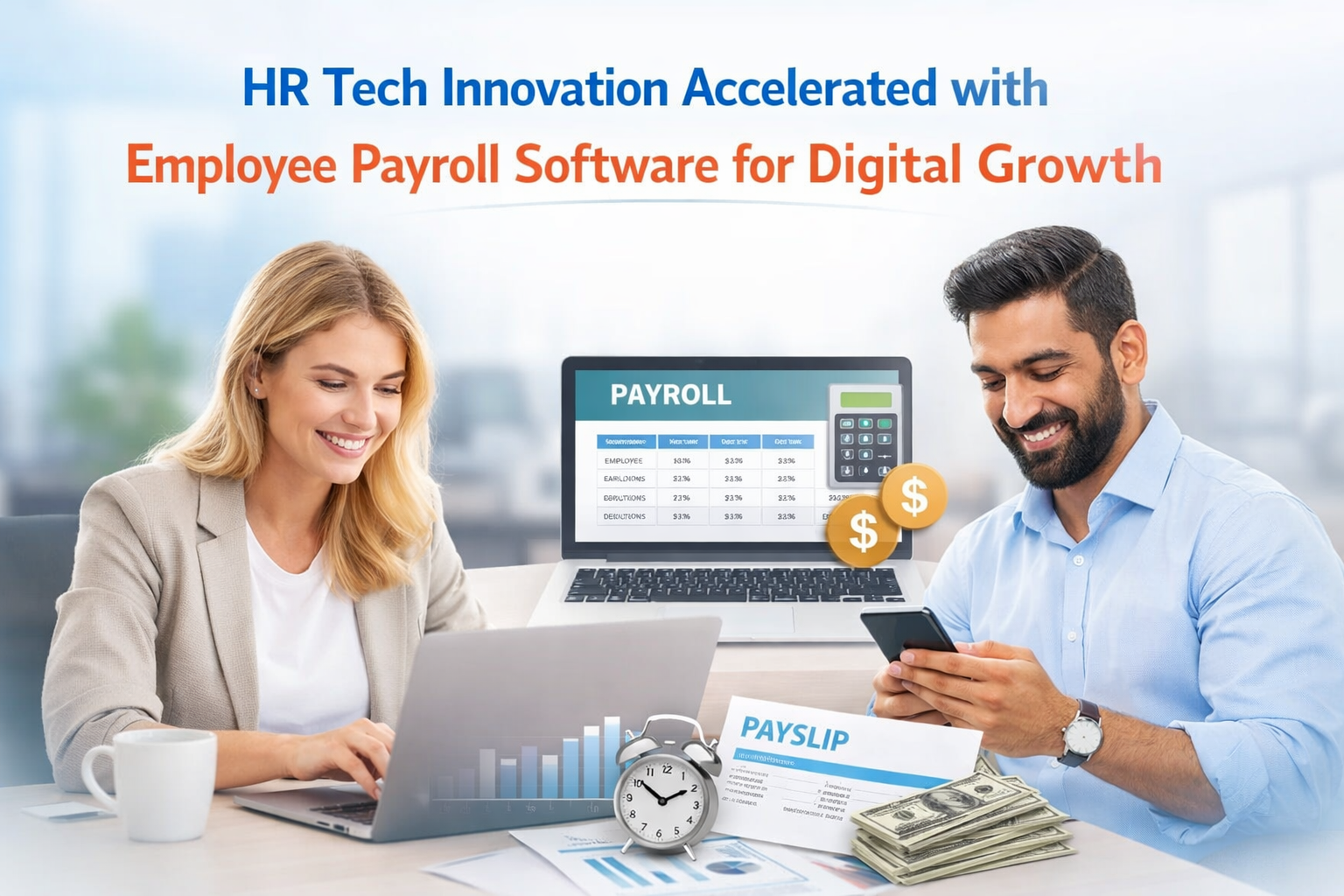
HR Tech Innovation Accelerated with Employee Payroll Software for Digital Growth
By Micck Davis 23-02-2026 233
Digital transformation in human resources has moved far beyond digitizing employee records. Organizations now expect intelligent, secure and scalable systems that unify payroll, compliance, workforce data and analytics under one ecosystem. In this environment, employee payroll software development plays a strategic role in shaping how businesses operate, scale and compete.
Modern enterprises no longer view payroll as a back-office obligation. It has become a data-rich operational core that influences employee satisfaction, financial planning, regulatory compliance and executive decision-making. Companies looking for robust HR technology services are increasingly investing in custom payroll platforms that integrate seamlessly with HRMS, ERP and financial systems while supporting global operations.
The Strategic Role of Employee Payroll Software Development in HR Transformation
Payroll impacts every employee and every pay cycle. A single miscalculation can damage trust, affect compliance and disrupt operations. As organizations grow, payroll complexity multiplies due to varying tax regulations, benefits structures, remote work policies and multi-country workforce management.
Employee payroll software development enables businesses to:
- Automate salary processing and tax calculations
- Maintain real-time compliance with changing labor laws
- Integrate attendance, leave and benefits systems
- Generate actionable payroll analytics
- Reduce administrative workload
Custom-built payroll systems are particularly valuable for mid-sized and enterprise companies with unique compensation structures, incentive programs, or international operations. Off-the-shelf tools may address standard requirements, but tailored development ensures flexibility, scalability and integration compatibility.
Digital growth depends on operational clarity. When payroll data connects with performance metrics, budgeting tools and workforce planning systems, leadership gains deeper insights into cost distribution, departmental productivity and resource optimization.
Building a Scalable Payroll Architecture for Digital Growth
A well-designed payroll solution must go beyond basic wage calculation. It should support scalability, security and performance under increasing employee volumes and expanding geographies.
Scalable employee payroll software development involves:
- Cloud-native infrastructure for elasticity
- Modular architecture for feature expansion
- API-based integrations with HR and finance tools
- Advanced encryption for payroll data security
- Automated compliance monitoring
Cloud deployment allows organizations to handle seasonal workforce fluctuations or rapid hiring without infrastructure bottlenecks. Microservices architecture further ensures that updates, regulatory changes, or new features can be deployed without disrupting the entire system.
Core Technical Features That Drive Long-Term Value
High-performing payroll platforms include advanced components that contribute to digital maturity:
- Real-time tax engine updates
- AI-driven anomaly detection for payroll errors
- Automated statutory reporting
- Multi-currency and multi-region payroll capabilities
- Self-service employee portals
Self-service functionality reduces HR dependency by allowing employees to access payslips, tax documents and benefit summaries independently. This improves operational efficiency while enhancing transparency.
Security is equally critical. Payroll systems handle sensitive financial and identity data. End-to-end encryption, multi-factor authentication and role-based access control protect the organization from breaches and compliance penalties.
Compliance Automation and Risk Reduction
Regulatory requirements differ across countries, states and industries. Manual tracking of tax codes, minimum wage adjustments and benefits compliance increases the risk of penalties and audits.
Employee payroll software development addresses this through embedded compliance engines that automatically update according to jurisdictional changes. Automated reporting tools generate statutory documents in required formats, reducing dependency on external processing agencies.
A blockchain payroll management system can further enhance compliance and transparency. Blockchain technology creates immutable payroll records, reducing disputes and ensuring audit-ready documentation. For enterprises handling cross-border payments or contractor networks, distributed ledger systems provide traceability and fraud resistance.
Compliance automation not only protects organizations legally but also reinforces trust among employees who expect accurate and timely compensation.
Integration with Workforce Engagement and Performance Systems
Payroll data does not exist in isolation. It intersects with performance metrics, incentives, retention strategies and employee satisfaction. Integrating payroll systems with workforce platforms enhances overall HR intelligence.
An integrated employee engagement app connected to payroll infrastructure enables real-time reward allocation, performance-linked bonuses and recognition incentives. When payroll and engagement data are unified, companies can measure the direct impact of incentives on retention and productivity.
Integrated systems allow HR leaders to:
- Align compensation with performance benchmarks
- Track benefit utilization trends
- Analyze overtime and attendance correlations
- Optimize workforce cost planning
Data-driven compensation strategies strengthen talent retention and improve organizational culture.
Custom vs White-Label Payroll Solutions
Organizations seeking faster go-to-market strategies sometimes opt for white-label payroll software to launch branded payroll services without developing a system from scratch. This approach benefits HR tech providers and fintech startups aiming to expand service offerings.
However, enterprises with specialized compliance requirements or complex compensation models often choose custom employee payroll software development to maintain control over architecture, data governance and feature prioritization.
Key Considerations When Choosing the Right Development Approach
- Degree of customization required
- Geographic payroll coverage
- Integration complexity
- Long-term scalability
- Data ownership and security compliance
White-label solutions offer rapid deployment and lower upfront costs. Custom development provides deeper flexibility and competitive differentiation. The choice depends on business objectives, regulatory exposure and growth trajectory.
Leveraging AI and Analytics in Payroll Systems
Advanced payroll platforms incorporate artificial intelligence and predictive analytics to transform payroll into a strategic intelligence tool.
AI-driven modules can:
- Detect payroll discrepancies before processing
- Predict overtime cost trends
- Forecast workforce budget requirements
- Identify compliance anomalies
- Automate the classification of contractors and full-time employees
Predictive analytics helps CFOs and HR directors anticipate workforce expenses based on hiring plans, seasonal patterns and compensation revisions. This reduces financial surprises and supports proactive planning.
Data visualization dashboards convert payroll records into executive-level insights. Leaders gain visibility into department-level compensation, tax liabilities and workforce cost distribution.
Security and Data Privacy in Payroll Software Development
Cybersecurity threats targeting HR systems are increasing. Payroll databases contain highly sensitive financial and personal information. A single breach can lead to regulatory penalties and reputational damage.
Secure employee payroll software development includes:
- Encrypted data storage and transmission
- Secure DevOps practices
- Penetration testing and vulnerability assessments
- GDPR and regional data compliance protocols
- Role-based permissions and audit logs
Zero-trust architecture models further enhance payroll security by validating every access request. Businesses operating across regions must also ensure data residency compliance and cross-border transfer security.
Security investment protects both organizational assets and employee trust.
Future Outlook: Payroll as a Digital Growth Catalyst
Payroll technology is evolving toward intelligent automation, embedded finance and real-time compensation models. Instant wage access, digital wallets and automated tax compliance tools are reshaping employee expectations.
Forward-looking organizations treat employee payroll software development as a long-term digital asset rather than a functional necessity. Integration with financial planning, workforce analytics and compliance systems ensures payroll contributes directly to digital growth objectives.
Emerging technologies such as blockchain, AI and API-first ecosystems will continue to redefine payroll infrastructure. Businesses that modernize their payroll architecture position themselves for scalable expansion, improved workforce satisfaction and regulatory resilience.
Conclusion
HR technology innovation depends on robust foundational systems. Payroll, often underestimated, serves as one of the most critical operational pillars. Investing in advanced employee payroll software development empowers organizations to automate compliance, secure sensitive data, enhance employee experience and gain actionable workforce insights.
Whether through custom-built solutions or strategic deployment of scalable payroll platforms, businesses that modernize payroll infrastructure strengthen their digital growth capabilities. Efficient payroll systems reduce operational risk, improve transparency and support long-term strategic planning.
Digital transformation in HR begins with precision, automation and integration and payroll stands at the center of that evolution.
FAQs
What is employee payroll software development?
Employee payroll software development refers to designing and building digital systems that automate salary processing, tax calculations, compliance management and payroll reporting while integrating with HR and finance platforms.
Why should businesses invest in custom payroll software?
Custom payroll software ensures flexibility, regulatory compliance alignment, seamless integration with internal systems and scalability for growing or multi-region operations.
How does payroll software support digital growth?
Payroll software centralizes workforce financial data, improves compliance automation, reduces administrative workload and provides analytics that support strategic workforce and budget planning.
Can payroll systems integrate with other HR tools?
Yes, modern payroll platforms integrate with HRMS, attendance tracking, performance systems, accounting software and employee engagement solutions to create a unified HR ecosystem.
Is blockchain useful in payroll management?
A blockchain payroll management system enhances transparency, auditability and security by maintaining tamper-proof payroll records, especially beneficial for cross-border operations and contractor payments.