The Role of Industrial Paint Manufacturers in Building a Sustainable Future
By Sofyandy 23-02-2026 109
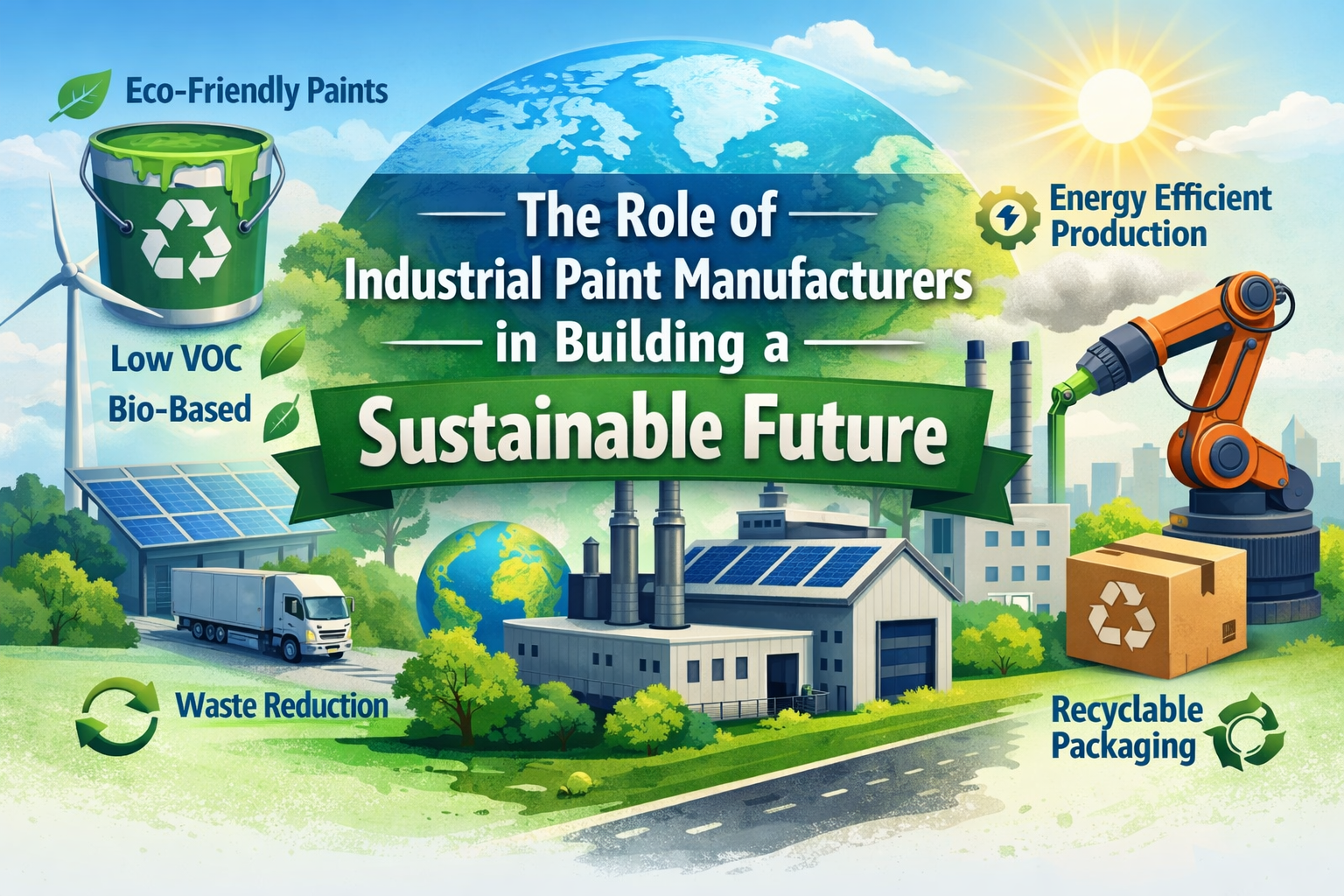
In the modern industrial landscape, sustainability is no longer just a buzzword — it’s a necessity. Businesses across the globe are rethinking their production processes, materials, and environmental footprints. Among these, industrial paint manufacturers play a crucial role in shaping a greener future. From developing eco-friendly coatings to reducing carbon emissions during production, the paint industry is undergoing a quiet but powerful transformation toward sustainability.
1. The Environmental Challenge in Paint Manufacturing
Traditionally, industrial paints and coatings have relied heavily on volatile organic compounds (VOCs), heavy metals, and synthetic resins. These substances, while effective in protecting surfaces and extending product life, contribute significantly to air pollution and environmental degradation. VOCs, in particular, are major contributors to smog formation and can pose health risks to workers and end-users.
2. Shift Toward Eco-Friendly Formulations
One of the most significant advancements in recent years has been the shift from solvent-based to water-based paints. Water-based formulations reduce VOC emissions dramatically and are easier to clean up, making them a preferred choice across industries such as automotive, construction, and manufacturing.
Moreover, bio-based resins — derived from renewable sources like vegetable oils, starches, and plant-based polymers — are gaining momentum. These materials not only reduce dependency on petrochemicals but also lower greenhouse gas emissions during production.
For instance, leading industrial paint manufacturers are investing heavily in bio-resin research and nanotechnology coatings that provide superior durability while being less harmful to the environment. The use of powder coatings, which contain no solvents and generate minimal waste, is another sustainable innovation that has revolutionized the market.
3. Energy Efficiency and Waste Reduction in Production
Sustainability isn’t just about the final product — it begins at the production stage. Paint manufacturing is energy-intensive, involving processes such as mixing, grinding, and curing. Modern manufacturers are optimizing their operations by adopting energy-efficient machinery, renewable power sources, and closed-loop systems that recycle water and solvents.
Smart factories, equipped with Internet of Things (IoT) sensors and automation tools, help monitor energy use in real time. These technologies not only reduce operational costs but also ensure consistency and quality in paint production. Additionally, waste recycling initiatives — such as reusing pigments and reprocessing rejected batches — minimize landfill contributions and conserve raw materials.
4. Sustainable Packaging and Distribution Practices
Packaging has also become a focal point of sustainable innovation. Traditional metal or plastic containers are being replaced or supplemented with recyclable, biodegradable, and lightweight packaging solutions. This shift not only reduces plastic waste but also cuts down transportation emissions due to lower overall weight.
Some forward-thinking industrial paint manufacturers are adopting returnable container programs, where clients send back used drums and cans for cleaning and reuse. Others are developing concentrated paint systems that require less packaging and storage space, further reducing environmental impact across the supply chain.
5. Digitalization and Smart Coatings
The next frontier in sustainability is digitalization — particularly through the rise of smart coatings. These are paints engineered to respond to environmental changes such as temperature, humidity, or UV exposure. For example, heat-reflective coatings reduce energy consumption in buildings, while anti-corrosion coatings extend the lifespan of infrastructure, cutting down the need for frequent repainting.
Digital tools like computer-aided color matching, AI-driven formulation, and data analytics help manufacturers design products that meet environmental regulations without sacrificing performance. By reducing the number of trial-and-error formulations, these technologies save time, raw materials, and energy.
6. Corporate Responsibility and Circular Economy
Beyond technology, sustainability also requires a shift in mindset. Many industrial paint manufacturers are embedding environmental, social, and governance (ESG) principles into their business models. This includes transparent reporting on emissions, responsible sourcing of raw materials, and supporting community initiatives related to waste management and education.
A growing focus is also being placed on the circular economy, where materials are reused or repurposed instead of discarded. For example, leftover or expired paints can be processed into secondary raw materials for new formulations. Some companies are even collaborating with local recyclers to convert paint waste into energy or construction materials, thereby closing the production loop.
7. Global Collaboration and Industry Standards
The journey toward sustainability cannot be achieved in isolation. International collaborations, such as the World Coatings Council and industry alliances under United Nations Industrial Development Organization (UNIDO), play an essential role in sharing best practices and setting common environmental standards. By aligning efforts across regions, the industry can accelerate the transition toward low-impact manufacturing and responsible consumption.
8. The Road Ahead
Looking ahead, the future of industrial paint manufacturing will be defined by innovation, transparency, and accountability. As climate change continues to reshape global priorities, companies that invest early in green technologies will gain a competitive edge. Customers, too, are increasingly choosing suppliers with verifiable sustainability credentials — a clear sign that environmental responsibility has become a business advantage, not just a compliance requirement.
In the coming decade, expect to see more breakthroughs in carbon-neutral paints, smart factories, and AI-driven sustainability tracking systems. Industrial paint manufacturers that embrace these trends will not only contribute to a cleaner planet but also build stronger, more resilient businesses.
Conclusion
The path to a sustainable future runs through innovation and conscious effort, and industrial paint manufacturers are at the forefront of this transformation. From eco-friendly formulations to circular production models, the industry is proving that performance and sustainability can go hand in hand. As technology evolves and global cooperation strengthens, the color of the future — quite literally — will be green.
Tags : .....