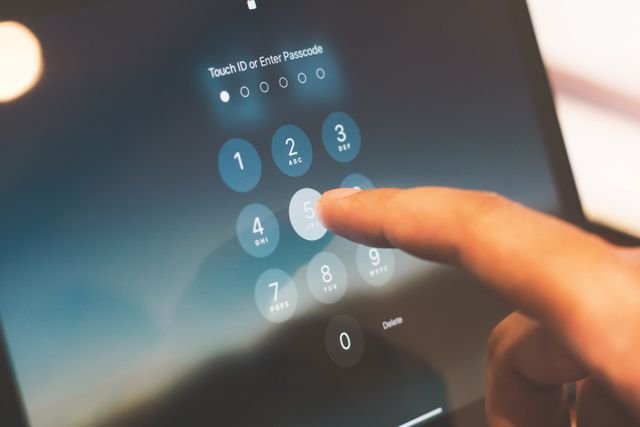
Passwords have long served as the primary gatekeepers of digital life. But as cyber threats grow more sophisticated by the day, relying on a single password for protection is no longer a viable security strategy. Data breaches, phishing attacks, and credential stuffing campaigns have proven time and again that passwords alone can and do fail. Understanding how to layer multiple security measures around accounts and personal data has become a fundamental skill for both individuals and organizations alike.
Why Passwords Fall Short in Modern Security Environments
The limitations of passwords are well-documented across cybersecurity research, and the numbers tell a sobering story. The average person manages dozens of accounts, which often leads to password reuse across platforms, a habit that dramatically raises the stakes when even one service gets compromised. Attackers deploy automated tools to test stolen credentials across hundreds of websites within minutes, exploiting this all-too-common behavior with alarming efficiency. Weak passwords built on predictable patterns remain surprisingly widespread despite years of public awareness campaigns. Even strong, unique passwords can be intercepted through phishing schemes that trick users into surrendering their credentials on convincing but fraudulent websites. The human element introduces vulnerabilities that password complexity rules simply cannot address on their own.
Multi-Factor Authentication as a Critical Defense Layer
Multi-factor authentication, widely known as MFA, requires users to verify their identity through two or more independent methods before gaining access to an account or system. These methods typically fall into three categories: something you know such as a password or PIN, something you have such as a mobile device or hardware token, and something you are such as a fingerprint or facial scan. By requiring multiple verification steps, MFA ensures that even if an attacker manages to obtain a password, they still cannot access the account without the secondary factor in hand. Organizations that implement MFA consistently report significant reductions in unauthorized access incidents, making it one of the most proven defenses available. Authentication apps like Google Authenticator or Microsoft Authenticator generate time-sensitive codes that expire within 30 seconds, making them far harder to exploit than static passwords. Hardware security keys take protection a step further, offering an even higher level of assurance particularly suited to sensitive enterprise environments.
Biometric Verification and Its Role in Stronger Access Control
Biometric authentication uses unique physical or behavioral characteristics to verify identity, making it inherently more personal and considerably harder to replicate than a memorized credential. Fingerprint scanning, facial recognition, iris detection, and voice recognition are all forms of biometric authentication now widely integrated into both consumer devices and enterprise systems. These methods carry a real convenience advantage since users have nothing to memorize, no complex strings of characters to forget or reset after a lockout. Biometric data is also extremely difficult to steal in a usable form, though it is not without risk, as sophisticated spoofing techniques have emerged and continue to evolve. Organizations implementing biometrics should pair them with additional verification steps to maintain a genuinely robust security posture. When teams are transitioning away from credential-based access entirely, passwordless authentication software enables biometric and hardware-based verification to work seamlessly across hybrid environments without relying on traditional passwords. Storing and processing biometric data on-device rather than in centralized databases remains the gold standard, making the approach one of the most reliable options currently available.
Zero Trust Security Principles for Organizations and Individuals
The Zero Trust model operates on a straightforward but powerful premise: trust nothing and verify everything, regardless of whether a request originates inside or outside the network perimeter. In a Zero Trust framework, every user, device, and application must continuously authenticate and prove authorization before gaining access to any resource. This approach marks a fundamental shift away from the long-held assumption that entities already inside a corporate network are inherently trustworthy. Implementing Zero Trust in practice involves network segmentation, strict identity verification, least-privilege access controls, and ongoing monitoring of user behavior patterns. For businesses managing sensitive customer or employee data, Zero Trust reduces the potential damage of any single breach by limiting how far an attacker can move laterally within the network. Even individuals can adopt Zero Trust thinking in their daily habits by questioning unfamiliar login prompts, regularly reviewing app permissions, and staying cautious about granting broad access to third-party services.
Practical Steps to Strengthen Your Information Security Today
Beyond adopting advanced authentication methods, several practical habits can significantly reduce exposure to threats worth building into a daily routine. A reputable password manager eliminates the temptation to reuse passwords and automatically generates cryptographically strong, unique credentials for every account. Keeping software, operating systems, and applications updated ensures that known vulnerabilities get patched before attackers find a way to exploit them. Monitoring accounts for unusual activity, enabling login notifications, and periodically reviewing active sessions can help detect unauthorized access before it escalates. Being selective about the personal information shared online limits the data available to attackers who rely on social engineering tactics. Encrypting sensitive files and communications adds yet another layer of protection, rendering intercepted data unreadable to anyone without the proper authorization.
Conclusion
Protecting personal and organizational information in today's threat landscape calls for a multi-layered approach that extends well beyond the humble password. Combining multi-factor authentication, biometric verification, Zero Trust principles, and proactive security habits creates a defense that is substantially harder for attackers to penetrate. The ongoing shift toward modern authentication methods reflects a broader recognition that static credentials are no longer adequate standing alone. Investing time and resources into stronger security practices today is far less costly than the effort required to recover from a breach down the road. Cybersecurity is not a destination but an ongoing discipline, and the strongest protection comes from staying informed, remaining adaptable, and committing to continuous improvement over time.