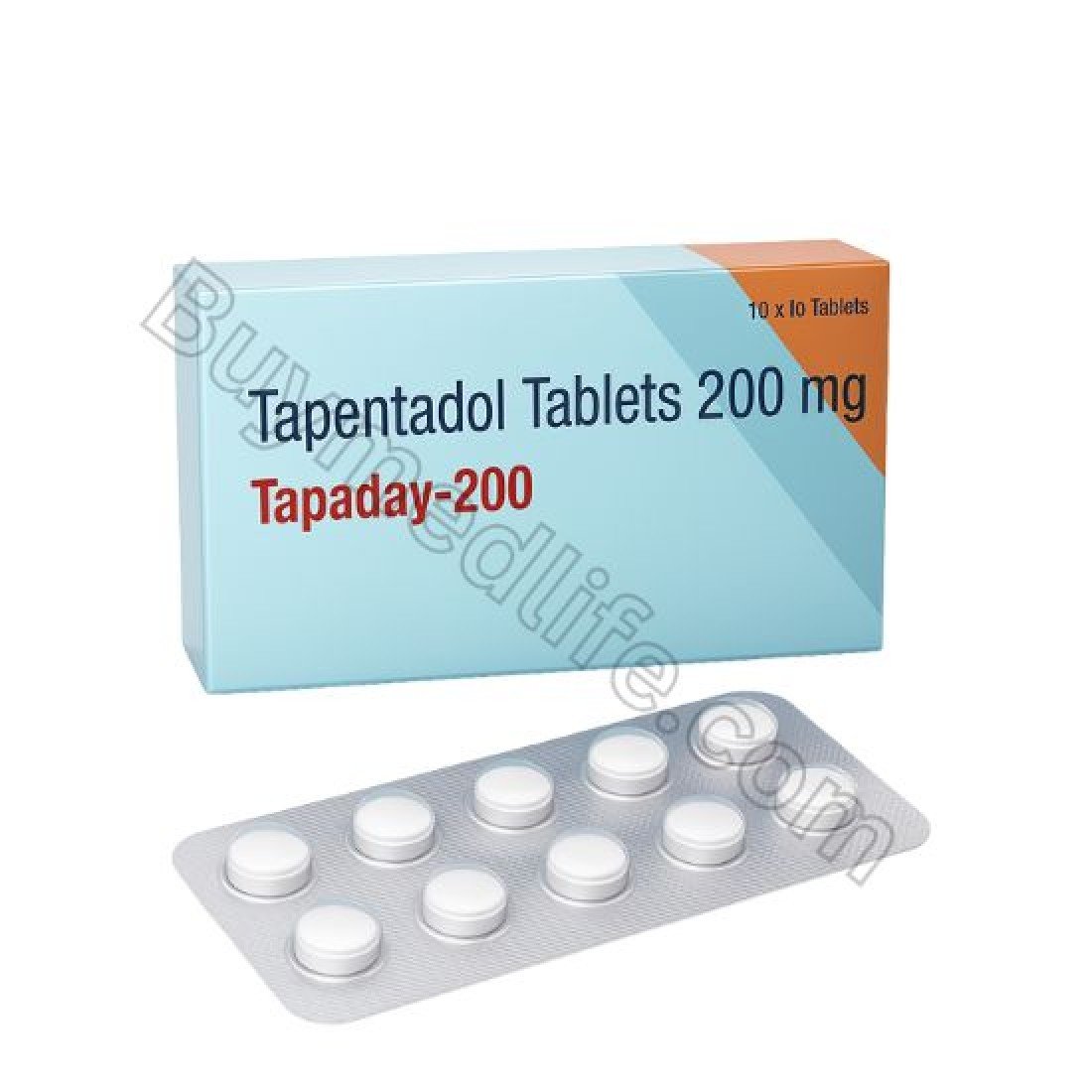
Pain—especially when it becomes chronic or severe—can profoundly affect quality of life. When simpler pain-relief measures fail, stronger medications may be considered. One such medicine is Tapaday 200 mg, which is a brand name formulation of Tapentadol. This article provides an in-depth, SEO-friendly guide on how Tapaday 200 mg works, when and how it may be used, what benefits it offers, and what risks and precautions should be considered. While this is intended to be educational, always follow your healthcare provider’s advice.
1. Understanding the Basics: What is Tapaday 200 mg?
Tapaday 200 mg is a dosage strength of the tapentadol class of medications. According to one source, Tapaday 200 mg is described as “a centrally-acting pain medication … approved … for treating severe chronic and acute pain” and is marketed in India by a manufacturer under this brand.
Tapentadol itself is an opioid analgesic medication used for moderate to severe pain.
In simpler terms:
It is prescription-only.
It is used when less potent pain relief options are inadequate.
The 200 mg strength suggests a higher dose (or higher strength formulation) intended for more significant pain.
2. How Does Tapaday 200 mg Work? (Mechanism of Action)
One of the distinctive features of tapentadol (and thus Tapaday) is its dual mechanism of action. Here’s how it works:
a) Opioid receptor agonist
Tapentadol binds to the µ-opioid receptor (a major opioid receptor in the central nervous system) to reduce perception of pain.
b) Norepinephrine reuptake inhibition
It also inhibits the reuptake of norepinephrine (noradrenaline) in the pain pathways, which boosts the body’s capacity to suppress pain signals.
Because of this combined action, tapentadol may provide effective analgesia with certain potential advantages over “classic” opioids (though risks remain).
c) Why that matters for chronic/severe pain
In chronic pain, especially neuropathic pain or other hard-to-treat types, merely blocking pain signals via one pathway may not suffice. The added noradrenergic mechanism can help address persistent pain signals and central sensitization. Thus, for patients whose pain has resisted other treatments, a medicine like Tapaday may be considered.
3. Which Pain Types and Scenarios Is It Used For?
Tapaday 200 mg (and tapentadol more broadly) may be used in several pain contexts:
Severe acute pain where other medicines are inadequate.
Chronic persistent pain (around-the-clock) where non-opioid analgesics or lower-dose opioids are ineffective or not tolerated.
Neuropathic pain in some cases (for example, diabetic peripheral neuropathy) when other therapies fail.
Back pain, joint pain, fibromyalgia, post-surgical pain may also be contexts where stronger analgesia is considered. (One source for Tapaday mentions back pain, hip/knee joint pain, fibromyalgia, diabetic neuropathy)
Important note: The specific formulation, dose, and indication will depend on local regulatory approval, country, and patient-specific factors. Always use under doctor supervision.
4. How Is Tapaday 200 mg Administered? Dosage & Schedule
When dealing with a medicine like Tapaday 200 mg, correct dosing is critical for both effectiveness and safety. Here are some considerations:
a) Typical dosage guidelines
For tapentadol immediate-release forms: initial doses often 50-100 mg every 4-6 hours as needed for pain.
For extended-release formulations (for chronic pain), initial doses might be 50 mg twice a day and titrated upward. Maintenance may reach 100-250 mg twice a day in some cases.
One source for Tapaday 200 mg indicated “maximum dose … is 600 mg per day; therefore, this medication should be taken two- to three-times a day as directed.”
b) Administration tips
Take exactly as prescribed—do not increase or decrease the dose without medical advice.
The tablet should be swallowed whole with a glass of water; do not crush or chew if it is a controlled-release form.
It may be taken with or without food—but following your doctor’s direction is key.
c) Titration and maintenance
Because of the risk of side-effects and dependence with opioids, healthcare providers typically start low and increase (titrate) only if necessary, then maintain the lowest effective dose.
d) For severe pain / chronic scenario
In chronic severe pain, continuous (around-the-clock) dosing is often used rather than “as needed.” The goal is stable pain control rather than only on flare-ups.
Thus, when using Tapaday 200 mg, the following would apply: it is likely part of a scheduled dosing regimen for significant or persistent pain, and must be monitored carefully.
5. What Are the Benefits of Using Tapaday 200 mg for Chronic/Severe Pain?
Here are key advantages as reported and discussed in the literature:
a) Effective pain relief in difficult cases
Some patients with chronic or severe pain, including neuropathic pain, do not respond to standard non-opioid analgesics or weaker opioids. Tapentadol’s dual mechanism gives another option in the analgesic toolkit.
b) Improved quality of life
By reducing pain severity, patients may engage better with daily activities, sleep better, move more, improve mood—even when their pain has been persistent. One source says Tapaday “improves sleep quality by reducing the severity of pain.”
c) Potentially lower “opioid burden”
Because of the added norepinephrine effect, some clinicians argue that compared to traditional opioids, a medicine like tapentadol may allow lower opioid receptor-only dosing. While not risk-free, it could mean somewhat different side‐effect profile. (The Wikipedia summary states “analgesic efficacy comparable to oxycodone despite a lower incidence of side effects.”)
d) Versatility in pain types
As noted earlier, Tapaday (and tapentadol) appear in contexts of back pain, joint pain, neuropathic pain, fibromyalgia, etc. Having a single medication capable of serving different pain mechanisms is helpful in complex cases.
In short: For someone whose pain is ongoing, interfering with life, and not adequately managed by other means, Tapaday 200 mg may offer a meaningful option—when used appropriately.
6. Key Safety Considerations, Risks & Side-Effects
Using a potent analgesic like Tapaday 200 mg comes with important safety responsibilities. Let’s review major points.
a) Common side-effects
Based on available data, side-effects may include:
Constipation, nausea, vomiting.
Dizziness, drowsiness, headache, fatigue.
Stomach pain or GI-related discomfort.
b) Serious risks
Respiratory depression (especially when starting or increasing dose, or if combined with other depressants).
Addiction, dependence and misuse potential. Even when used correctly, opioids carry risks.
Withdrawal symptoms if abruptly stopped.
Interaction risks with other medications (e.g., sedatives, alcohol) and in patients with certain conditions (e.g., severe breathing problems, bowel obstruction, MAO inhibitor use).
c) Contraindications / caution
Patients with uncontrolled asthma or breathing problems, paralytic ileus, or those who have taken MAO inhibitors in the past 14 days should not use tapentadol.
Also, elderly patients and those with impaired kidney/liver function should use with caution; dose adjustments may be needed.
d) Monitoring and safe use
Use the lowest effective dose for the shortest duration consistent with treatment goals.
Patients starting the medication or increasing dose should be monitored for signs of respiratory depression (especially first 24-72 hours).
Avoid concomitant use with alcohol, other CNS depressants, or medications that increase risk of serotonin syndrome.
Proper disposal of unused medication is also critical.
7. How to Incorporate Tapaday 200 mg into a Pain Management Strategy
Given the severity of chronic or severe pain, using Tapaday 200 mg should be part of a multimodal pain management plan, not the sole approach. Here are how patients and clinicians might approach this:
a) Pain-assessment first
Before starting a potent analgesic, it is important to determine:
The underlying cause and type of pain (nociceptive, neuropathic, mixed)
Prior therapies tried and their outcomes
Patient’s medical history (comorbidities, kidney/liver status, respiratory status)
Risk factors for opioid misuse or addiction
b) Initiation and titration
Start with the lowest possible effective dose.
Gradually titrate upward only if pain remains inadequately controlled and side-effects are tolerable.
Set realistic pain-control goals (rather than “zero pain”)—improvement in function and quality of life are often the goal.
Concurrently manage non-drug strategies: physical therapy, lifestyle modifications (exercise, weight management), cognitive behavioural therapy, etc.
c) Scheduled dosing vs “as needed”
Because chronic pain often entails ongoing discomfort rather than intermittent flare-ups alone, scheduled dosing (e.g., every 12 hours) may be preferred over only “as needed” dosing. This helps stabilize pain levels and avoid peaks/troughs. Some sources for extended-release tapentadol reflect this.
d) Monitoring, follow-up and reassessment
Regular follow-up visits to assess effectiveness, side-effects, adherence, potential misuse.
Monitor for signs of tolerance (needing more dose for same effect) or dependence.
Re-evaluate the underlying pain source—if worsening, further investigation may be needed rather than just increasing dose.
Tapering/discontinuation plan: If pain improves or alternative strategies become available, reducing or stopping the opioid may be considered carefully.
8. Real-world Use: What Patients Should Know and Expect
a) Setting expectations
It is unrealistic to expect that Tapaday 200 mg will completely eliminate all pain. The realistic goal is meaningful reduction in pain intensity and improved function (mobility, sleep, daily activities).
It may take several days to weeks to find the “right” dose and to combine it with other strategies.
b) What to watch out for
If you feel more drowsy, dizzy, or nauseous shortly after a dose, inform your doctor.
If you notice reduced breathing rate, are hard to wake, or feel faint, seek urgent medical help.
Avoid drinking alcohol or combining sedative drugs without physician approval.
Carry your medication responsibly; do not share with others.
c) Lifestyle and complementary strategies
Pain management is rarely just about medication. Good sleep hygiene, physical activity tailored to your ability, stress management, weight control, proper nutrition and avoiding smoking/alcohol can all enhance outcomes. A strong non-drug foundation means the medication can be more effective and possibly required at a lower dose.
d) Cost, availability & brand awareness
In some markets (for example in India), Tapaday 200 mg is marketed and available via pharmacies. One source outlines its cost and usage in an online pharmacy context. Availability, pricing, brand names and formulations may differ by country—patients should check with local providers/pharmacies.
9. When Tapaday 200 mg Might Not Be Appropriate or Alternatives to Consider
a) Situations where it might not be appropriate
If the pain is mild or moderate and responsive to non-opioid analgesics (NSAIDs, acetaminophen, adjuvant neuropathic pain meds) then starting with a strong opioid may not be justified.
If patient has high risk of opioid misuse/abuse, severe respiratory disease or uncontrolled sleep apnea, bowel obstruction (ileus), or recent MAO inhibitor use—tapentadol might be contraindicated or used with extreme caution.
Patients with severe liver or kidney disease may need different dosing or may not be suitable.
b) Alternative or adjunct pain-management options
Non-opioid medications: NSAIDs, acetaminophen, selective neuropathic pain drugs (e.g., gabapentin, pregabalin, certain antidepressants)
Non-drug therapies: physiotherapy, cognitive behavioural therapy, interventional pain procedures
Other opioids: In some cases, traditional opioids may still be used, but each has its risk/benefit profile.
Combination/regimen adjustment: Using lower-dose opioid plus adjuvant may sometimes be better than high-dose alone.
10. Summary: Why Tapaday 200 mg Can Be a Valuable Option — With Caution
If you’re dealing with chronic or severe pain that has not responded to standard treatments, Tapaday 200 mg (tapentadol 200 mg) may offer an effective next-step option because of its dual mechanism of opioid receptor agonism plus noradrenaline reuptake inhibition. It has the potential to improve pain relief and quality of life, especially when integrated into a broader pain-management plan.
However, this potency comes with significant responsibilities: correct dosing, close monitoring, managing side-effects, minimizing risk of dependence, and always combining the medicine with other therapies when possible. The ultimate goal is not only reducing pain intensity, but improving function, sleep, mood and overall well-being.
Final Thought:
Pain is multifaceted—physical, emotional and behavioural. A medicine like Tapaday 200 mg can be a strong tool in the toolbox, but it is just one part of a comprehensive strategy. If you or someone you care for is considering this medication, the conversation with a pain specialist or prescribing doctor should include all the above aspects: mechanism, benefits, risks, lifestyle supports and long-term plan. Use the lowest effective dose, monitor progress closely, and aim for meaningful improvement—not simply “no pain”.