Understanding Machine Learning
Machine Learning is a subset of Artificial Intelligence (AI) that enables computers to learn from data and improve performance without being explicitly programmed. Instead of relying on fixed instructions, ML models identify patterns and make predictions or decisions based on data. Over time, these models refine themselves through continuous exposure to new information—just like humans learn from experience.
Whether it’s predicting what you’ll buy next, recognizing your face to unlock your phone, or filtering spam emails, ML algorithms are working in the background to make technology more responsive and efficient.
1. Smarter Smartphones and Personal Assistants
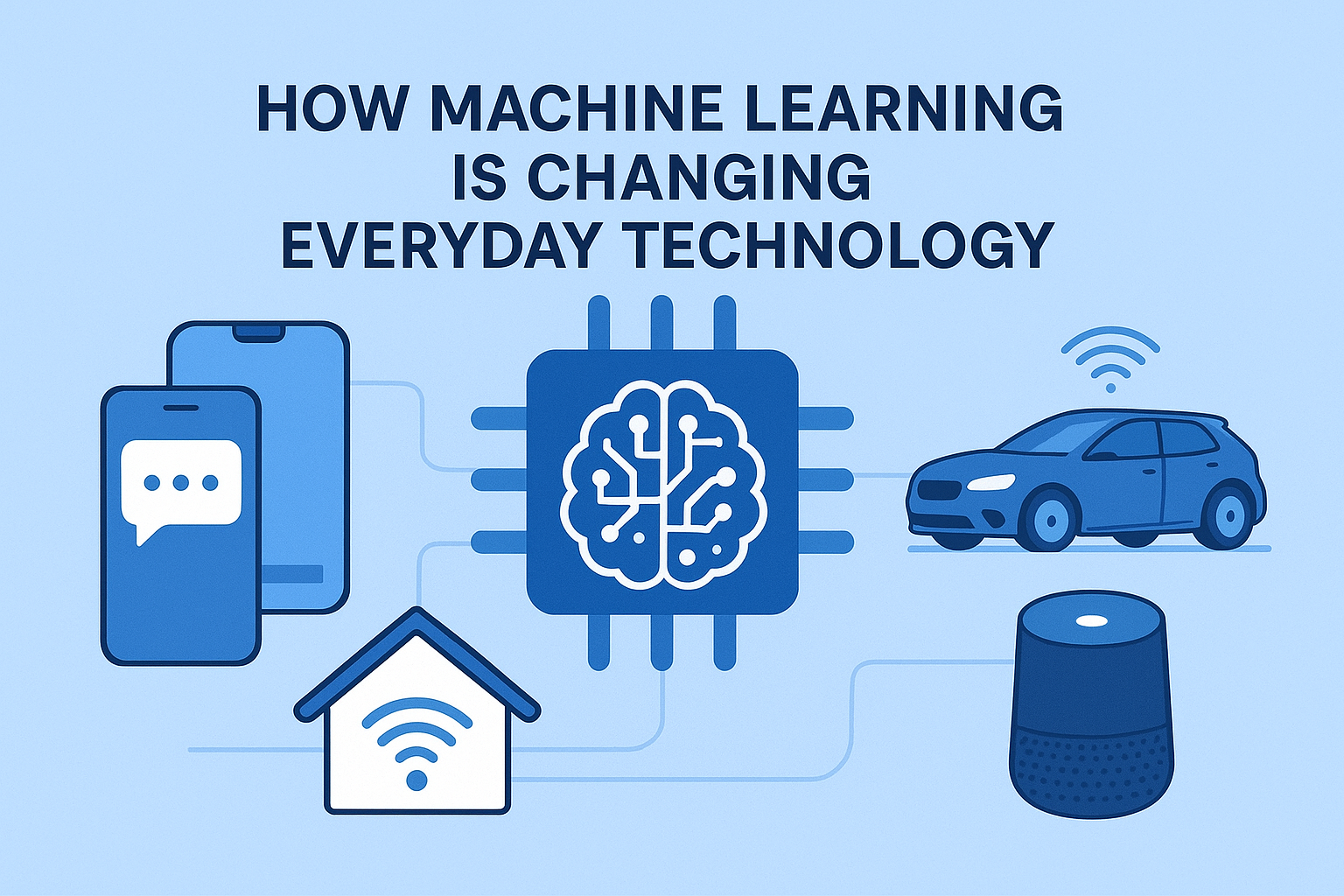
Smartphones are one of the most accessible examples of how machine learning influences our daily lives. ML powers many of their “smart” features—from photo enhancement to predictive text.
Voice Assistants: Tools like Google Assistant, Siri, and Alexa use natural language processing (NLP), a branch of ML, to understand and respond to voice commands. These assistants can schedule tasks, answer questions, and even control smart home devices through simple voice prompts.
Camera Intelligence: Modern smartphone cameras use ML to automatically adjust lighting, detect faces, and even remove background noise for crystal-clear photos.
Predictive Typing: When you type on your phone, ML algorithms predict the next word or phrase based on your previous typing habits, helping you type faster and more accurately.
By continuously learning from user interactions, smartphones have evolved from simple communication devices into powerful AI-driven tools that adapt to each individual user.
2. Personalized Content and Recommendations
Ever wondered how Netflix knows what movie you’ll love next or how Spotify curates playlists that match your mood? The answer lies in machine learning.
ML models analyze your past behavior—what you watched, listened to, or skipped—to predict your preferences. These algorithms look for similarities between users and recommend content accordingly. The more data you provide, the more accurate these predictions become.
This personalization extends beyond entertainment platforms:
E-commerce websites use ML to recommend products you’re likely to buy.
YouTube adjusts video suggestions based on your viewing history.
Social media platforms like Instagram and Facebook curate your feed using ML-driven algorithms that prioritize content based on your interests and engagement.
In short, machine learning creates personalized digital experiences tailored specifically to each user.
3. Machine Learning in Healthcare
Healthcare has seen a massive transformation thanks to ML. From diagnosis to treatment, it’s making medicine more precise and efficient.
Predictive Diagnosis: ML models can analyze patient data and detect early signs of diseases like cancer or diabetes. This early detection can save lives by enabling quicker interventions.
Medical Imaging: Algorithms can scan X-rays, CT scans, and MRIs to spot abnormalities faster and more accurately than traditional methods.
Drug Discovery: ML accelerates the discovery of new drugs by simulating how different compounds interact with the human body.
Virtual Health Assistants: Apps powered by ML track fitness, monitor vital signs, and offer personalized health tips.
By processing massive amounts of medical data, machine learning helps doctors make informed decisions, improving patient outcomes and reducing human error.
4. Smarter Transportation and Self-Driving Cars
One of the most exciting applications of ML is in autonomous vehicles. Companies like Tesla, Waymo, and Uber are using machine learning to make self-driving cars a reality.
Navigation and Route Optimization: ML models analyze real-time traffic data to suggest the fastest and safest routes.
Object Detection: Cameras and sensors use ML to recognize pedestrians, traffic signals, and other vehicles, ensuring safe driving.
Predictive Maintenance: ML can predict when a vehicle part is likely to fail, allowing preventive repairs and avoiding breakdowns.
Even in public transport, ML is improving scheduling, reducing congestion, and making travel more efficient. The result? A smarter, safer, and more sustainable transportation ecosystem.
The Future of Machine Learning in Everyday Life
As ML continues to evolve, its impact will deepen across all sectors. We can expect:
More hyper-personalized digital experiences.
Smarter healthcare and wellness tracking.
Broader adoption of AI-powered assistants in workplaces.
Greater autonomy in transportation and logistics.
However, with great power comes great responsibility. Ethical concerns around data privacy, bias in algorithms, and job automation need careful attention. The future of ML depends on finding a balance between innovation and responsible use.
Conclusion
Machine Learning is quietly revolutionizing how we live, work, and interact with the world. It’s turning once-impossible ideas into reality—from predictive healthcare to self-driving cars and smart homes. As technology continues to evolve, the influence of ML will only grow stronger, making everyday technology smarter, faster, and more personalized than ever before.
In essence, machine learning isn’t just changing technology—it’s changing life itself.
Tags : .....