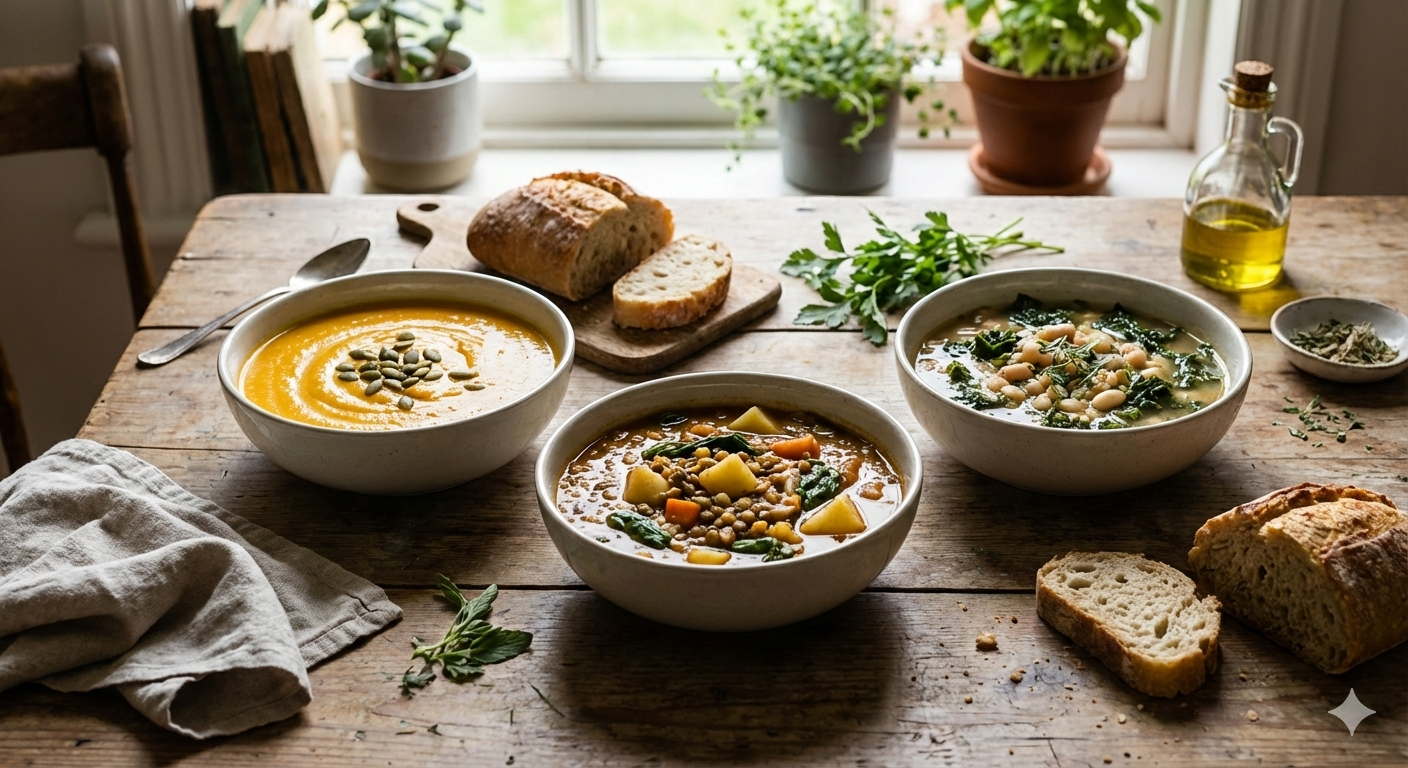
Vegan and gluten-free Italian soups accommodate diverse dietary needs while maintaining authentic flavors and comforting character that define traditional preparations. These plant-based, grain-free versions prove that dietary restrictions don't require sacrificing the soul-satisfying warmth and rich taste that make Italian zuppe beloved worldwide.
Through my decades working with dietary adaptations, I've learned that vegan and gluten-free Italian soups actually enhance rather than diminish traditional recipes. The focus on vegetables, beans, and quality broths returns to cucina povera roots where humble ingredients created nourishing meals without expensive meats or refined grains.
What Makes Italian Zuppa Naturally Adaptable?
Many traditional Italian soups are already naturally vegan or easily modified, as they're typically made with vegetables, beans, and broth to minimize waste. Easy vegan Zuppa Toscana is lusciously creamy, naturally dairy-free and gluten-free, loaded with Lacinato kale and comforting potatoes, demonstrating how Italian soups embrace plant-based ingredients effortlessly.
Based on extensive culinary training throughout Italy, I've observed that Italian cooking philosophy celebrating seasonal vegetables and simple preparations aligns perfectly with vegan principles. Minestrone dates back to the 2nd century BC when Rome conquered Italy and Italian peasants would gather ingredients from leftover meals to make soup, proving plant-based Italian soups have sustained families for millennia.
The Cucina Povera Foundation
Italy's cucina povera tradition celebrates simplicity, frugality, and resourcefulness where nothing is wasted and vegetables take center stage. This philosophy, developed through centuries of agricultural living, creates soups that nourish economically while delivering genuine satisfaction.
Throughout my research into Italian food traditions, I've discovered that the most authentic regional zuppe featured minimal meat, relying instead on beans, grains, and seasonal vegetables. Modern vegan adaptations honor rather than betray these traditional preparations.
How Can You Make Vegan Zuppa Toscana at Home?
Vegan Zuppa Toscana is one of the best mushroom soup recipes, probably the best dried mushroom soup, featuring plant-based Italian sausage, potatoes, and kale in creamy dairy-free broth. The preparation requires sautéing vegan sausage until golden, then building aromatic base with onions and garlic before adding vegetables and coconut milk.
The key involves using quality plant-based sausage that maintains texture during cooking. In my experience perfecting this recipe, Field Roast or Beyond Sausage work beautifully, providing savory depth and fennel notes defining traditional versions.
Creating Creamy Texture Without Dairy
Achieving rich, creamy consistency without dairy requires strategic ingredient choices. Blend soaked cashews with water and optional tapioca until smooth and creamy for luxurious texture rivaling heavy cream, or use full-fat coconut milk for simpler alternative.
Based on years teaching vegan cooking, I've learned that blending portion of cooked potatoes creates natural creaminess. This technique, which Italian grandmothers employed long before veganism became popular, produces authentic texture without specialized ingredients.
Gluten-Free Considerations
Making vegetarian Zuppa Toscana recipe gluten-free is easy watch two ingredients: plant-based sausage and non-dairy milk. Beyond Sausage and Impossible Sausage contain no gluten, while Field Roast uses wheat-based protein requiring substitution for gluten-free versions.
Throughout my culinary career, I've witnessed how reading labels carefully prevents inadvertent gluten exposure. Many plant-based products contain hidden wheat, making vigilance essential for truly gluten-free results.
What About Vegan Italian Wedding Soup?
Vegan Italian Wedding Soup is meat-free and gluten-free rendition featuring sweet onion, celery, and carrots sautéed until tender, combined with garlic, Italian spices, vegetable broth, and chopped kale. Bean-based meatballs replace traditional meat versions, providing protein and authentic texture without animal products.
The soup traditionally includes tiny pasta like Acini de Pepe or stelline, though gluten-free versions work equally well. In my experience, gluten-free stelline pasta works perfectly, maintaining authentic character while accommodating dietary restrictions.
Making Bean-Based Meatballs
Cannellini bean meatballs provide Italian authenticity while delivering plant-based protein and fiber. The beans get mashed with breadcrumbs, herbs, and seasonings before baking until firm, creating texture remarkably similar to traditional versions.
Based on extensive experimentation, I've learned that using certified gluten-free oat flour instead of breadcrumbs maintains proper binding while eliminating gluten. The meatballs should be added just before serving to prevent sogginess.
How Do You Prepare Gluten-Free Minestrone?
Vegan gluten-free minestrone requires just 1 pot and about 30 minutes, featuring late summer vegetables, vegetable broth, fire-roasted tomatoes, beans, and gluten-free pasta. The simplicity proves that dietary adaptations needn't complicate cooking or extend preparation times.
The flexibility defines this preparation substitute vegetables according to seasonal availability and personal preference. Throughout years making minestrone, I've learned that variety matters more than specific ingredients, creating complexity through diversity.
Choosing Gluten-Free Pasta
Select small pasta shapes that cook quickly and maintain structural integrity in soup. Gluten-free shells, elbows, or broken spaghetti work beautifully, though grain-free options allow truly grain-free versions.
In my experience, cooking pasta separately and adding just before serving prevents mushiness during storage. This technique, which I emphasize in every cooking class, maintains perfect texture for leftovers.
Where Can Londoners Find Vegan and Gluten-Free Zuppa?
Finding authentic vegan and gluten-free Italian soups in London requires seeking establishments emphasizing traditional cooking methods and dietary accommodation. An italian restaurant in covent garden like la ballerina covent garden brings authentic regional soup traditions to central London, where experienced chefs understand adapting classic recipes while maintaining essential character.
Look for restaurants preparing soups daily as specials rather than keeping large batches for extended periods. Based on decades evaluating restaurants professionally, I've learned that establishments discussing ingredient sourcing and dietary modifications typically maintain highest standards.
What to Look For
Quality restaurants willingly discuss ingredients and preparation methods, accommodating dietary restrictions without compromising flavor. They understand that vegan and gluten-free versions require thoughtful adaptation rather than simple ingredient omission.
Throughout my career consulting with restaurants, I've noticed that establishments training staff about dietary requirements signal genuine commitment. These indicators separate authentic from merely adequate accommodation.
Why Do These Adaptations Work So Well?
Italian soups succeed as vegan and gluten-free preparations because traditional recipes already emphasized vegetables, beans, and broths as primary ingredients. The adaptations honor rather than betray culinary heritage, returning to roots where expensive meats played minimal roles.
In my experience, properly executed vegan and gluten-free zuppe often surpass their traditional counterparts in flavor and satisfaction. The focus on quality vegetables and thoughtful seasoning creates depth that meat-heavy versions sometimes lack.
Tags : Zuppa