Hidden Layers That Keep Infrastructure Working Long After Construction
By Hitendra Panchal 03-02-2026 217
Hidden Layers That Keep Infrastructure Working Long After Construction
Walk past a finished building or a newly paved road and everything looks solid, complete, permanent. What’s less visible is the set of decisions made below the surface that determine whether that structure still performs ten or twenty years later.
Water movement, soil pressure, and ground moisture don’t stop once construction ends. They continue every day, responding to rain cycles, temperature changes, and gradual soil settlement. When those forces aren’t anticipated, problems surface slowly-cracks in basements, damp interiors, premature surface failures, or drainage issues that seem to appear “out of nowhere.”
The difference between structures that age well and those that don’t often comes down to how effectively subsurface challenges were addressed during planning.
Why Subsurface Conditions Matter More Than Surface Finishes
Architectural finishes get most of the attention, but infrastructure durability is shaped underground. Moisture migration, hydrostatic pressure, and soil movement exert constant stress on foundations and retaining elements.
Concrete itself is strong in compression but vulnerable over time when water is allowed to collect against it. Moisture can transport salts, promote mold growth in interior spaces, and weaken reinforcement if left unmanaged. In colder regions, freeze-thaw cycles amplify this stress, expanding trapped water and accelerating material fatigue.
Ignoring subsurface dynamics rarely causes immediate failure. Instead, it creates slow-burn issues that surface years later, often after warranties have expired and repair costs rise sharply.
Traditional Drainage Approaches and Their Limits
For decades, builders relied on gravel layers, perforated pipes, and natural soil permeability to manage water around structures. While these systems still play a role, they come with practical limitations.
Gravel layers can clog with fines over time. Clay-heavy soils restrict drainage regardless of pipe placement. Maintenance access is limited once a structure is complete, leaving little margin for error if performance declines.
As projects have grown more complex—taller structures, deeper basements, tighter footprints-these older methods alone no longer provide enough reliability.
How Modern Materials Changed Subsurface Design Thinking
Advances in material engineering have reshaped how engineers approach drainage, separation, and protection below grade. Instead of relying solely on bulk materials, designers now use engineered layers that perform specific functions consistently across large areas.
This shift allows planners to:
- Predict water flow paths with greater accuracy
- Reduce dependence on large excavation volumes
- Improve long-term performance without increasing maintenance demands
Rather than replacing traditional systems entirely, modern materials work alongside them, filling performance gaps where natural soil behavior falls short.
Managing Water Pressure Without Fighting It
One of the most common design mistakes is trying to block water completely. Water always finds a way. Effective systems focus on controlled movement rather than absolute resistance.
By allowing moisture to drain vertically or laterally away from sensitive surfaces, pressure buildup is reduced. This approach protects membranes, limits seepage, and prevents the slow degradation that comes from constant saturation.
In foundation assemblies, this controlled drainage layer often sits between soil and structural elements, creating a path for water to escape instead of forcing it to push inward.
The Role of Engineered Layers in Drainage and Protection
Engineered subsurface layers serve multiple functions at once. They can:
- Separate soil from structural elements
- Create air or water channels
- Protect waterproofing membranes from damage
- Distribute pressure more evenly
Because these layers are manufactured with consistent geometry, performance is predictable across different sites. This consistency is especially valuable in large-scale developments where variable soil conditions would otherwise introduce risk.
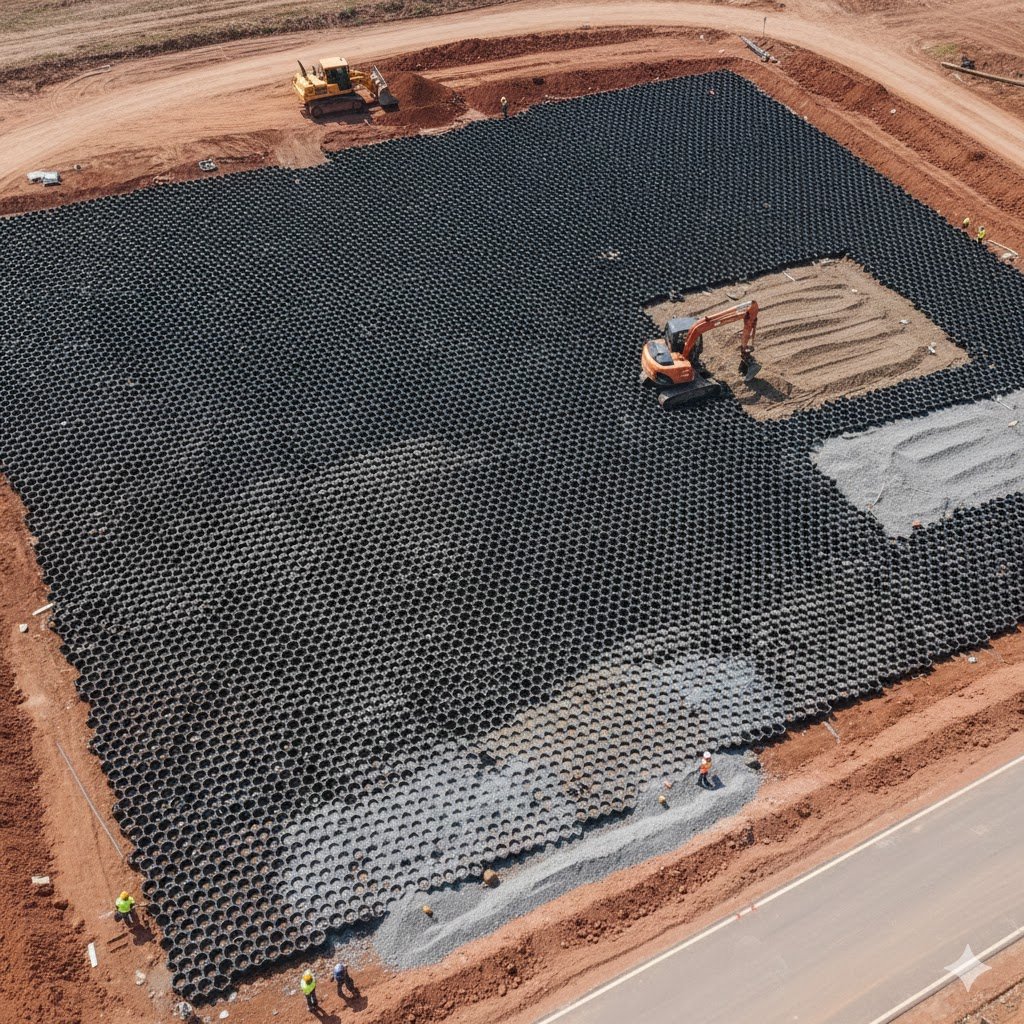
Professionals working on infrastructure, basements, tunnels, or landscaped podium decks increasingly rely on geosynthetics products to deliver this kind of controlled performance without excessive excavation or material handling.
The value isn’t just in water management, but in long-term reliability. Once installed, these systems quietly perform for decades with minimal intervention.
Moisture Control in Confined Urban Construction
Urban construction introduces unique challenges. Limited space restricts slope gradients, drainage paths, and access for repairs. Water pressure builds quickly when structures sit close together, and even minor failures can affect neighboring properties.
In these environments, subsurface systems must work precisely as designed from day one. There’s little room for redundancy or correction after construction.
Engineered drainage layers help solve this by offering thin profiles with high flow capacity. They manage water without requiring deep gravel beds or oversized drainage trenches, which are often impractical in dense sites.
Protecting Waterproofing Systems From Mechanical Stress
Waterproofing membranes are only as effective as the protection they receive. During backfilling, sharp aggregates, equipment movement, and soil settlement can all compromise membrane integrity.
Once damaged, membranes are nearly impossible to repair without excavation.
A structured protective layer placed over waterproofing absorbs mechanical stress and shields sensitive surfaces from punctures and abrasion. This layer also ensures that water reaching the membrane can drain away rather than remain trapped.
In many foundation assemblies, a dimple board is used for this dual purpose—creating a drainage cavity while protecting the waterproofing beneath from direct soil contact.
Long-Term Cost Control Through Preventive Design
Subsurface failures are expensive not because of material costs, but because of access. Excavation, interior demolition, and downtime often far exceed the original construction budget.
Preventive design focuses on eliminating the conditions that cause these failures rather than reacting to symptoms later. Investing in reliable drainage and protection systems upfront reduces the likelihood of moisture-related damage that’s difficult to address post-construction.
From an asset management perspective, this approach improves lifecycle costs and preserves property value over time.
Sustainability Benefits Beyond Water Management
Modern subsurface materials also contribute to sustainability goals. Reduced excavation lowers fuel consumption and site disruption. Improved drainage performance extends the service life of structures, reducing the need for resource-intensive repairs.
By managing water efficiently, these systems also help prevent soil erosion and unintended groundwater redirection, which can affect surrounding ecosystems.
Sustainability in construction isn’t only about visible materials. It includes the unseen systems that reduce waste and preserve structural integrity over decades.
Coordination Between Design and Installation
Even the best materials fail if installation details are overlooked. Subsurface systems require coordination between designers, contractors, and site engineers.
Key considerations include:
- Proper overlap and continuity
- Secure attachment without compromising membranes
- Correct termination points for water discharge
- Integration with surface drainage systems
When these details are addressed early, installation becomes straightforward and performance predictable. When they’re treated as afterthoughts, issues often emerge during the first heavy rainfall.
Why Subsurface Systems Deserve More Attention
The most successful projects rarely attribute their longevity to what lies beneath them. That’s precisely the point. When subsurface systems work properly, they stay unnoticed.
As construction standards evolve and expectations for durability rise, these hidden layers become increasingly important. They represent quiet engineering decisions that protect visible investments for the long term.
Ignoring them doesn’t always cause immediate failure-but it almost guarantees future problems that are costly, disruptive, and avoidable.
Thoughtful subsurface planning isn’t about adding complexity. It’s about respecting how water and soil behave over time and designing systems that work with those forces instead of against them.