How Large Planter Manufacturers in India Deliver Durable and Stylish Big Planters for Commercial Spaces
By Frp Planters 19-05-2026 110
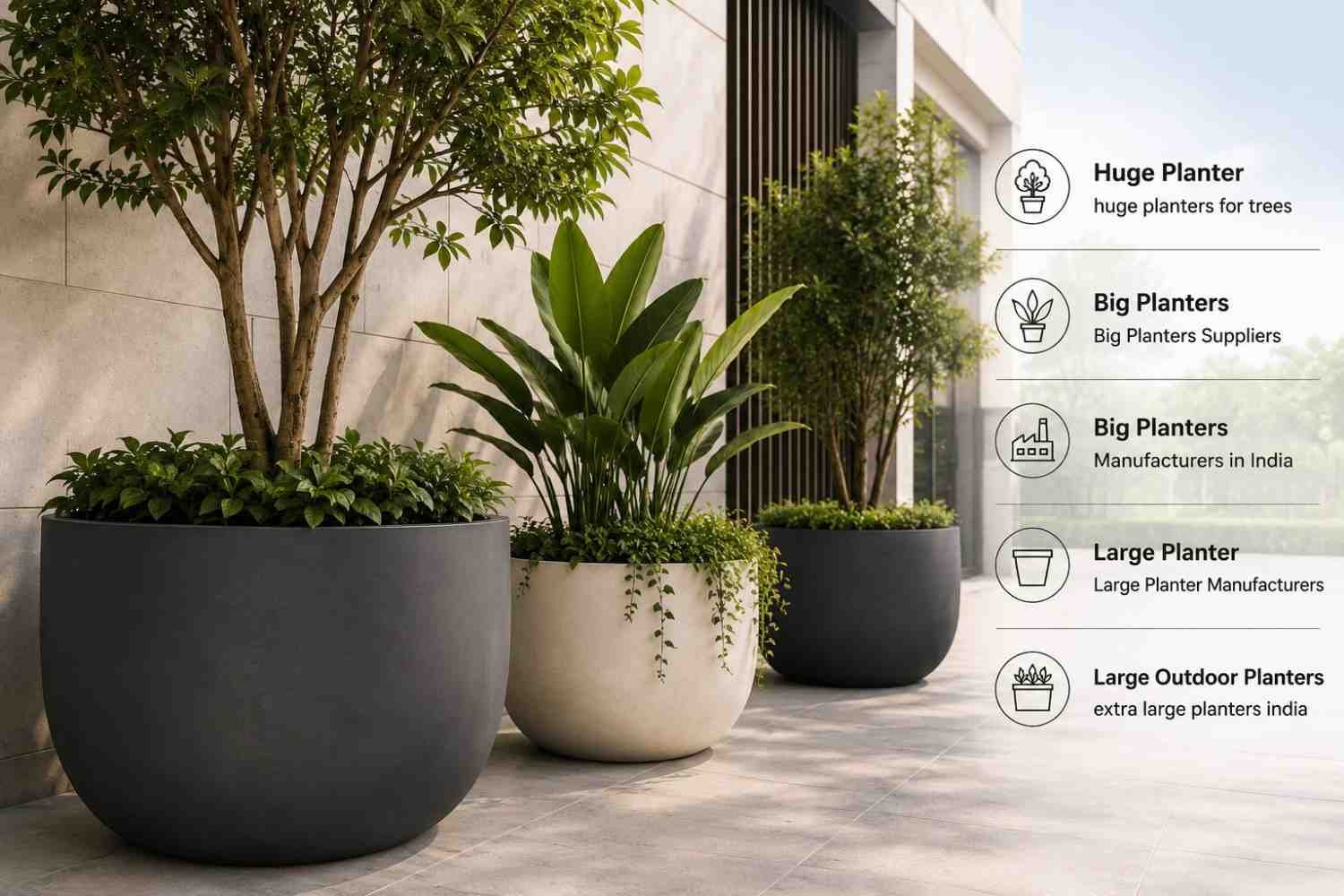
A hotel chain in Pune replaced 186 concrete pots within two monsoon cycles because the bases cracked during forklift movement. The replacement cost wasn’t the real problem. Freight delays pushed their site handover back by 11 days. That’s why procurement teams sourcing a Huge Planter, Big Planters, or Large Planter solution for commercial landscaping projects are moving toward experienced Indian FRP manufacturers instead of low-cost traders with inconsistent production control.
And yet, many buyers still compare only unit price. That’s usually where the trouble starts.
Large outdoor landscaping products deal with UV exposure, standing water, crane handling, temperature variation, and rough on-site movement. A planter that looks fine in a catalog can warp after one summer if the resin ratio is off or the wall thickness changes between batches. Buyers discover that after containers arrive — not before.
For commercial projects, durability is not a design feature. It’s a logistics decision.
The Spec Detail Most Buyers Ignore in Huge Planter Procurement
Not every manufacturer producing decorative containers can handle large-format FRP fabrication consistently. The difference becomes obvious once planter sizes cross 36 inches in height or are designed for trees with deep root structures.
Material Composition and Resin Quality
Most premium FRP planters use a fiberglass-reinforced polymer blend with UV-stable gel coating. Reputable Large Planter Manufacturers typically maintain wall thickness between 5 mm and 9 mm depending on planter dimensions and soil load requirements.
Here’s the overlooked detail: many buyers never ask whether calcium powder fillers are being excessively used to reduce production cost.
That shortcut weakens structural integrity.
A planter may still look smooth externally while becoming brittle internally within 18–24 months of outdoor exposure.
Drainage Design for Huge Planters for Trees
Large commercial installations often fail because drainage planning is treated as an afterthought. Proper drainage systems should include:
- Elevated internal base support
- Multi-point drainage outlets
- Root aeration channels
- Reinforced bottom ribs for weight distribution
Which means a planter designed for decorative shrubs cannot automatically support mature trees.
Surface Finish Consistency
Large outdoor planters are frequently specified in matte stone textures, concrete-look coatings, or automotive-grade glossy finishes. But color consistency across batches is harder than buyers expect, especially for dark charcoal and sandstone shades exposed to high UV regions like Rajasthan or Gujarat.
We’ve seen projects where one shipment matched perfectly while the second container looked two shades lighter under sunlight.
A supplier who dismisses that concern as “minor variation” probably lacks proper batch control documentation.
Weight and Freight Efficiency
Concrete planters weighing 140–170 kg create handling issues at malls, airports, and hospitality projects. FRP alternatives often reduce weight by nearly 65% while maintaining structural stability.
That changes freight economics immediately.
5 Evaluation Criteria Procurement Teams Should Use Before Finalizing Big Planters Suppliers
1. Ask for Actual Wall Thickness Specifications
Good answer:
“6 mm sidewall with reinforced bottom support for tree-loading applications.”
Bad answer:
“Thickness depends on design.”
That response usually means there is no fixed production standard.
2. Verify Export Packaging Capability
Reliable Big Planters Suppliers use foam wrapping, corner protection, moisture barriers, and wooden palletization for export movement.
Bad answer:
“We pack carefully.”
Nobody serious ships oversized FRP products internationally using vague promises.
3. Check UV Resistance Documentation
Ask whether UV-stable gel coat testing has been done for outdoor applications above 42°C.
Bad answer:
“No complaints so far.”
No complaints is not technical data.
4. Confirm Production Lead Time Stability
Large landscaping projects fail when suppliers overload capacity during seasonal demand spikes between February and June.
Good answer:
“Average production cycle is 18–24 working days depending on mold availability.”
Bad answer:
“We’ll try our best.”
That phrase has delayed more commercial launches than most buyers realize.
5. Evaluate Mold Ownership and Design Flexibility
Many trading firms outsource molding to third-party workshops. Which means design changes become slow, expensive, and inconsistent.
Ask directly:
“Do you control your own mold development?”
If the answer gets evasive, you’re not speaking with an actual manufacturer.
Why Large Outdoor Planters Protect Project Margins Better Than Cheap Alternatives
Reduced Replacement Frequency
High-quality FRP Big Planters Manufacturers in India often engineer products for 7–10 years of outdoor use under standard commercial conditions. Cheap rotationally molded plastic alternatives can deform much earlier in extreme heat zones.
Replacement cycles destroy landscaping budgets quietly.
Lower Freight and Installation Costs
Large planters are expensive to move. Lightweight FRP construction reduces crane dependency, manpower requirements, and breakage during unloading.
A single damaged oversized planter can delay site finishing because replacement production rarely happens immediately.
Better Finish Retention in Commercial Spaces
Hotels, office parks, and retail chains care about appearance consistency across properties. Large outdoor planters with stable coatings maintain visual uniformity longer, especially in high-visibility entrances.
That matters more than many procurement teams admit publicly.
Easier Custom Branding
Custom RAL shades, embossed branding, and project-specific dimensions are easier with FRP molding systems than traditional stone fabrication.
Corrosion and Water Resistance
Unlike metal containers, FRP planters resist rusting in coastal installations. That’s one reason beachfront hospitality projects increasingly prefer Huge Planter solutions manufactured using fiberglass composites.
Faster Site Movement
Nobody talks about this enough.
Landscaping layouts change constantly during commercial construction. Lightweight large planters are simply easier to reposition without damaging tiles or requiring heavy equipment every time the architect changes placement.
Why India Has Become a Major Hub for Big Planters Manufacturers
India’s FRP manufacturing ecosystem expanded sharply after 2016 as export demand increased from hospitality, infrastructure, and urban landscaping sectors. Today, several Large Planter Manufacturers supply projects across the Middle East, Southeast Asia, and Europe from Indian production units.
The western manufacturing belt — particularly Gujarat, Maharashtra, and parts of Haryana — plays a major role because resin sourcing, mold fabrication, and freight access are concentrated there.
That geographic advantage matters.
Factories located closer to Nhava Sheva and Mundra ports generally manage export logistics faster than inland suppliers dependent on third-party consolidation hubs. Buyers sourcing extra large planters india products for overseas projects often overlook inland freight delays while comparing quotations.
And yes, price differences sometimes exist for a reason.
A supplier quoting 18% lower than market average may be reducing fiberglass density, skipping UV-resistant coatings, or outsourcing finishing work to smaller job units without batch consistency controls.
Cheap procurement becomes expensive after installation.
About Terre Pure
At Terre Pure, we manufacture FRP landscaping products for commercial buyers, wholesalers, architects, and project contractors across India and export markets. We’ve worked with hospitality projects, office developments, institutional campuses, and retail landscaping installations where oversized planters need to survive real site conditions — not just showroom display environments.
We learned a difficult lesson in 2021 after repeated feedback from two Gulf-region buyers about surface fading in darker matte finishes exposed to extreme UV conditions. We changed the coating system and stopped using that formulation entirely. That decision increased production cost slightly, but repeat orders improved afterward.
Most factories won’t admit when a material choice failed.
We will.
Our production process includes mold-controlled fabrication, reinforced base structures for huge planters for trees, and export-grade packaging designed for long-distance freight handling.
If you’re sourcing Big Planters, don’t send only reference images.
Send dimensions, expected plant load, installation location, quantity, finish preference, and delivery timeline. That reduces quotation errors immediately. At Terre Pure, our team usually responds within 24 business hours for standard inquiries.
MOQ typically starts from 10 units depending on planter size and customization requirements.
For custom projects, share:
- CAD drawings or reference dimensions
- Surface finish preference
- Quantity split by size
- Delivery destination
- Whether the project is indoor or outdoor
That information saves days of back-and-forth later.
Conclusion
The demand for Huge Planter and large-format FRP landscaping products keeps rising because commercial projects cannot afford repeated replacement costs, freight damage, and inconsistent finish quality anymore. Experienced Big Planters Manufacturers in India bring production scale, export handling capability, and customization flexibility that many smaller suppliers still struggle to maintain. Over the next few years, buyers will likely prioritize lifecycle cost and logistics reliability far more aggressively than upfront unit pricing alone.
Here is another blog you might be interested in
FAQs
Why are huge planters for trees increasingly made from FRP instead of concrete?
Weight reduction is the main reason. FRP planters can weigh 60–70% less while still supporting heavy root systems. That makes transportation, rooftop installation, and site movement far easier. Concrete still works for permanent installations, but it creates handling problems during phased commercial construction.
Do Large Planter Manufacturers offer custom sizes for commercial projects?
Most established manufacturers do. Customization usually includes dimensions, colors, textures, branding, and drainage design. The caveat is lead time. Custom molds add production time buyers often underestimate.
What is the typical lifespan of extra large planters India manufacturers produce?
Well-manufactured FRP planters commonly last between 7 and 10 years outdoors under commercial use conditions. Lifespan depends heavily on UV exposure, drainage maintenance, and handling practices during relocation.
Are huge planters for trees difficult to transport internationally?
Oversized units require careful palletization and freight planning. Some dimensions trigger higher shipping costs because of volumetric weight rules. Experienced exporters account for that during packaging design instead of improvising at dispatch stage.
Why do prices vary so much between Big Planters Manufacturers in India?
Material quality, fiberglass density, coating systems, and production control standards create major cost differences. Two planters can look identical in photos while performing very differently after one monsoon season outdoors.