If you’re looking into Bosnia cultural and heritage tours but want something deeper than the standard Sarajevo–Mostar loop, this is where things get interesting. Bosnia and Herzegovina rewards travelers who slow down, take side roads, and stay an extra night in places most people treat as quick stops.
I’ve traveled across the country more than once, sometimes by car, sometimes by bus, sometimes just following a local’s suggestion scribbled on a café napkin. The real Bosnia isn’t hard to find. It’s just slightly off the main route.
Here are the hidden gems that are actually worth your time.
1. Jajce – Waterfalls in the Middle of Town
Most travelers pass through Jajce on the way between Sarajevo and Banja Luka. They stop for 30 minutes, take a photo of the waterfall, and leave. That’s the mistake.
The Pliva Waterfall crashes right in the center of town. Not outside. Not in a park. Right there. It feels almost unreal.
But what most people miss are the Pliva Lakes just outside town. Rent a bike or simply walk around the wooden watermills at sunset. It’s quiet. Mist rises from the water. I once sat there for an hour without speaking, just watching fishermen drift by.
Stay overnight if you can. When the day-trippers leave, Jajce feels completely different.
2. Trebinje – The South Without the Crowds
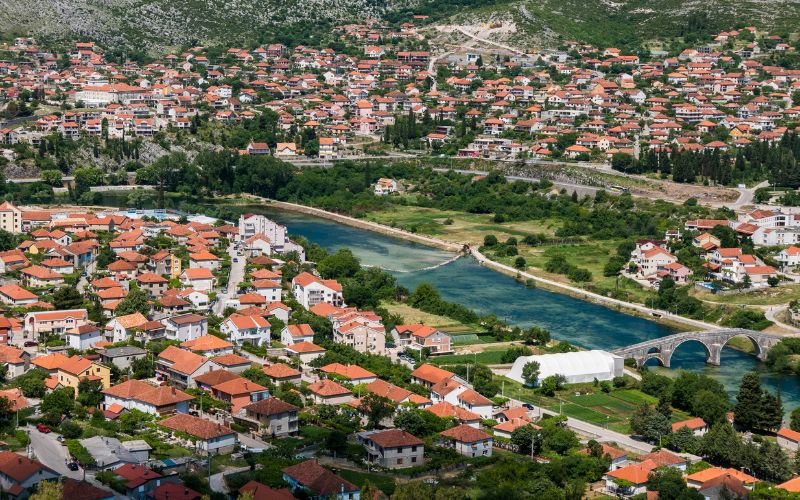
Down near the border with Croatia and Montenegro sits Trebinje. It has Mediterranean energy without Dubrovnik prices or cruise ship chaos.
The old town is small but relaxed. Stone streets. Outdoor cafés shaded by plane trees. Local wine that’s better than most people expect.
Climb up to Hercegovačka Gračanica monastery above town. Go late afternoon. The view stretches across vineyards and red rooftops. This is where trips often go wrong: people rush Trebinje as a lunch stop. It deserves at least a night.
It feels like a place Bosnians visit for themselves, not for tourists.
3. Blagaj – Beyond the Famous Tekke
Yes, the Blagaj Tekke monastery built into the cliff is beautiful. You’ve seen the photos.
But here’s the thing: most visitors arrive mid-day when bus groups line the riverbanks. Come early. Or even better, stay overnight in a local guesthouse.
Walk a little beyond the main spring area. The Buna River turns impossibly clear and quiet. I once followed a narrow path along the water and ended up at a small family-run restaurant with three tables and no English menu. It was one of the best trout meals I had in the country.
Blagaj isn’t just a photo stop. Slow it down.
4. Počitelj – Climb Higher Than Everyone Else
Počitelj looks like a postcard from the Ottoman era. Stone houses climbing a hillside. A mosque dome peeking out between them.
Most people wander halfway up and stop.
Don’t.
Climb all the way to the fortress at the top. The stairs are uneven and steep, but the view over the Neretva River valley is worth every step. I’ve seen people turn back because of the heat — go early in the morning or near sunset instead.
Also, bring water. There’s very little shade once you start climbing.
5. Konjic – More Than a Bridge
Konjic is often overshadowed by Mostar. That’s unfair.
Yes, it has a beautiful Ottoman bridge. But what makes Konjic special is the surrounding nature. The Neretva River here is emerald green and fast-moving. Rafting trips are popular, but even just sitting by the river with a coffee feels restorative.
If you’re interested in Cold War history, the ARK D-0 nuclear bunker built for Tito is nearby. It’s strange. Surreal. Deep underground. You won’t expect it in a town this small.
Spend a night here between Sarajevo and Mostar. It breaks up the journey perfectly.
6. Višegrad – Quiet Mornings on the Drina
Višegrad is home to the Mehmed Paša Sokolović Bridge, made famous by literature. But early morning is when the town truly shows itself.
Mist rising off the Drina River. Fishermen setting up quietly. Hardly anyone else around.
The nearby Andrićgrad complex can feel slightly artificial, but the river itself is timeless. Walk across the bridge slowly. Sit midway and just look.
It’s not a loud destination. It’s reflective. And that’s why it works.
7. Lukomir – The High Mountain Village
If you’re comfortable with narrow mountain roads, Lukomir is unforgettable.
It’s the highest permanent village in Bosnia and Herzegovina, perched on the edge of a canyon. Traditional stone houses with metal roofs. Sheep grazing freely. No rush. No noise.
The drive can be rough depending on weather conditions. This is where trips often go wrong — people attempt it in bad weather or without checking road updates.
Go on a clear day. Hike along the Rakitnica Canyon viewpoints. Talk to locals selling handmade wool socks. Drink strong Bosnian coffee while staring at dramatic cliffs.
It feels like stepping back in time, but without being staged.
A Few Practical Observations
Rent a car if possible. Public transport connects major cities but won’t get you easily to Lukomir or remote viewpoints.
Cash is useful. Smaller towns don’t always accept cards.
Don’t overpack your schedule. Bosnia rewards slower travel.
Talk to locals. Some of my best detours came from casual conversations.
Also, distances on the map can be misleading. Mountain roads mean slower driving times than you might expect.
Why These Places Matter
Bosnia isn’t about checking off landmarks. It’s about atmosphere.
It’s sitting by a river with no plan. It’s hearing the call to prayer echo through a small valley town. It’s watching older men play chess in shaded courtyards.
Most travelers hit Sarajevo and Mostar and leave. Those cities are worth visiting. But the smaller towns — Jajce, Trebinje, Konjic, Lukomir — show a different layer of the country. Quieter. More personal.
If you’re the kind of traveler who prefers texture over polish, this is where Bosnia shines.
Final Thoughts: Is It Worth Going Beyond the Usual Route?
Absolutely.
The hidden gems in Bosnia aren’t hard to find. They just require intention. Stay an extra night. Drive the longer road. Wake up early. Avoid peak bus hours.
You don’t need to see everything. Pick two or three of these places and build around them. Let the country unfold slowly.
Bosnia and Herzegovina doesn’t try too hard to impress you. That’s exactly why it does.
If you’re ready to move beyond the obvious and explore a country that still feels authentic and grounded, start with these hidden corners. You won’t regret it.
FAQs
1. Is Bosnia and Herzegovina safe for independent travel?
Yes. It’s generally very safe, including smaller towns. Use normal travel awareness, especially when driving rural roads.
2. Do I need a car to visit these hidden gems?
For places like Lukomir or rural areas near Jajce, yes. Major towns are accessible by bus, but flexibility improves the experience.
3. How many days do I need to explore beyond Sarajevo and Mostar?
Add at least 3–4 extra days to comfortably include 2–3 hidden destinations.
4. Is English widely spoken?
In cities and tourist areas, yes. In rural villages, less so — but people are welcoming and helpful.
5. When is the best time to visit Bosnia?
Late spring (May–June) and early autumn (September–October) offer good weather without peak summer crowds.
6. Is Bosnia expensive compared to neighboring countries?
Generally more affordable than Croatia, especially for accommodation and dining.
7. Are these destinations suitable for luxury travel?
Luxury options exist but are limited in smaller towns. The appeal here is charm and authenticity rather than high-end resorts.
Tags : Hidden Gems in Bosnia Bosnia