The structural transformation of enterprise communication has moved beyond simple automation toward a state of unified agentic intelligence. In the current digital landscape, the primary challenge for scaling organizations is the fragmentation of data across diverse social and web-based channels. Chattsy functions as an intelligent conversational engine designed to solve this problem through a unified omnichannel architecture. By leveraging high-parameter language models, the system serves as an autonomous sales and support engine that operates with high precision and zero latency across multiple interfaces.

The Engineering Foundations Of Agentic AI Systems
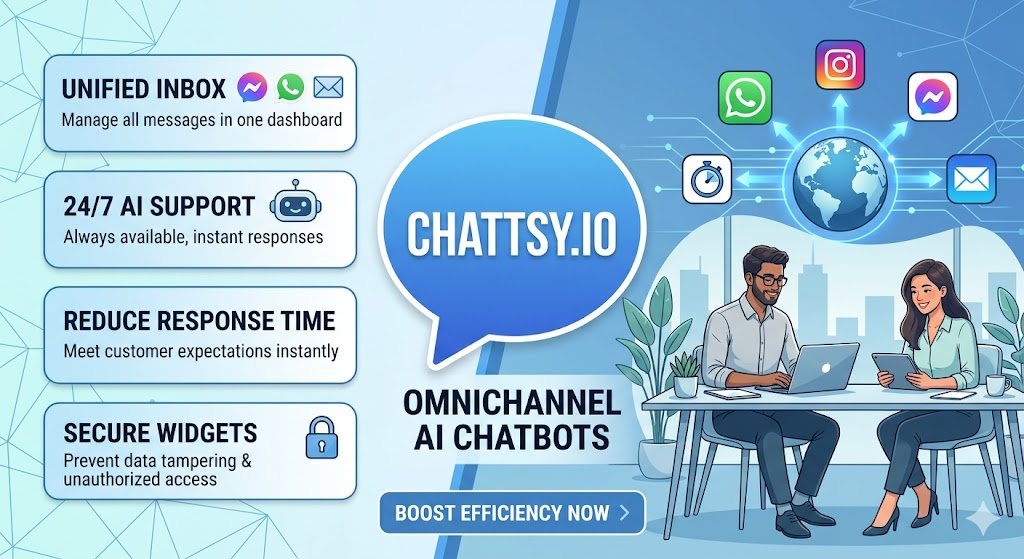
Chattsy is an omnichannel conversational AI platform built to function as an intelligent sales and support engine for modern business scaling. By utilizing advanced language models, the platform unifies communication from WhatsApp, Instagram, and web portals into a single intelligence hub. This allows for the execution of human-like assistance and goal-oriented workflows without increasing human resource allocation, ensuring continuous 24/7 engagement.
Architectural Centralization And The Unified Inbox
The cornerstone of the platform is the Unified Messaging Architecture. In traditional support models, data is typically siloed within specific applications, which leads to high operational latency and the loss of customer context. The engineering objective of this engine is to create a singular data pipeline where all interactions are normalized and processed through a central processing core.
This centralization enables Contextual Persistence. When a user moves from an inquiry on a social media platform to a direct website interaction, the AI maintains the history and intent of the previous exchange. This technical persistence prevents the redundancy of data collection and significantly accelerates the resolution cycle. From a structural standpoint, this is facilitated by robust API integrations that bridge disparate messaging protocols into a common data format for the intelligence layer to analyze.
Logic Systems In Task Oriented Automation
A defining characteristic of an agentic system is the transition from passive information retrieval to Active Task Execution. Traditional automation often relies on static decision trees that fail to account for complex user needs. Current agentic models, however, are capable of reasoning toward a specific goal. This means the engine can execute sophisticated tasks—such as inventory verification, order processing, and appointment scheduling—directly within the conversation flow.
This capability is driven by an intent recognition engine that analyzes the semantics of a user’s query. If a user presents a complex technical requirement, the AI evaluates the request against the organization’s proprietary data and provides a tailored solution. This autonomous reasoning reduces the operational burden on human sales teams while ensuring that the customer receives accurate, high-utility information instantaneously.
Proactive Engagement Via Behavioral Intent Triggers
In the field of conversion optimization, the timing of engagement is a critical performance metric. The platform utilizes Behavioral Intent Triggers to shift from a reactive support posture to a proactive sales posture. By monitoring interaction metrics—such as session depth, hover time on technical modules, and frequency of visits to pricing sections—the system can identify high-intent moments in real time.
When these thresholds are met, the engine initiates a conversation designed to assist the user in their decision-making process. This proactive approach is engineered to reduce friction within the conversion funnel. By providing necessary technical clarity or personalized assistance at the exact moment of decision-making, the system minimizes session abandonment and maximizes the probability of a successful outcome.
Data Grounded Training For Technical Precision
To eliminate the risk of hallucination in AI responses, the platform utilizes Data Grounded Training. This framework allows the AI to be trained specifically on proprietary business data, including engineering manuals, internal service protocols, and product specifications.
By using a Retrieval-Augmented Generation (RAG) architecture, the engine ensures that every response is derived from a verified data source. This is particularly vital in industries involving complex technical principles or regulatory compliance. Grounding the AI in the business’s own data ensures that the human-like assistance it provides is technically accurate, consistent, and free from generalized inaccuracies found in broader AI models.
Comparative Operational Metrics
The following table evaluates the performance of traditional human-led workflows against the deployment of an intelligent agentic engine.
| Operational Factor | Manual Multi-Channel Support | Chattsy Agentic Engine |
|---|---|---|
| Response Latency | Variable (Minutes to Hours) | Minimal (Under 2 Seconds) |
| Scalability | Linear (Requires New Hires) | Exponential (Unlimited Sessions) |
| Data Synchronization | Manual (High Error Risk) | Automated CRM and ERP Sync |
| Operational Hours | Limited Shift Patterns | Continuous 24/7 Availability |
| Global Capacity | Requires Localized Staff | Native Support in 50+ Languages |
Tags : chattsy chatbot