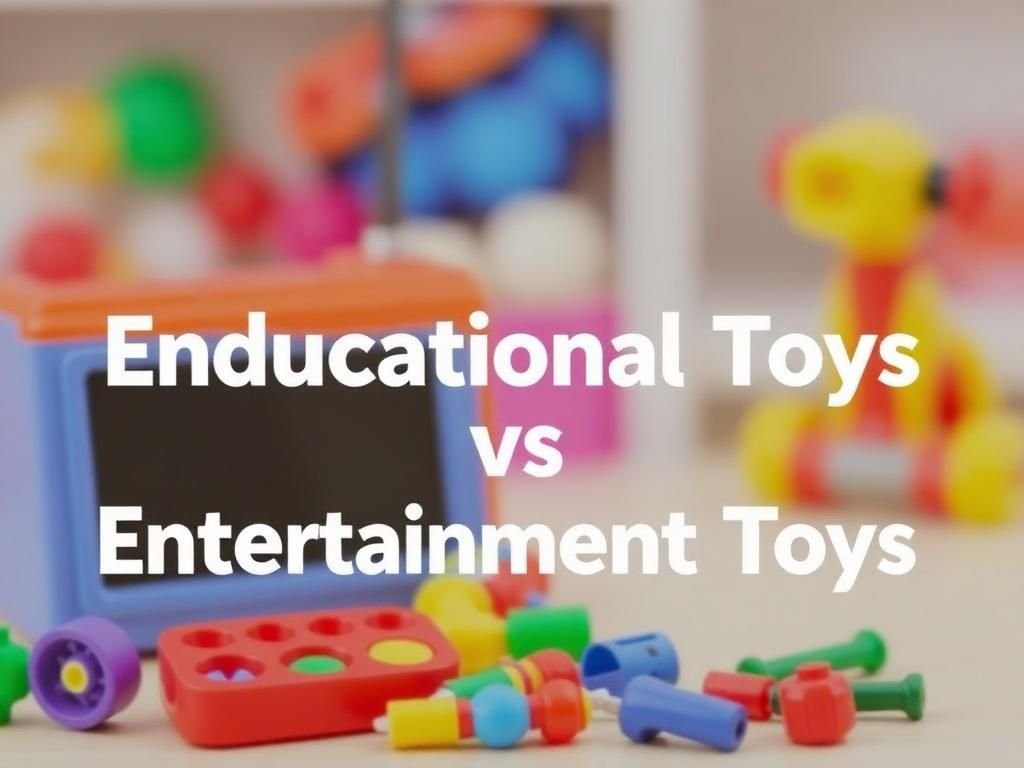
Parents today face a real choice when buying toys. Every toy promises fun. Some promise learning. Others promise excitement. Understanding the difference between educational toys and entertainment toys helps parents make smarter decisions for their children's growth , development and happiness.
Both types of toys play an important role. The key is knowing what each one offers and when it fits best into a child life.
What Are Educational Toys
Educational toys are designed to help children learn specific skills. These skills may include problem solving, language math creativity or motor coordination. These toys support mental development while keeping the child engaged.
Examples include building blocks puzzles, science kits, alphabet boards and coding toys. Many educational toys are designed with learning goals in mind and are often backed by child development research.
Educational toys focus on how children think rather than how long they stay busy.
What Are Entertainment Toys
Entertainment toys focus mainly on fun, excitement and imagination. These toys may not follow structured learning goals but they encourage play storytelling and emotional expression.
Examples include dolls, action figures, toy cars, playsets and electronic games. These toys often connect with movies cartoons or characters children already love.
Entertainment toys are powerful because they keep children interested and emotionally invested in play.
Learning Through Play Matters
Children learn best when they are engaged. Educational toys work because they blend learning with play. They encourage curiosity trial and error and independent thinking.
A child building a tower learns to balance patience and spatial awareness. A child solving a puzzle learns focus and logic. These lessons stay with them beyond playtime.
Educational toys also help prepare children for school by building early academic and social skills.
Emotional and Social Growth from Entertainment Toys
Entertainment toys help children express emotions and understand relationships. When children play with dolls or figures they create stories. These stories reflect real life feelings, experiences and challenges.
Role play helps children develop empathy, confidence and communication skills. These toys also help children relax after structured learning or school hours.
Fun based toys are often the reason children fall in love with play itself.
Which Toys Support Creativity More
Both types support creativity in different ways. Educational toys encourage creative thinking through problem solving and experimentation. Entertainment toys encourage imagination storytelling and fantasy.
A child using art kits or building sets explores ideas freely. A child playing with characters creates worlds and narratives. Creativity grows in both environments when play is not forced.
The best creativity comes when children are free to explore without pressure.
Age Matters When Choosing Toys
Age plays a major role in deciding which toy is better. Younger children benefit more from sensory and educational toys that support basic skills. Older children can gain more from a mix of learning based and entertainment focused toys.
Toddlers need toys that build coordination and recognition. School age children need toys that challenge thinking and social skills. Teens enjoy toys that reflect their interests and independence.
Matching the toy to the child stage is more important than the category.
Screen Based Toys and Modern Challenges
Many entertainment toys today include screens, lights and sounds. While exciting these toys should be used in balance. Too much screen time can reduce attention span and limit hands on learning.
Educational toys without screens help children focus and interact physically with their environment. Balance is key in modern play.
Parents should guide children rather than restrict them completely.
Packaging Influence on Toy Choice
Packaging plays a big role in how toys are perceived. Bright colors, characters and designs attract children's attention instantly. For collectible toys and character based products action figure packaging is designed to tell a story before the toy is even opened.
Educational toy packaging often focuses on benefits, age range and skills developed. Clear messaging helps parents understand value quickly.
Good packaging supports trust and decision making.
Cost and Value Comparison
Educational toys may cost more but often offer long term value. They can be used in multiple ways and grow with the child. Entertainment toys may provide instant joy but sometimes lose appeal quickly.
Value is not about price alone. It is about how often the toy is used and what the child gains from it.
Smart purchases balance joy, learning and durability.
What Experts Recommend
Child development experts agree that no single toy type is perfect. A healthy mix of educational and entertainment toys creates the best environment.
Educational toys support brain development. Entertainment toys support emotional health. Together they help raise balanced confident children.
Parents should observe how their child plays and choose toys that match their interests and needs.
Final Thoughts
Educational toys and entertainment toys are not rivals. They are partners in childhood development. One teaches structure skills and focus. The other teaches imagination, emotion and joy.
The goal is not to choose one over the other. The goal is to create a play environment where children learn, grow and feel happy.
When toys support both the mind and the heart they truly serve their purpose.