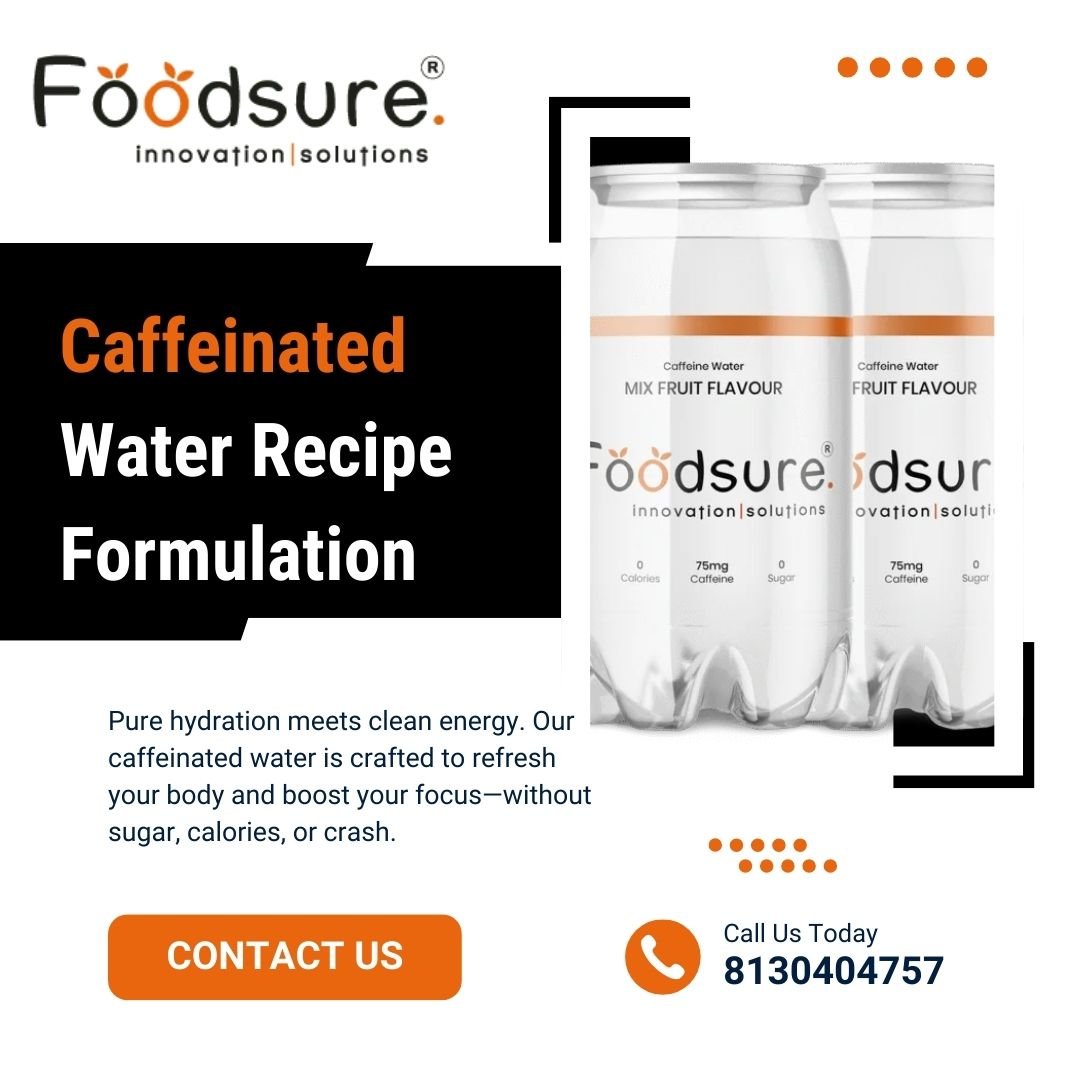
The global beverage market is evolving rapidly. Consumers are shifting from sugary sodas and high-calorie energy drinks to healthier, functional options that fit their lifestyle. One of the fastest-growing innovations in this space is caffeinated water—a clean, refreshing, and energizing drink that delivers caffeine without the sugar, calories, or artificial additives.
But how exactly is caffeinated water formulated? What goes into making a beverage that is both effective and appealing to today’s health-conscious audience? Let’s dive into the science and strategy behind caffeinated water recipe formulation.
Why Caffeinated Water?
Simplicity & Purity: Unlike traditional energy drinks, caffeinated water is light, clear, and often free from sugar, colors, and preservatives.
Hydration + Energy: It combines the hydration benefits of water with the mental alertness of caffeine.
Clean Label Trend: Today’s consumers check labels carefully—they want functional benefits without unnecessary ingredients.
Market Demand: With the functional water market growing globally, caffeinated water provides a perfect niche for brands targeting fitness enthusiasts, working professionals, and students.
Key Considerations in Caffeinated Water Formulation
Creating a caffeinated water product isn’t as simple as dissolving caffeine in water. It requires scientific formulation to ensure taste, stability, and consumer acceptance.
1. Choosing the Right Source of Caffeine
Different caffeine sources can be used depending on the brand identity and target market:
Synthetic Caffeine: Cost-effective and highly soluble; common in mainstream energy beverages.
Natural Caffeine Extracts (Green Coffee, Guarana, Green Tea): Aligns with the “clean label” trend and attracts health-conscious consumers.
Microencapsulated Caffeine: Provides controlled release and reduces bitterness.
2. Solubility & Stability
Caffeine needs to be dissolved evenly in water for a clear, consistent product. Key steps include:
Maintaining the correct pH balance.
Using solubilizers or natural acids to improve stability.
Ensuring no sediment or cloudiness forms over time.
3. Taste & Palatability
While caffeine itself is bitter, the challenge is to keep the water refreshing and clean-tasting. Solutions include:
Adding natural fruit essences (lemon, lime, berry, cucumber).
Using light sweeteners (stevia, monk fruit) for a zero-calorie twist.
Keeping flavors subtle so the drink feels closer to water than soda.
4. Functional Add-Ons
To differentiate, brands often enhance caffeinated water with additional benefits:
Electrolytes: For hydration support, especially for athletes.
Adaptogens (Ashwagandha, Ginseng): For stress relief and focus.
Vitamins B & C: To support energy metabolism and immunity.
This transforms caffeinated water from a simple stimulant into a multi-functional wellness drink.
5. Caffeine Dosage & Safety
Getting the dosage right is crucial. Too little caffeine, and the product won’t stand out. Too much, and it could raise safety concerns. Typically:
30–60 mg caffeine per serving – Comparable to a cup of tea, perfect for casual consumers.
70–120 mg caffeine per serving – For fitness and performance-focused audiences.
Labeling should clearly mention caffeine content per bottle to build consumer trust.
6. Packaging & Shelf Life
Since caffeinated water is clear and light, packaging should highlight freshness and functionality:
BPA-free PET bottles or cans with protective lining.
Transparent bottles with minimalistic branding appeal to the “healthy lifestyle” market.
Proper sealing ensures long shelf stability without preservatives.
Market Opportunities
Caffeinated water is still a niche category but rapidly gaining traction, especially among:
Students & Professionals: Seeking clean energy without jitters or sugar crashes.
Fitness Enthusiasts: Hydration plus performance enhancement.
Lifestyle Consumers: People moving away from soft drinks but still wanting functional beverages.
Brands that innovate with flavors, clean formulations, and unique positioning can capture this growing demand.
Example Positioning Ideas for Caffeinated Water
“Hydrate + Energize” – Highlighting dual benefits.
“Coffee Alternative” – Positioning as a cleaner morning boost.
“Zero Sugar. Zero Calories. Pure Energy.” – Perfect for weight-conscious buyers.
“Fitness Fuel” – Marketed toward gyms, athletes, and endurance sports.
Final Thoughts
Caffeinated water represents the future of functional hydration—a product that aligns perfectly with modern consumer demands for clean, effective, and convenient beverages. But successful caffeinated water recipe formulation requires the right balance of caffeine source, flavor design, stability, and smart positioning.
For startups, beverage brands, or fitness companies, partnering with experienced formulation experts can make the difference between a great idea and a market-ready product.
👉 At Foodsure, we specialize in functional beverage development, recipe formulation, and contract manufacturing. With 10+ years of expertise and 95+ successful brand launches, we help businesses transform innovative ideas like caffeinated water into profitable, consumer-loved products.