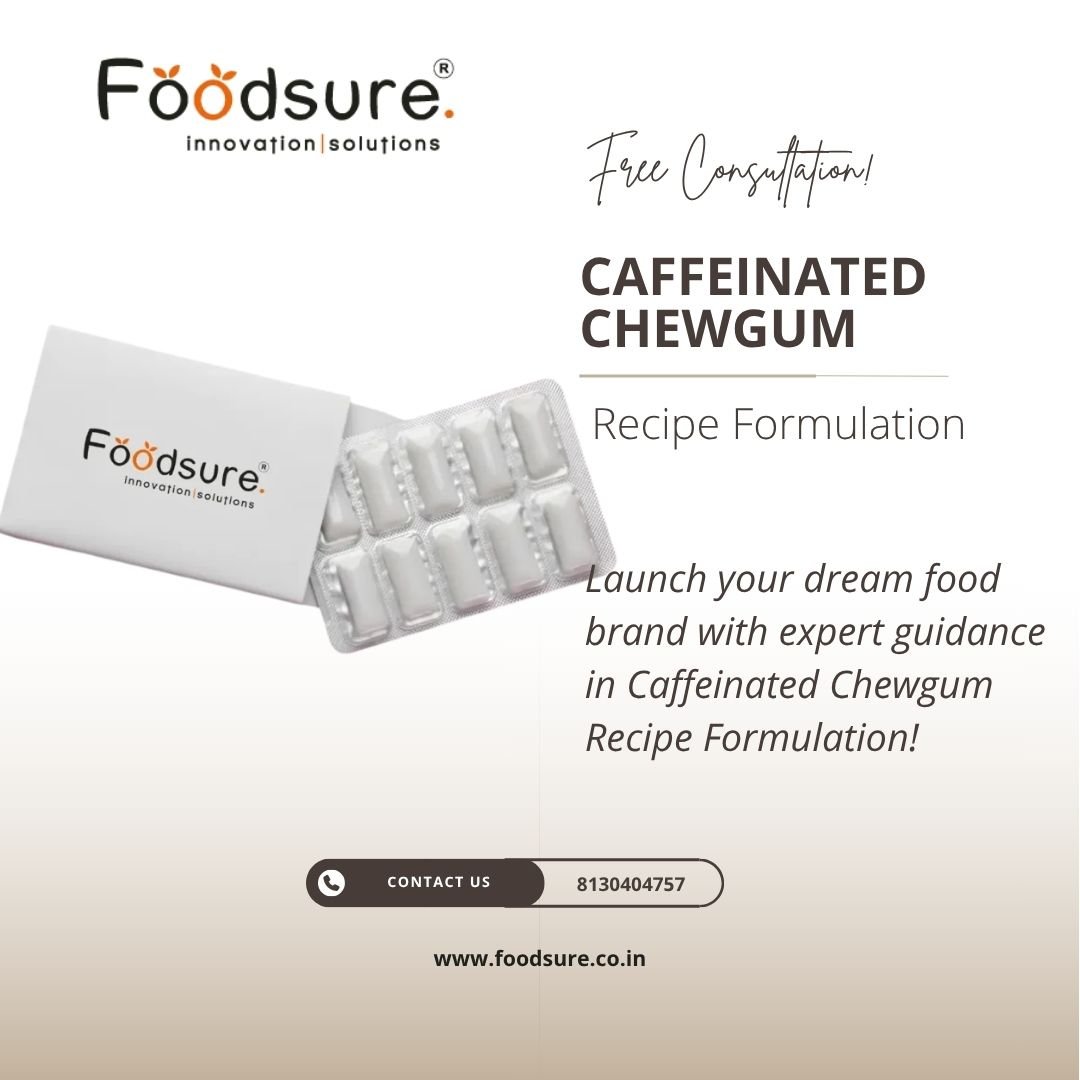
In today’s fast-moving world, consumers want quick and convenient energy solutions. While energy drinks and coffee have dominated this space for years, a new innovative product is making its way into the functional food and nutraceutical segment — Caffeinated Chewing Gum.
Unlike beverages, caffeinated chewgum delivers energy in a portable, sugar-free, and fast-absorbing format. But creating this innovative product requires precise formulation expertise, regulatory understanding, and technical know-how. In this blog, we’ll explore the complete process of caffeinated chewgum recipe formulation, market insights, and key benefits for brands entering this growing segment.
🚀 Why Caffeinated Chewing Gum is Trending
The global functional gum market has been steadily growing as consumers look for alternative ways to boost energy without depending solely on drinks. Some major reasons for its rise include:
Rapid Absorption: Caffeine absorbed through the oral mucosa works faster than traditional drinks.
On-the-Go Convenience: No need for water, bottles, or preparation. Just pop a gum anywhere.
Controlled Dosing: Each gum piece can offer a measured caffeine amount, usually between 40–100 mg.
Sugar-Free Appeal: Many caffeinated gums use sugar substitutes, making them suitable for health-conscious users.
Longer Shelf Life: Compared to liquid products, gum remains stable for longer durations.
For startups and established brands, this is an exciting opportunity to innovate in the functional snacking and nutraceutical categories.
🧪 Key Steps in Caffeinated Chewgum Recipe Formulation
Creating caffeinated chewing gum requires a scientific approach and precise formulation. Here are the essential steps:
1. Defining Product Objectives
Before starting formulation, brands must define:
Target caffeine dosage per gum
Sugar or sugar-free positioning
Desired flavor profile (e.g., mint, citrus, coffee)
Shelf-life expectations
Functional ingredients (vitamins, adaptogens, etc.)
2. Selecting the Gum Base
The gum base determines chew texture, stability, and release profile. A high-quality base ensures smooth caffeine release without bitterness. The right choice depends on regulatory approvals, flavor masking, and consumer expectations.
3. Caffeine Source & Integration
Caffeine can be added in its pure form or via natural extracts like green coffee bean or guarana. Uniform dispersion is crucial to ensure each gum piece delivers consistent energy. This step also involves microencapsulation or coating techniques to mask caffeine’s bitterness and control its release.
4. Flavor Masking & Enhancements
Caffeine’s natural bitterness can be challenging. Advanced flavoring techniques, sweeteners, and masking agents are used to deliver a pleasant chewing experience. Popular flavors include peppermint, spearmint, or fruity variants to create a refreshing feel.
5. Nutraceutical Add-Ons
Many brands enhance caffeinated gum with vitamins (B12, B6), nootropics, or electrolytes to create a differentiated product. This adds functional value and improves market positioning.
6. Regulatory Compliance
Depending on the target market (India, EU, US), caffeine dosage limits and labeling requirements must be met. FSSAI in India has clear guidelines for caffeine use in food products. Expert consultants help brands navigate this smoothly.
7. Pilot Batches & Stability Testing
Before commercial launch, multiple pilot batches are created to ensure consistency, flavor stability, and caffeine uniformity. Stability testing under different temperature and humidity conditions ensures long shelf life.
🏭 Manufacturing Considerations
Caffeinated gum requires specialized equipment for mixing, rolling, and cutting. Contract manufacturing partners with experience in nutraceutical confectionery can help brands scale faster. Factors to consider:
Homogeneous mixing technology
Hygienic and FSSAI-compliant facilities
Temperature-controlled processing
Accurate dosing systems for caffeine
Working with experienced food consultants and contract manufacturers ensures smooth transition from formulation to large-scale production.
📈 Market Opportunities for Brands
The caffeinated gum category is still underpenetrated in India, offering first-mover advantage for brands targeting:
Fitness & sports enthusiasts
Students and professionals needing quick energy
Travelers and drivers looking for portable alertness solutions
Gamers and e-sports audiences
With the right branding, formulation, and regulatory strategy, companies can tap into this growing demand and launch innovative functional products that stand out on shelves.
🤝 How Foodsure Can Help
At Foodsure, we specialize in end-to-end caffeinated chewgum formulation — from recipe development, flavor masking, and regulatory support to commercial manufacturing. With 10+ years of experience in new product development and functional foods, we help brands build market-ready products quickly and efficiently.
Whether you’re a startup entering the nutraceutical space or an existing brand diversifying your portfolio, our team can help you launch a scientifically formulated, compliant, and tasty caffeinated gum.
📝 Final Thoughts
Caffeinated chewing gum is more than just a trend — it’s a smart, convenient, and innovative way to deliver functional benefits. With proper formulation, flavor innovation, and regulatory clarity, brands can create products that appeal to modern, health-conscious consumers.
If you’re ready to develop your own caffeinated chewgum, now is the perfect time to innovate. 🚀