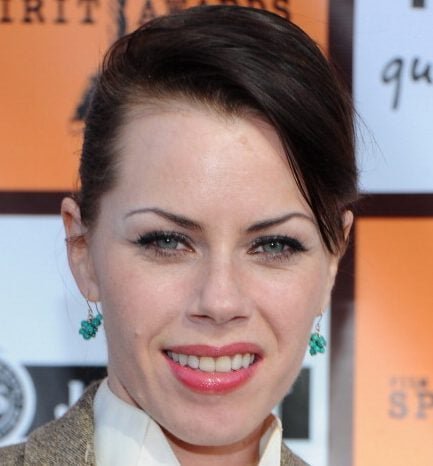
Her most notorious parts are not fundamentally important because of ensembles, trade, or sensational moments. They persevere since Balk occupies them completely. She brings a sense of inward life to each execution, proposing histories, fears, and wants that are never spelled out but continuously felt. This quality has made her a defining figure in faction cinema and an enduring influence on on-screen characters drawn to darker, more complex material.
Early Establishments: A Common Fit for Passionate Depth
Fairuza Balk’s acting career started at a curiously young age, and from her earliest appearances, it was clear she had a passionate interest in acting. Indeed, as a child entertainer, she stayed away from the over-the-top sweetness that regularly characterizes youthful parts. Instep, she inclined into truthfulness, establishing her character in veritable feeling click here.
This early affectability laid the foundation for the work that would follow. Balk did not act on her feelings; she allowed them to unfurl naturally. Her expressions, poses, and hushes frequently spoke louder than the exchange. This intuitive understanding of disposition and internal strife became one of her defining qualities and would later enable her to explore mentally demanding aspects with ease. Rather than chasing ubiquity, she took on fabric that challenged her. This choice molded her notoriety and ensured that when she did step into the spotlight, it was on her terms.
Dorothy Storm in “Return to Oz”: A Dull Reimagining
One of Balk’s most punctual and most critical parts came with “Return to Oz”, where she depicted Dorothy Hurricane in an adaptation of the classic story that unsettled gatherings of people anticipating something unusual. This was not the cheerful, sing-along world associated with Oz. In a step, it was ghostly, divided, and regularly frightening.
Balk’s Dorothy is strong but unmistakably shaken. She carries injury, disarray, and assurance in balance with her degree. Or maybe, rather than playing the character as a wide-eyed visionary, Balk depicts a youthful young lady, hooked in fear and misfortune, while clinging to trust. Her execution grounds the film’s dreamlike components, making the bizarre scenes and unsettling figures feel sincerely real.
What made this part famous was Balk’s capacity to adjust defenselessness and quality. Dorothy is not intrepid, but she is courageous. Balk communicates this through unobtrusive shifts in tone and expression, appearing like a child learning to survive in a world that no longer makes sense. The execution resonated with viewers who recognized its authenticity and emotional weight, and it set Balk apart as a performer unafraid to explore darker interpretations.
Vicki Vallencourt in “The Waterboy”: A Subversive Turn
To begin with, look, Vicki Vallencourt from “The Waterboy” might appear like an exception in Balk’s career. The film is broad, comedic, and relies on overstated humor. However, Balk changes Vicki into something distant, more curious than a standard sentimental lead.
Vicki is cleverly, unapologetically self-assured, and refreshingly free of shame. Balk plays her with certainty and sharp comedic timing, grasping the character’s peculiarities rather than smoothing them out. Her execution challenges generalizations, particularly in a genre that often reduces female characters to one-dimensional roles.
What makes Vicki notorious is Balk’s refusal to play her as a joke. Indeed, inside the film’s overstated tone, she remains grounded and genuine. Her chemistry with her co-stars feels authentic, and her delivery elevates the material. Balk demonstrates that comedy does not require relinquishing realness, and her work in “The Waterboy” shows her flexibility while maintaining her unmistakable edge.
Nancy Downs in “The Craft”: A Characterizing Performance
No dialogue from Fairuza Balk’s notorious parts can keep a distance from Nancy Downs from “The Mummy”. This execution has ended up synonymous with Balk herself and remains one of the most recognizable depictions in 1990s cinema.
Nancy is unstable, injured, and hazardously effective. Balk approaches the part without judgment, permitting the character’s outrage and edginess to unfurl with crude escalation. From her first appearance, Nancy commands consideration. Balk’s physicality, penetrating look, and enthusiastic instability make a character who is both captivating and profoundly unsettling.
What sets this execution apart is its genuine enthusiasm. Nancy is not essentially a lowlife; she is an item of disregard, manhandling, and a starvation for control in a world that has consistently failed her. Balk passes on this complexity with intrepid commitment. Her descent into chaos feels either unavoidable or overdone, making the character both appalling and terrifying.
Nancy Downs became a symbol because Balk refused to soften her edges. She grasped the character’s haziness completely, giving groups of onlookers a figure who epitomized seethe, torment, and control to a degree. Decades afterward, the execution proceeds to reverberate, rousing adoration, examination, and reinterpretation.
The Control of Nearness: Past Dialogue
One of Fairuza Balk’s most noteworthy qualities lies in her understanding of hush. Many of her most vital moments come not from what she says but from how she listens, observes, and responds. This quality is particularly apparent in her darker parts, where inward turmoil frequently stews underneath the surface.
Balk employs stillness as a device. A slight tilt of the head, a waiting gaze, or a controlled breath can communicate volumes. This approach gives her exhibitions a sense of authenticity and profundity, inviting viewers to engage effectively rather than passively devouring the story.
This commitment to nearness allows her characters to wait in memory. They feel total, as if their lives extend beyond the outline. Balk’s exhibitions energize gatherings of people to envision the hidden moments that shaped these characters, revealing layers of meaning in each scene.
Independent Movies and Risk-Taking Choices
As her career advanced, Balk increasingly turned to free cinema, where she found greater opportunity to explore offbeat material. These parts may not have reached standard groups of onlookers, but they cemented her notoriety as an on-screen character driven by interest rather than comfort.
In free ventures, Balk frequently depicts women exploring separation, identity, and emotional change. These characters are occasionally cleaned or unsurprisingly. In step, they reflect the inconsistencies and complexities of genuine individuals. Balk brings the same elevated she brings to higher-profile movies to these parts, treating each venture as an opportunity for fair expression.
This commitment to create over perceivability has made her a regarded figure among producers and groups of onlookers who esteem substance. Balk’s autonomous work fortifies the idea that famous parts are not defined by box-office numbers but by their enthusiastic impact.
Television Appearances: Growing the Canvas
Though known primarily for her film work, Balk’s television appearances reveal another dimension of her talent. On the little screen, she adjusts her fashion to longer accounts, permitting characters to advance over time.
In these parts, Balk frequently plays ladies shaped by difficult circumstances, bearing emotional scars that shape their choices. Her exhibitions remain nuanced, resisting simple clarifications. Indeed, within outfit casts, she stands out for her ability to convey complexity without dominating others.
Television gave Balk space to investigate character development in greater depth. She utilized it to her advantage, further developing her acting skills. These exhibitions may be calmer than her most popular film parts, but they are no less impactful.
A Voice for Outsiders
A recurring topic in Fairuza Balk’s notorious roles is her association with untouchables. Numerous of her characters exist on the edges, misconstrued or belittled by those around them. Balk brings nobility to these parts, guaranteeing they are never reduced to stereotypes.
Her depictions regularly highlight the allure of prohibition and the craving for a place. Whether playing a vexed youngster, a misjudged sentimental intrigued, or a lady hooking with internal evil spirits, Balk emphasizes the humankind underneath the surface. This sympathy is what allows groups of onlookers to engage with her most troublesome characters.
By choosing parts that challenge standards, Balk has become an image for those who feel inconspicuous or unheard. Her work proposes that quality can develop from defenselessness and that complexity is not something to be feared.
Lasting Impact and Social Impact
The impact of Fairuza Balk’s notorious roles extends far beyond their original release dates. Characters like Nancy Downs have taken on lives of their own, impacting mold, music, and narrating over eras. Balk’s exhibitions proceed to rouse artisans drawn to darker aesthetics and candidly fair narratives.
Her work has also contributed to a broader acknowledgment of female characters who resist conventional desires. Balk’s parts regularly dismiss the lack of involvement, depicting women who are irate, self-assured, imperfect, and effective. This representation has resonated with groups of onlookers seeking authenticity rather than idealization.
The social control remaining over her exhibitions speaks to their enthusiastic truth. Balk did not chase patterns; she made minutes that felt genuine, and reality seldom goes out of style.
The Craftsmanship of Refusal
Perhaps one of the most characterizing angles of Fairuza Balk’s career is her eagerness to say no. She has reliably dodged being boxed into a single sort, indeed, when certain parts brought broad acknowledgment. This refusal to be limited has enabled her to maintain imaginative keenness and personal authenticity.
By stepping away from the spotlight, Balk protected her sense of self and dodged the burnout that often comes with steady visibility returning to the screen; it feels intentional, or maybe more than required. This specific approach emphasizes her appearances and strengthens the impression that her work is driven by enthusiasm, not pressure.
Conclusion: A Bequest Built on Fearlessness
Fairuza Balk’s famous roles are united by a shared quality: bravery. She has never been averse to playing it safe or mixing into the foundation. In step, she has consistently chosen characters who demand passionate authenticity and personal risk.
Through exhibitions that range from the frequent to the amusing, Balk has carved out a space that is entirely her own. Her characters wait, as if lived-in, molded by encounters that reverberate beyond the screen. She reminds gatherings of people that acting is not about flawlessness, but about truth.
In a career characterized by striking choices and uncompromising performances, Fairuza Balk stands as a testament to the power of singularity. Her famous parts are not fair turning points in film history; they are reflections of a craftsman who trusted her instinct and followed them wherever they led.
Tags : Biography