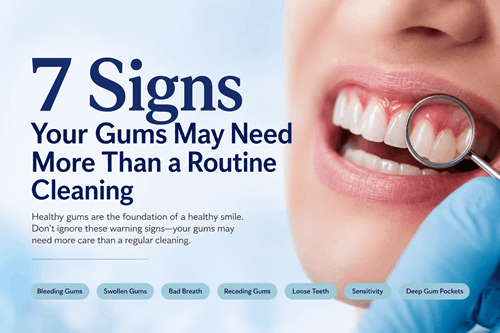
Do you know that most gum problems don’t start with pain, swelling, or anything dramatic at all? They start quietly, in places you can’t see, and by the time you notice something’s off, your gums have already been struggling for a while. That’s why gum health deserves more attention than it usually gets. A routine dental cleaning is great for maintenance, but sometimes your gums need deeper help.
If you’ve been wondering whether your mouth is really as healthy as it feels, this guide will walk you through seven clear signs that your gums may need more than a routine cleaning and what you can do about it before things become complicated.
Why Gum Health Needs More Than Brushing Alone
Most people brush and floss, thinking they’re fully covered. And honestly, that effort matters a lot. Still, bacteria don’t play fair. They creep under the gumline, settle in tight spaces, and slowly build up where your toothbrush can’t reach. Over time, that buildup hardens into tartar and triggers infection. Routine dental cleaning clears the visible areas, but deep cleaning goes further, reaching those hidden pockets that quietly damage gum tissue. This difference is what makes gum health and disease prevention possible before bigger problems appear.
7 Signs Your Gums May Need More Than a Routine Cleaning
Sign 1: Your Gums Bleed When You Brush or Floss
Spotting blood when you brush or floss isn’t normal, even if it seems minor. Healthy gums just don’t bleed like that. If it keeps happening, there’s probably bacteria stirring things up under your gums, and a regular cleaning probably won’t cut it. Deep cleaning digs out the real problem, giving your gums a chance to calm down and actually heal.
Sign 2: Your Gums Look Swollen or Feel Tender
When your gums get puffy, turn red, or start to ache, that's your body's way of sounding the alarm about bacteria hiding below the surface. Swelling just means your immune system is kicking into gear, trying to protect you. Letting that infection stick around only makes things worse; your gums take more damage the longer it’s there. Deep cleaning clears out all that gunk, giving your gums a fresh start so they can actually heal.
Sign 3: You Have Constant Bad Breath
Honestly, everyone gets bad breath sometimes. But when it sticks around after you’ve brushed, flossed, and rinsed, your gums could be the problem. Bacteria hiding below the gumline release gases that cause that stubborn odor. Daily brushing of the teeth can make the smell better, but deep brushing gets to the root cause; hence, your breath is truly clean.
Sign 4: Your Gums Are Pulling Away From Your Teeth
When your gums start to pull back, your teeth look a bit longer, and those sensitive spots get exposed. As the gums pull back, they form little pockets, perfect places for bacteria to hide out. These pockets are a main sign of early gum disease. Routine dental cleaning can’t fully clean them. Deep cleaning smooths the root surfaces and removes buildup inside the pockets, helping gums reattach and slow future damage.
Sign 5: Your Teeth Feel Loose, or Your Bite Feels Different
If your teeth shift or your bite feels off, that’s a serious warning sign. Gum disease doesn’t just affect the surface. It breaks down the bone that holds your teeth in place. Deep cleaning becomes essential at this stage because removing infection is the only way to protect the support your teeth still have.
Sign 6: You Feel Sensitivity to Hot or Cold
Sudden sensitivity often comes from exposed roots caused by receding gums. Once those roots are exposed, normal temperatures can trigger sharp discomfort. Deep cleaning, combined with improved daily care, helps stop the progression and makes everyday eating comfortable again.
Sign 7: Your Dentist Mentions Deep Gum Pockets
During examination, dentists measure the space between your gums and teeth. Healthy gums have shallow pockets. Deeper numbers mean infection is already active below the gumline. Once those pockets form, routine dental cleaning simply isn’t enough. Deep cleaning becomes necessary to stabilize gum health and prevent further damage.
How Deep Cleaning Protects Gum Health
Deep cleaning is also known as scaling and root planing, which is the removal of hardened tartar that is beneath the gum line and also the smoothing of the roots of the teeth. This complicates the attachment of bacteria and simplifies the healing of gums. Although the name sounds extreme, the majority of patients consider the process to be not overwhelming, and the outcomes usually feel life-changing. The bleeding is reduced, swelling is improved, and gums start tightening once again.
More importantly, deep cleaning plays a huge role in gum health and disease prevention. Gum disease doesn’t stay in the mouth. Research continues to show links between poor gum health and heart disease, diabetes complications, and other chronic conditions. Protecting your gums helps protect your overall health.
What Happens After Deep Cleaning
Maintenance is the key to success in the long term after treatment. This involves improved home care, follow-ups, and periodic checkups to ensure that the infection remains in control. These visits are not extra appointments. They are about the security of the work already accomplished and avoiding the emergence of problems in the future without making a sound.
Gum care services are provided by professionals whose concern is over the early detection, targeted treatment, and constant monitoring. Promptly detecting problems can save several patients from surgery, loss of teeth, and permanent pain. It is indeed easier to act sooner.
How You Can Support Your Gums Every Day
Your daily habits matter more than you think. Brush gently twice a day. Floss daily, even when you’re tired. Use any recommended rinses. Keep sipping water. Pay attention if your gums feel sore or look swollen. Little changes like these can clue you in before bigger problems show up.
Why Acting Early Makes All the Difference
Gum problems don't just go away by themselves. The sooner you deal with them, the easier things get. Deep cleaning and consistent care can really turn things around and keep your smile healthy in the long term. If you put it off, the infection spreads, and fixing it gets a lot harder.
Conclusion
Gum health isn’t about having flawless teeth. It’s about feeling good, staying healthy, and keeping your confidence. Regular cleanings help, sure, but when you spot these seven warning signs, it’s time to step up your care. Pay attention to what your gums are telling you and take action when you need to. That way, you’ll keep your smile and your health in great shape for years to come.