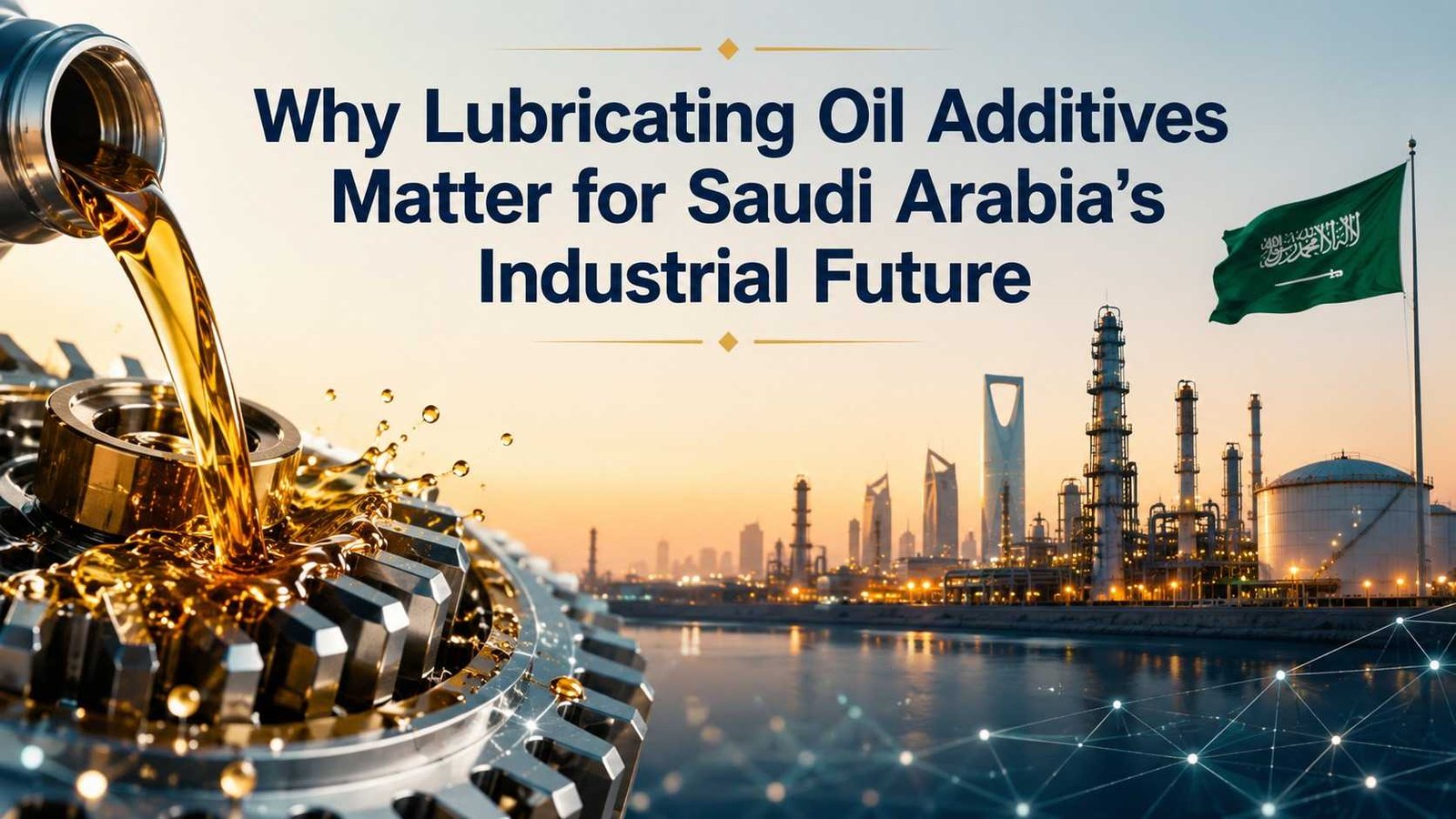
Lubricating oil additives play a vital role in improving the performance, reliability, and lifespan of lubricants used across industries. These specialized chemical compounds are blended into base oils to enhance properties such as oxidation resistance, corrosion protection, viscosity stability, and wear prevention. As Saudi Arabia continues to diversify its economy through industrial expansion and infrastructure development, the demand for high-performance lubrication solutions is expected to remain significant across multiple sectors.
Industries such as automotive, manufacturing, construction, marine, mining, and energy rely on advanced lubricant formulations to ensure efficient equipment operation. Growing attention toward operational efficiency and preventive maintenance has encouraged businesses to invest in high-quality lubricant technologies. According to insights published by MarkNtel Advisors, developments in the advanced lubricant formulation landscape in Saudi Arabia continue to reflect evolving industrial requirements without relying solely on conventional performance standards.
The increasing complexity of industrial machinery has also created the need for lubricants capable of performing under demanding operating conditions. Whether equipment operates in extremely high temperatures, heavy loads, or dusty environments, lubricant additives help maintain consistent performance while minimizing mechanical failures and maintenance downtime.
Understanding Lubricating Oil Additives
Lubricating oil additives are chemical components blended with base oils to improve or modify lubricant characteristics. While base oils provide the primary lubrication function, additives enhance performance by addressing specific operational challenges. Modern lubricants typically contain multiple additive technologies working together to deliver balanced protection.
Common additive categories include antioxidants, anti-wear agents, detergents, dispersants, viscosity index improvers, corrosion inhibitors, friction modifiers, anti-foam agents, and pour point depressants. Each serves a unique purpose, allowing lubricants to meet the demanding requirements of different industries and equipment types.
Industrial Growth Is Driving Higher Performance Expectations
Saudi Arabia continues investing in industrial diversification, logistics, manufacturing, petrochemicals, and large-scale infrastructure projects. These developments increase the utilization of heavy machinery, industrial equipment, compressors, turbines, hydraulic systems, and transportation fleets.
As machinery becomes more sophisticated, operators seek lubricants capable of extending maintenance intervals while maintaining equipment reliability. High-quality additives improve lubricant stability, reduce component wear, and help equipment perform efficiently under continuous operation, making them an essential part of modern industrial maintenance strategies.
Supporting the Automotive Sector
The automotive industry remains one of the major users of lubricating oil additives. Passenger vehicles, commercial trucks, buses, and specialized transport fleets require engine oils that can withstand varying driving conditions while protecting engine components from wear and deposits.
Modern engines demand lubricants that provide improved fuel efficiency, reduced emissions, and enhanced durability. Advanced additive packages help engine oils maintain viscosity, reduce sludge formation, and protect moving components even under high operating temperatures.
As vehicle technologies continue evolving, lubricant manufacturers are also developing formulations compatible with hybrid vehicles, cleaner engine technologies, and stricter environmental standards.
Enhancing Equipment Reliability in Harsh Conditions
Saudi Arabia's environmental conditions present unique lubrication challenges. High ambient temperatures, sand exposure, and demanding industrial operations place significant stress on machinery and lubricants.
Lubricating oil additives improve thermal stability, oxidation resistance, and corrosion protection, allowing lubricants to maintain effectiveness over extended operating periods. These characteristics become especially important for industries operating in remote locations where equipment reliability directly influences productivity and operating costs.
Sustainability Is Influencing Lubricant Innovation
Environmental considerations are encouraging manufacturers to develop cleaner and more efficient lubricant technologies. Improved additive formulations help extend lubricant service life, reduce waste generation, and improve equipment efficiency.
Longer oil drain intervals can decrease lubricant consumption while reducing maintenance requirements. At the same time, innovations in additive chemistry are supporting the development of environmentally responsible lubricant formulations that align with evolving industrial sustainability objectives.
Digital Maintenance Is Changing Lubrication Practices
Predictive maintenance technologies are becoming increasingly important across industrial facilities. Sensors, condition monitoring systems, and oil analysis programs allow maintenance teams to evaluate lubricant health before equipment problems occur.
Advanced lubricant additives contribute to more stable lubricant performance, making predictive maintenance programs more effective. Combined with digital monitoring tools, these technologies enable organizations to improve equipment uptime and reduce unexpected maintenance expenses.
Innovation Continues Across Additive Technologies
Research efforts continue to improve lubricant performance through innovative additive chemistry. Manufacturers are focusing on formulations that deliver improved oxidation resistance, better compatibility with modern engines, enhanced wear protection, and greater stability under demanding operating conditions.
Nanotechnology, synthetic lubricant development, and advanced chemical engineering are also contributing to the next generation of lubricant additives designed for increasingly complex industrial applications.
Applications Across Multiple Industries
Lubricating oil additives support a broad range of industries beyond automotive manufacturing. Heavy equipment used in mining, marine transportation, construction, agriculture, aviation, power generation, and industrial manufacturing all depend on specialized lubricant formulations.
Each application requires unique additive combinations tailored to operating environments, equipment design, load conditions, and maintenance requirements. This diversity continues to encourage innovation throughout the lubricant value chain while supporting equipment reliability across various industrial sectors.
Looking Ahead
As Saudi Arabia advances its industrial transformation, efficient machinery operation will remain a key priority for businesses seeking greater productivity and lower operating costs. Lubricating oil additives will continue supporting these objectives by enhancing lubricant performance, protecting valuable equipment, and enabling longer service life across numerous industrial applications.
Continued investment in research, advanced lubricant technologies, and smarter maintenance practices is expected to strengthen the role of additive solutions within the country's evolving industrial ecosystem. Organizations that prioritize high-performance lubrication strategies are likely to benefit from improved operational efficiency, greater equipment reliability, and more sustainable maintenance practices over the long term.