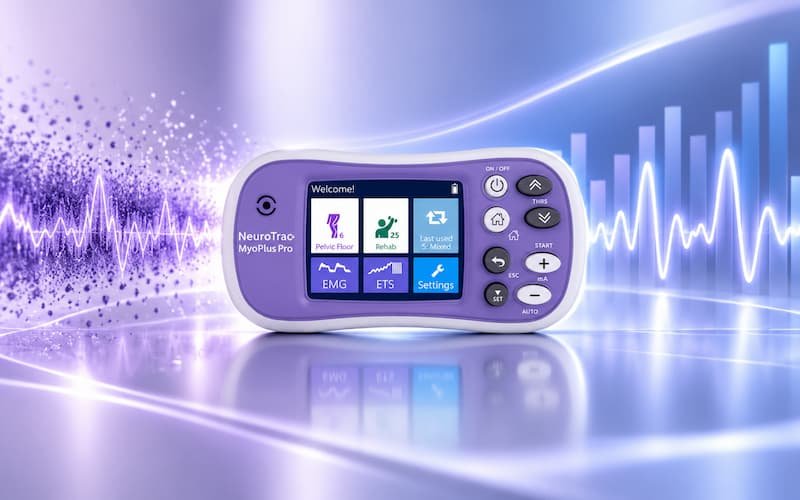
EMG biofeedback is a useful rehabilitation tool that will assist the patient to learn and enhance muscle activity by giving immediate feedback on the muscles' electric signal. It can aid in training muscles, enhance voluntary control and track progress in therapy. The degree of effectiveness of this depends on the accuracy and clarity of the signals being measured, however.
One of the key factors is muscle signal quality EMG, as weak or inconsistent signals can make it challenging to identify the true muscle activity from unwanted noise. Clear signal enables the confident assessment of muscle performance by healthcare professionals and feedback during treatment. Therefore, knowledge of factors affecting signal quality can be useful in ensuring the reliability of the EMG-based rehabilitation.
So what is the muscle signal quality of EMG?
The quality of the muscle signal means how well an EMG system records the electrical activity generated by the muscles. A good signal should be a clear representation of muscle activation, with minimal movement, electrical or nearby muscle interference. The better the signal quality, the more easily muscle activity can be interpreted and changes during various exercises can be seen.
If the signal recorded is unstable or if it is noisy, it will become difficult for the therapist to remember if the changes are due to actual muscle activity or to outside interfering sources. This may impact on the quality of assessment and feedback.
Why Discriminate Muscle Signal Quality for Biofeedback?
The better the quality of an EMG signal, the more useful the feedback will be for the patient. If a clean signal is received by the system, the patient can be given more meaningful information concerning how and when a muscle is contracting. This can help to make exercises more understandable and also help them control easier when recovering.
The quality of the recordings can also be valuable for therapists to note any changes in muscle activity over the course of time. Standardized assessments allow for easier comparisons across sessions and help identify if a patient is making progress, holding progress, or if a changes in their rehabilitation program is needed.
What are the consequences of poor signal quality on rehabilitation?
EMG can give false readings, due to poor muscle signal quality. For instance, unwanted signals can be introduced by the movement of electrodes, electrical interference, or by the activation of neighboring muscles. These can distort the muscle activity seen, making it look greater or less than it really is.
With incorrect feedback repeated, patients can get the wrong idea about muscle activation. Therefore, therapists must make sure electrodes are placed correctly and equipment is being used correctly, before interpreting the results.
Several issues affect the quality of the EMG signal.
There are a number of factors that can affect the quality of an EMG recording. One of the most critical ones is electrode placement, as the electrodes must pick up action from the desired muscle. Additionally, the quality of the signal may vary depending on the condition of the skin, the contact between the electrodes and the skin, movements, and the distance between the electrodes.
Recordings can be affected by more noise caused by environmental electrical interference. Good preparation, appropriate equipment settings, steadfast positioning of the electrodes and minimizing unnecessary movement can help to obtain more consistent measurements when using biofeedback.
How can a better signal quality enhance patient feedback?
Clear signals enable EMG systems to give more responsive and meaningful visual and/or auditory feedback. This information enables the patient to notice when the muscle is working, when it is not working, and to slowly increase his or her voluntary control.
When patients find it hard to identify and/or activate certain muscles, reliable feedback can be helpful. They can observe changes in muscle activity in real time, allowing them to better understand how much effort and which muscle it takes to produce the muscle response.
The importance of standardized measurements
Another crucial component of the quality EMG is its consistency. Differences in the placement of the electrodes or preparation during different sessions can impact measurements, even if individual recordings seem clear. Consistency facilitates meaningful comparison of therapists' work over time.
Accurate measurements can be used to assist in planning and monitoring progress. They also may be useful for physicians to know if exercises or rehab techniques are causing the muscle changes they are looking for.
Conclusion
The quality of the muscle signal (EMG) is an important factor to make biofeedback accurate, useful and consistent. Clear recordings help therapists to better understand muscle activation and provide patients with accurate information that can help with controlling muscles and rehabilitation exercises.
The quality of recording may enhance the benefit of EMG assessment and training. Consistency of sessions, movement, signal interference and placement of electrodes provide healthcare professionals with more reliable information, and should be taken into consideration to make biofeedback sessions more effective.
Tags : medical devices medical equipment