Why Is Accurate Muscle Activity Monitoring Important in Biofeedback Therapy?
By leo ben 19-09-2026 9
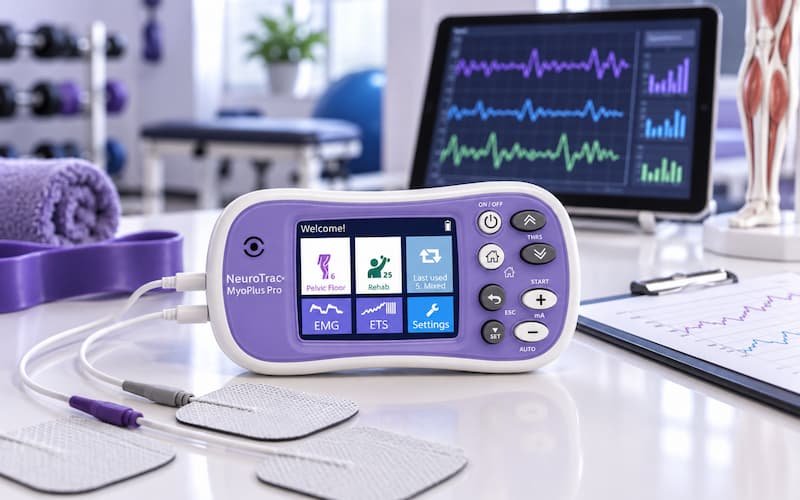
Biofeedback therapy is used to teach people how to control the way their muscles are working by giving them information about the activity of their muscles as it happens. Biofeedback therapy machine is used to measure electrical signals generated by muscles and to translate the signals into visual or auditory feedback, which aids the patient and therapist to monitor muscle tension, relaxation and variation during specific exercises.
This is because reliable information is essential for effective biofeedback. If muscle activity is properly measured, therapists can gain insight and make adjustments to the rehab program, as the amount of muscle control will be known. Biofeedback Muscle Activity Monitoring therefore can facilitate more accurate training and to acquire better awareness of the muscle function in patients.
Muscle activity during therapy: what does it tell us?
When muscles contract, they make electricity. These signals can be fed into biofeedback systems and presented in a manner that is easier for the patient to understand. This can help people understand how much and when they can trigger a target muscle and if they are relaxing it correctly.
Proper measures can be used to differentiate between effective muscle activation and unnecessary tension in other muscles. This is especially helpful if a patient is not able to identify or control a certain muscle during the rehab session.
Help to improve the way they use their bodies
Correct exercise technique is an important part of rehabilitation. The exercise may fail to give the desired benefit if the patient activates the incorrect muscles or exerts too much force. The real-time feedback provides the patient with the chance to identify these patterns and modify his/her movement or muscle tension.
Biofeedback that uses reliable Muscle Activity Monitoring allows the therapist to see the change in muscle activity with various exercises. This information can be utilized to help patients activate their muscles more under control and in a more targeted manner.
Following students' progress over time
Biofeedback can also be helpful in determining muscle performance changes across a rehabilitation program. Over time, the therapist can be able to notice patterns of activation, relaxation, or control of a specified muscle.
Regular monitoring facilitates comparisons across therapy sessions. Therapists can use measured muscle activity as one more source of information when checking in with a rehabilitation process.
Improving Patient Awareness
An important advantage of biofeedback is that it can help the average person to make sense of muscle activity that is normally undetectable. Sometimes patients don't know if they are contracting/relaxing muscles properly. Real-time visualization of the feedback can help establish a better relationship between the effort put in by the patient and the resulting muscle response.
This awareness can help patients to learn more effective muscle control during supervised treatment and when performing exercises at home, as appropriate. Feedback should be considered in conjunction with other professional advice and not as the only indicator of rehabilitation.
To lessen any unnecessary muscle tension
Accurate monitoring can be helpful not only for detecting contraction, but also for observing relaxation. There are some rehabilitation exercises that target learning to decrease over-activated muscle tension following a muscle contraction. Reliable feedback can be used to determine if muscle activity lowers when the patient tries to relax.
This can be particularly helpful during therapists' training on controlled contraction-and-relaxation patterns. Therapy will be better understood if both phases are monitored.
Why accuracy is important in biofeedback
The effectiveness of biofeedback is greatly dependent upon the quality of the signals that are being recorded. This may be influenced by poor electrode placement, electrode movement, electrical interference, or variations in test conditions. Therefore, the proper set up and the application of the same measurement techniques are necessary.
Accurate Muscle Activity Monitoring in Biofeedback provides therapists with more accurate information to adjust exercises and for patients to receive feedback reflecting the actual muscle activity. Use equipment as directed by manufacturer and under proper professional supervision.
Conclusion
Biofeedback accurate Muscle Activity Monitoring offers important data on the effect of muscles during rehabilitation workouts. Biofeedback demonstrates changes in muscle activation and relaxation to increase patients' awareness and provide information for therapists to guide therapy.
Stable monitoring also helps constant assessment and adjustment of exercises during a rehabilitation program. Biofeedback, if used properly and complemented by a professional evaluation, can be a beneficial tool to enhance muscle awareness, control and training.
Tags : medical device medical equipment