Why EPCG License Redemption Is Essential for Long Term Export Success
By Anthony Parker 29-06-2026 44
Businesses today operate in an environment where regulatory compliance and sustainability are becoming just as important as profitability. Companies involved in manufacturing, importing, and exporting are expected to meet legal requirements while also demonstrating environmental responsibility and efficient business practices.
Two important mechanisms that help organizations achieve these objectives are EPCG License Redemption and EPR Registration. While EPCG License Redemption confirms that a company has fulfilled its export obligations under the Export Promotion Capital Goods Scheme, EPR Registration promotes responsible management of waste generated by products after consumption.
Although these frameworks focus on different aspects of business operations, together they help organizations build credibility, improve operational efficiency, and strengthen long-term competitiveness.
Understanding EPCG License Redemption
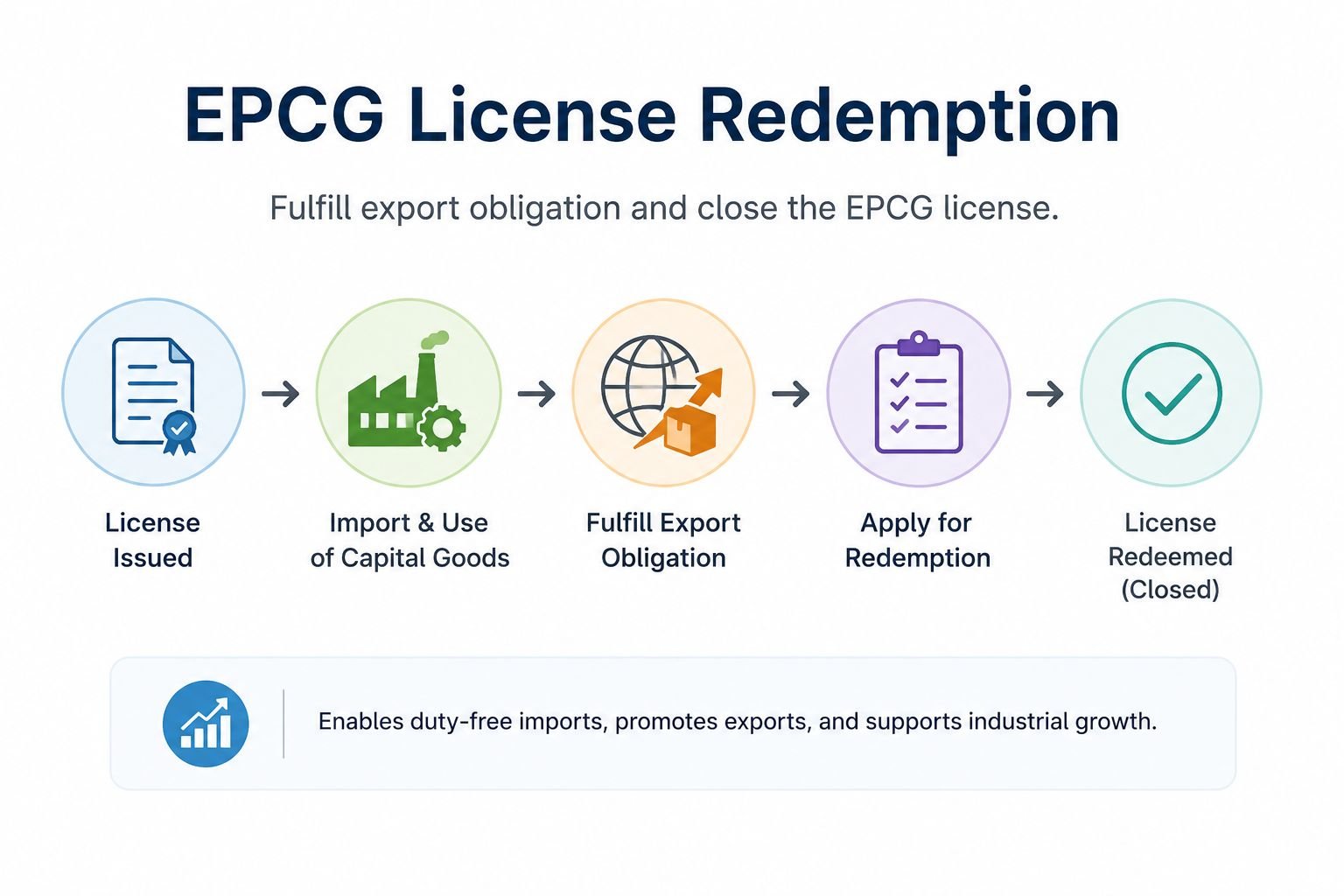
The Export Promotion Capital Goods Scheme allows businesses to import machinery and capital goods at concessional customs duty rates in return for meeting prescribed export obligations.
After successfully fulfilling these obligations, businesses can apply for EPCG License Redemption. The redemption process serves as official confirmation that all commitments under the license have been completed.
Receiving redemption approval is an important milestone because it closes pending obligations and demonstrates compliance with export regulations.
Businesses that successfully complete EPCG License Redemption often enjoy improved credibility and greater confidence when pursuing future trade opportunities.
Why EPCG License Redemption Is Important
Proper completion of export obligations offers several benefits.
Confirms Regulatory Compliance
Successful redemption demonstrates accountability.
- Businesses receive official confirmation that all export commitments associated with the imported capital goods have been fulfilled.
- Companies can continue expansion activities without concerns regarding unresolved obligations.
Improves Business Credibility
Strong compliance records build trust.
- Organizations that complete redemption procedures demonstrate professionalism and effective export management capabilities.
Supports Future Growth Opportunities
Positive compliance histories create advantages.
- Businesses with successful redemption records are often better positioned to participate in additional trade initiatives and expansion programs.
Understanding EPR Registration
EPR Registration, or Extended Producer Responsibility Registration, is a framework that makes producers, importers, and brand owners responsible for managing waste generated by their products.
The registration applies to sectors dealing with electronic goods, plastic packaging materials, batteries, and other products that create post-consumer waste.
The primary objective of EPR Registration is to encourage businesses to adopt environmentally responsible practices and participate actively in waste management and recycling activities.
Through EPR Registration, companies contribute to reducing environmental pollution and promoting sustainable resource utilization.
Why EPR Registration Matters
Environmental sustainability has become a major business priority.
Promotes Responsible Waste Management
Sustainable practices protect natural resources.
- EPR Registration encourages businesses to establish systems for collecting, recycling, and disposing of product waste in an environmentally responsible manner.
- Companies become active participants in creating circular economies that minimize waste and encourage resource recovery.
Strengthens Regulatory Compliance
Environmental regulations continue evolving.
- Businesses that obtain EPR Registration demonstrate their commitment to legal compliance and avoid potential penalties associated with non-compliance.
Improves Brand Reputation
Consumers increasingly value sustainability.
- Companies that prioritize environmental responsibility often build stronger relationships with customers and stakeholders.
How EPCG License Redemption and EPR Registration Complement Each Other
Although these frameworks focus on different areas, they both contribute significantly to responsible and sustainable business management.
For example, a manufacturing company may import advanced production machinery under the EPCG Scheme and subsequently achieve EPCG License Redemption after fulfilling export obligations. At the same time, the organization may obtain EPR Registration to manage waste generated by its products responsibly.
Together, these achievements demonstrate both export excellence and environmental accountability.
Organizations that effectively manage both areas often enjoy stronger market credibility and improved competitive positioning.
Industries That Benefit from Both Frameworks
Several industries regularly benefit from integrating export compliance and environmental responsibility.
Electronics Industry
Environmental obligations continue expanding.
- Electronics manufacturers frequently participate in waste recycling initiatives while managing export obligations associated with imported machinery.
Consumer Goods Industry
Compliance supports market confidence.
- Businesses dealing with packaged products and manufactured goods benefit from both sustainable practices and efficient export management.
Packaging Industry
Responsible resource management remains essential.
- Companies can strengthen their environmental reputation while modernizing production capabilities.
Manufacturing Sector
Efficiency and sustainability drive growth.
- Manufacturers often invest in advanced equipment and simultaneously implement waste management strategies to remain competitive.
Best Practices for Achieving EPCG License Redemption
Careful planning simplifies the redemption process.
Maintain Accurate Documentation
Records support compliance verification.
- Businesses should preserve invoices, shipping documents, export records, and production information throughout the export obligation period.
Monitor Export Performance Regularly
Continuous evaluation prevents complications.
- Organizations should periodically review export achievements to ensure commitments are fulfilled within required timelines.
Seek Professional Guidance
Expert assistance improves efficiency.
- Trade professionals can help businesses understand procedural requirements and avoid unnecessary delays.
Best Practices for Obtaining EPR Registration
Strategic preparation supports effective implementation.
Identify Applicable Products
Understanding responsibilities is essential.
- Organizations should determine which products generate waste and require EPR compliance measures.
Develop Waste Collection Systems
Structured approaches improve results.
- Businesses should establish partnerships with authorized recyclers and create efficient collection processes.
Maintain Detailed Records
Documentation promotes accountability.
- Accurate records regarding recycling activities and waste management initiatives simplify reporting requirements.
Common Challenges Businesses Face
Managing compliance responsibilities requires commitment and proper planning.
Regulatory Complexity
Requirements may appear difficult.
- Businesses often require guidance to understand procedural obligations and documentation requirements.
Resource Allocation
Implementation demands investment.
- Organizations may need dedicated personnel, training programs, and administrative systems to manage compliance effectively.
Ongoing Monitoring
Responsibilities continue over time.
- Businesses must regularly evaluate activities to maintain both export and environmental compliance standards.
Companies that establish structured management systems generally experience smoother operations and greater long-term benefits.
Long-Term Benefits of Strategic Compliance
Organizations that successfully implement both frameworks often achieve significant advantages.
Enhanced Corporate Reputation
Responsible businesses gain trust.
- Demonstrating export excellence and environmental responsibility improves credibility among customers and stakeholders.
Greater Operational Efficiency
Structured processes improve performance.
- Organized compliance systems help businesses reduce administrative challenges and improve productivity.
Improved Competitive Advantage
Compliance creates differentiation.
- Businesses that prioritize sustainability and export excellence often enjoy stronger market opportunities.
Sustainable Growth
Long-term planning strengthens resilience.
- Investments in responsible business practices create a solid foundation for future expansion.
Why Businesses Should Prioritize Both Frameworks
EPCG License Redemption and EPR Registration are more than regulatory obligations. They represent strategic opportunities that help organizations improve operational performance, strengthen credibility, and support sustainable growth.
EPCG License Redemption demonstrates successful export management and regulatory compliance, while EPR Registration reflects environmental responsibility and commitment to sustainable practices.
Businesses that embrace both frameworks often position themselves as reliable, forward-thinking organizations capable of succeeding in increasingly competitive markets.
Conclusion
EPCG License Redemption and EPR Registration play important roles in helping businesses achieve both compliance and sustainability objectives. While EPCG License Redemption validates successful fulfillment of export obligations under the EPCG Scheme, EPR Registration promotes responsible management of product waste and environmental resources.
Together, these mechanisms help businesses strengthen credibility, improve operational efficiency, and build long-term competitive advantages. Organizations that prioritize export excellence and environmental responsibility are better prepared to succeed in today's dynamic business environment.
Looking to improve your export compliance and sustainability initiatives? Consult experienced professionals to understand how EPCG License Redemption and EPR Registration can help your business streamline operations, enhance credibility, and achieve long-term growth and success.