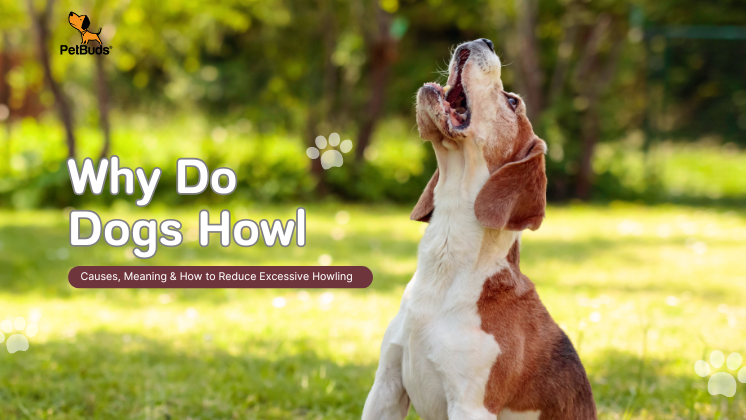
Why dogs howl? This is a question that occurs to many pet owners when they hear their dog for the first time making a long, emotional noise—especially in the night. Actually, dog howling refers to an instinct and a dog’s means. Nevertheless, should your pet persist in howling excessively, vigorously, or at inconvenient times, thereby disturbing you, its conduct can rightly be termed a dog behavior problem.
Dogs' howling is a mode of communication amongst them. Dogs use howling to express emotions. They may be happy, lonely, or anxious. Boredom can also trigger howling. Sometimes, it signals discomfort or pain. Stopping howling starts with understanding it. You must identify the real cause first. Each reason has a different meaning.
We’ll explore those reasons and what they truly mean.. Moreover, this article provides some tips to help you reduce the howling without putting a strain on both you and your dog.
What Is Howling in Dogs?
Howling is a type of dog vocalization that is close to barking. It can also be whining or growling.
Dogs' Howling is a long, drawn-out sound.
➤ It carries over long distances. Wild canids used it to communicate. Not all howling signals a problem.
➤ Most dogs howl occasionally. Sirens, other dogs, or excitement can trigger it. Frequent howling may signal boredom or anxiety.
➤ Lack of stimulation is a common cause. Watch the timing and context closely. Constant howling, especially alone or at night, needs attention.
Common Causes of Dog Howling
1. Instinctive Communication
Dogs have changed genetically from wolves, and howling is one of the most primal traits of their dog lineage. Wild wolves communicate through howling to find each other, alert of the enemy, or strengthening the social pack.
Currently, the howling of dogs could just be an indication that they haven't completely given up their instinct of pack communication—this is especially true for breeds like Huskies, Beagles, and Alaskan Malamutes. Your dog may be involuntarily triggered to make a response upon hearing another dog howling or a high-pitched sound.
2. Dog Howling at Night
One of the frequent grievances that owners of dogs bring up is the dog howling at night. Several elements can lead to such behavior:
➤ Environmental sounds (sirens, other dogs at a distance, traffic)
➤ Feeling lonely when the house is quiet
➤ Not having a regular evening schedule
Dogs are known to become more alert during the night, and if they do not receive the proper type of stimulation during the day, their accumulated energy after dark may be released. Give your dog a daily schedule, and it will be simpler for you to understand how to stop a dog from howling at night.
3. Separation Anxiety & Stress
Dogs, who respond by howling mainly when you leave the house, are most probably suffering from separation anxiety. The howls are normally associated with other types of reactivity like pacing, destroying, or excessive whining.
These different types of vocalisation are essentially dog anxiety sounds which, among other things, indicate the dog's fear, distress, or emotional discomfort. Conditioned to separation anxiety, dogs find it difficult to soothe themselves and may howl to call their owners' attention.
Soothing helps, such as a Lick Mat, which is based on the premise of slow, repetitive licking, may work well in calming the dog and helping the dog to relax when left alone.
4. Boredom & Lack of Mental Stimulation
Energetic and smart dog breeds frequently resort to howling as a sign of boredom. If dogs are deprived of mental stimulation, howling turns into an attention-getting behavior - a stereotypical dog behaviour problem.
Animals abandoned without enrichment for a long time may howl simply because they have nothing to do. Providing structured activities and interactive challenges is very important. For instance, Puzzle Toys stimulate the minds of dogs and direct their extra energy towards problem-solving, thus avoiding dogs howling.
5. Pain, Discomfort, or Medical Issues
Suddenly loud or unusual howling, especially from elderly dogs, should not be overlooked. It can be a dog's response to pain, dementia, deafness, or some kind of internal discomfort. Howling accompanied by changes in appetite, movement, or behavior is an obvious sign to see a vet right away. Howling resulting from a medical condition is a serious dog behavior problem that necessitates professional intervention.
What Does Dog Howling Mean?
So, when you overhear dogs howling, what is it really trying to tell you?
➤ Communication: Can be responses to noises or a way to let others know they are in the area.
➤ Emotional expression: Can be symptoms of stress or anxiety, or simply showing excitement.
➤ Warning: A sign alerting to the presence of potential threats.
Certain dog anxiety sounds, such as howling and whining, might be the dog expressing sadness or being emotionally upset. In this case, it would not be typical dog vocal communication.
Barking vs Howling: What’s the Difference?
Recognizing the differences between barking vs howling dogs
➤ Sound: Barking sounds are typically short and sharp, while howling sounds are long and melodious
➤ Meaning: Barking is an animal’s reaction to alert or express a need, whereas howling is more associated with communication or the expression of feeling
➤ Behavior patterns: Barking is a regular animal behavior and usually happens in direct relation to the situation at hand; therefore, howling, though not often, is an animal’s more dramatic way of expressing itself.
How to Stop Excessive Dog Howling
1. Create a Consistent Daily Routine
Dogs really count on predictability to be happy. Having their times for walks, meals, playing, and sleep all neatly organized has the effect of lowering stress levels and problems with sleeping at night. It goes without saying that a dog, when fully exhausted, will not have the energy to howl too much.
2. Reduce Anxiety Triggers
Making a quiet environment is very important for dogs that can get scared by dog anxiety sounds. Playing gentle music, using familiar smells, and providing comfort things will be of great help. It might be very useful to promote self-comforting behaviors like licking. An instrument like a Lick Mat can be used to help nervous dogs calm down through the release of soothing endorphins.
3. Provide Mental Stimulation
Mentally challenging exercises are equally important as physical workouts. Various training sessions, scent games, and interactive play are good tools for averting boredom-induced dog behaviour problems. By changing the enrichment activities and introducing Puzzle Toys you can significantly minimize your dog's frustration and thus, help him/her to concentrate on these activities rather than howling.
4. Avoid Reinforcing Howling
Do not give in to loud howling by rewarding it with immediate attention. By doing this, you are basically telling your dog that howling gets attention. Wait instead for the dog to be calm and give the dog a treat or words of appreciation for being silent. Keep doing this every time.
When Should You Be Concerned?
Of course, dogs can howl once in a while. However, you should be worried when the dog:
➤ Is there constant howling during the night.
➤ Shows sudden changes in behavior.
➤ Exhibits symptoms of pain or disorientation.
If you have been looking for how to stop a dog from howling at night, then you should definitely seek the advice of a vet or a certified dog behaviorist. To ensure that there are no health or severe anxiety problems behind your dog’s actions.
Conclusion
So, why do dogs howl? It's a mixture of instinct, feeling, surroundings, and health that leads to a dog's howl. Howling for dogs is one of the ways of communication; however, they can also be anxious or bored. Whatever the situation, dogs howling is always a reason.
Most of the pet owners can thank their dogs for less noisy howling by simply figuring out the causes and providing them with the appropriate routine, mental stimulation, and emotional support. Through it, they get what's best for their pets and themselves as well—living a harmonious, stress-free life.