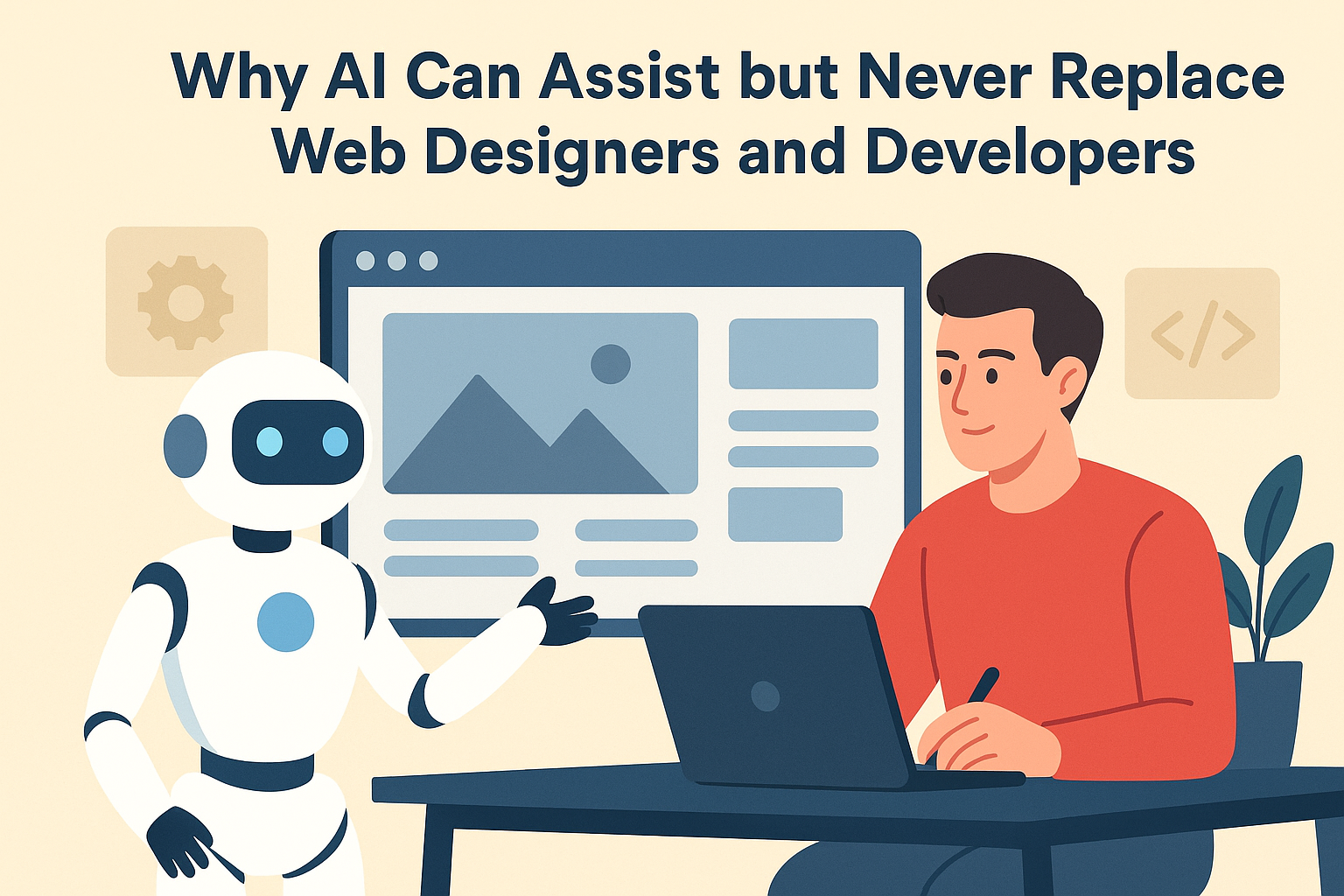
In today’s digital age, artificial intelligence (AI) is transforming how websites are designed, developed, and maintained. From automating repetitive tasks to analyzing user behavior, AI tools have become powerful assistants for web professionals. However, while these tools can enhance productivity and creativity, they can never fully replace the skills, insight, and human touch of experienced web designers and developers.
Let’s explore why AI serves as an incredible ally—but not a replacement—in the world of web creation.
1. AI Speeds Up Development, but Lacks Creative Vision
An AI development company can build intelligent systems that automate coding tasks, generate design templates, and optimize layouts. Yet, creativity is inherently human. Web designers bring storytelling, emotion, and brand identity to digital spaces—something AI cannot replicate.
AI may suggest design elements based on data, but it doesn’t understand the nuances of a brand’s personality or the emotional connection users seek. That’s why the best websites still rely on human designers who can translate ideas into unique, meaningful experiences.
2. AI Tools Need Human Input for Context and Strategy
Modern artificial intelligence companies have created tools capable of generating UI components, testing page speeds, and even personalizing user experiences. However, these tools depend entirely on human input for direction and decision-making.
A developer understands why a particular framework, structure, or feature makes sense for a specific business goal. AI only executes instructions—it doesn’t interpret strategy. Without human insight, even the most advanced AI-generated designs can miss the mark when it comes to user intent or business objectives.
3. Emotional Intelligence and Empathy Are Human Strengths
A website is more than code—it’s a digital experience. Designers and developers understand human emotions, behavior, and accessibility. These qualities enable them to create user-friendly, emotionally engaging interfaces that AI cannot produce on its own.
While an artificial intelligence development company can train algorithms to analyze user patterns, machines still lack empathy. They can’t “feel” what a user might find confusing, frustrating, or delightful. Human designers, on the other hand, can sense and adjust designs accordingly to improve user satisfaction.
4. AI Handles Data; Humans Handle Innovation
AI is excellent at managing data-driven tasks such as:
A/B testing
Performance optimization
Predictive analytics
SEO enhancement
However, innovation—the creation of something truly new—comes from people. Web designers and developers combine technical skills, intuition, and creative risk-taking to push digital boundaries.
For example, AI can analyze which colors perform best for conversions, but it takes a designer to blend those colors in a way that’s both aesthetically pleasing and aligned with a brand’s identity.
5. Collaboration Between Humans and AI Creates the Future of Web Design
The real power lies in collaboration. When web professionals work alongside AI tools provided by top AI development companies, they can:
Accelerate project timelines
Improve design precision
Personalize user experiences
Reduce repetitive workloads
AI should be viewed as a collaborator, not a competitor. It empowers humans to focus on innovation, creativity, and user engagement—areas that define long-term success.
Conclusion: AI Is a Tool, Not a Replacement
Artificial intelligence has undoubtedly revolutionized the digital landscape. It can automate, optimize, and even inspire. But web design and development will always need human creativity, empathy, and strategic thought.
The future of web creation lies not in machines replacing humans but in both working together to deliver smarter, more intuitive, and emotionally resonant digital experiences.
So, as AI continues to evolve, one thing remains clear: web designers and developers are not being replaced—they’re being enhanced.