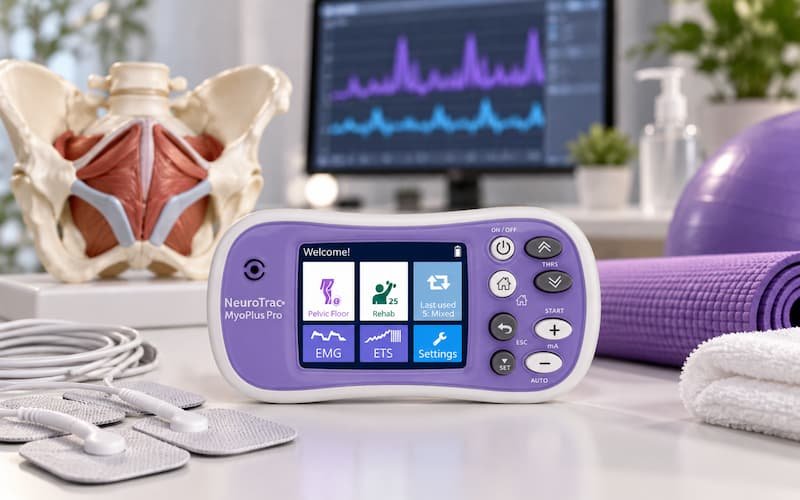
A biofeedback therapy machine can help healthcare professionals observe physiological activity and use that information to guide rehabilitation. In EMG biofeedback, for example, electrical activity generated by muscles can be detected and displayed so that the patient and therapist have a clearer understanding of muscle activation during an exercise or movement.
Signal monitoring is particularly relevant when rehabilitation involves improving muscle awareness, activation, coordination, or control. Instead of relying only on what can be seen externally, therapists can use monitored signals as an additional source of information when assessing performance and structuring therapy.
For this reason, Signal Monitoring in Biofeedback Therapy can play an important role in making rehabilitation sessions more structured and responsive to individual needs.
Understanding Signal Monitoring in Biofeedback Therapy
Biofeedback uses measurable physiological information to provide feedback to the person receiving therapy. With EMG biofeedback, sensors detect electrical activity associated with muscle activation. The resulting signal can then be presented through a suitable interface so that changes in muscle activity can be observed.
Signal Monitoring in Biofeedback Therapy does not simply mean recording a number or displaying a graph. The information can help therapists and patients understand whether a muscle is becoming more active, relaxing appropriately, or responding differently during a particular exercise.
This can be useful in rehabilitation situations where muscle activity is difficult to assess through observation alone. Pelvic floor rehabilitation, neuromuscular re-education, and selected muscle rehabilitation programmes are examples where EMG feedback may have a practical role.
How Does Signal Monitoring in Biofeedback Therapy Work?
The process generally involves several stages.
1. Detecting Muscle Activity
Appropriately positioned electrodes or sensors detect electrical activity associated with muscle contraction. Correct preparation and placement are important for obtaining useful signals.
2. Processing the Signal
The biofeedback equipment processes the detected electrical activity so that it can be displayed in a meaningful form. Depending on the system, this may include visual or other forms of feedback.
3. Presenting Information to the Patient
The patient can observe changes in the displayed feedback while performing a specific contraction, relaxation exercise, or rehabilitation task. This can provide information that is otherwise difficult to perceive directly.
4. Interpreting the Response
The therapist considers the signal alongside clinical assessment and the patient's reported experience. A displayed change should not be interpreted in isolation from the wider rehabilitation context.
5. Adjusting the Exercise or Programme
Where appropriate, the therapist can modify exercises, instructions, or treatment strategies according to the patient's performance and rehabilitation objectives.
This feedback loop makes biofeedback different from simply performing an exercise without any information about the underlying muscle response.
Key Benefits and Clinical Applications
Improving Awareness of Muscle Activity
Some patients may have difficulty recognising when a particular muscle is contracting or relaxing. Visualising muscle activity can provide an additional way to understand what is happening during an exercise.
Signal Monitoring in Biofeedback Therapy can therefore support the learning process by connecting a physical action with measurable feedback.
Supporting Muscle Re-Education
Biofeedback may be incorporated into neuromuscular re-education programmes where the objective involves improving voluntary muscle control. The therapist can use the monitored response as one part of the assessment and training process.
Supporting Pelvic Floor Rehabilitation
EMG biofeedback is relevant to some pelvic floor rehabilitation programmes because pelvic muscle activity can be difficult for a patient to observe directly. A suitable system can provide information about activation and relaxation during guided exercises.
The information should be interpreted by an appropriately trained professional and incorporated into an individualised programme.
Encouraging Active Patient Participation
Biofeedback can make the patient's muscle activity more visible during therapy. This may help patients understand instructions and actively participate in exercises rather than relying entirely on passive treatment.
Supporting Progress Review
Repeated observations of muscle activity can provide useful information for clinical discussions and treatment reviews. However, signal changes should be considered alongside functional performance, symptoms, exercise quality, and other relevant clinical observations.
Important Features and Factors to Consider
When selecting a professional biofeedback system, healthcare professionals may consider several factors.
Signal Quality
Reliable signal detection is fundamental to meaningful biofeedback. Appropriate electrode application, skin preparation, and equipment setup can all influence the quality of the recorded signal.
Clear Feedback Display
The information should be understandable to both the clinician and patient. A clear display can make it easier to observe changes during contractions and relaxation exercises.
EMG Functionality
For muscle-focused rehabilitation, EMG capability is an important consideration. The system should provide functionality appropriate to the intended assessment and training application.
Multiple Therapy Options
Some rehabilitation programmes may involve biofeedback alongside electrical stimulation. Depending on the device, features such as stimulation or EMG-triggered stimulation may allow different approaches to be considered under professional supervision.
Ease of Use
Equipment should fit naturally into the clinical workflow. Straightforward controls and practical electrode connections can make setup and routine use easier.
Professional Suitability
The device should match the intended clinical application, patient population, and therapist's assessment approach. More features are not necessarily better if they are unrelated to the treatment objective.
How Can Healthcare Professionals Use Signal Monitoring in Practice?
Physiotherapists can incorporate EMG feedback into selected rehabilitation programmes to help patients understand muscle activation and relaxation. During an exercise, the therapist can observe the feedback and provide instructions based on the patient's performance.
Rehabilitation clinicians may use biofeedback during neuromuscular re-education when a patient needs additional information about voluntary muscle activity. The approach can be particularly useful when external observation provides limited information.
Pelvic health specialists may also use EMG biofeedback in appropriate pelvic floor programmes. Because pelvic floor muscle activity is not easily visible, feedback can provide an additional method for explaining contraction and relaxation.
In hospitals and rehabilitation centres, professional biofeedback equipment can also support structured assessment and treatment sessions. When home rehabilitation is considered appropriate, patients should receive clear professional instruction on equipment use and should understand how the feedback should be interpreted.
Choosing the Right Solution
Selecting a suitable biofeedback solution should begin with the clinical objective rather than the device's feature list.
Professionals can consider:
Which muscle group needs to be assessed or trained?
Is EMG biofeedback the appropriate feedback method?
Does the device provide sufficiently clear signal information?
Will the system be used for assessment, exercise training, or both?
Is stimulation functionality also required?
Does the equipment fit the intended clinical environment?
Can patients understand the feedback with appropriate instruction?
How will progress be monitored over the course of rehabilitation?
For professionals working across different rehabilitation applications, a flexible system may be useful, but the final selection should remain linked to clinical requirements.
Why Professional Rehabilitation Devices Matter
Professional rehabilitation devices can provide structured ways to measure, display, and respond to physiological information during therapy. In EMG biofeedback, this can help bridge the gap between a patient's internal muscle activity and what they can consciously perceive.
Verity Medical's NeuroTrac range includes professional rehabilitation technologies involving EMG biofeedback and stimulation. NeuroTrac MyoPlus systems, for example, are designed around applications involving EMG biofeedback and related stimulation functions. Such technology can be relevant to muscle rehabilitation, neuromuscular re-education, and selected pelvic floor applications.
Some NeuroTrac systems can also incorporate EMG-triggered stimulation, commonly referred to as ETS. In suitable rehabilitation programmes, this allows detected muscle activity to be linked with stimulation according to the device's capabilities and the professional's treatment approach.
The purpose of these technologies is not to replace clinical assessment. Instead, they can provide additional information that therapists can use alongside examination, exercise performance, patient feedback, and functional observations.
Practical Considerations for Effective Therapy
Effective biofeedback depends on both the equipment and the way it is applied. Professionals should consider:
Correct electrode placement: Sensors should be positioned appropriately for the muscle being assessed.
Signal quality: Poor contact or unsuitable placement can affect the information displayed.
Clear patient instructions: Patients should understand which muscle action they are being asked to perform.
Appropriate interpretation: A signal should be considered within the wider clinical context.
Patient comfort: Electrodes and any associated stimulation should be used appropriately.
Consistent procedures: Similar assessment conditions can make repeated observations more useful.
Progress monitoring: Signal changes should be considered alongside functional and clinical outcomes.
Professional guidance: Patients using biofeedback equipment outside the clinic should receive appropriate instruction.
These practical details help ensure that monitoring contributes meaningful information rather than becoming an isolated measurement.
FAQs
What is Signal Monitoring in Biofeedback Therapy?
Signal Monitoring in Biofeedback Therapy involves detecting measurable physiological activity, such as EMG muscle activity, and presenting that information as feedback. It allows therapists and patients to observe changes during contractions, relaxation, or rehabilitation exercises and use the information as part of a structured therapy programme.
How does EMG biofeedback monitor muscle activity?
EMG biofeedback uses electrodes or sensors to detect electrical activity associated with muscle activation. The equipment processes the detected signal and presents it through an appropriate feedback display. The therapist can then consider the patient's response during specific exercises or movements.
Who can benefit from biofeedback therapy?
Biofeedback may be incorporated into selected rehabilitation programmes for people who need greater awareness or control of muscle activity. Applications can include muscle re-education and certain pelvic floor rehabilitation programmes. Suitability depends on the individual's clinical requirements and should be determined by an appropriately qualified healthcare professional.
Why is signal quality important in EMG biofeedback?
Good signal quality helps provide more useful feedback. Electrode placement, skin preparation, movement, and environmental factors can affect the detected signal. Professionals should follow appropriate equipment instructions and clinical procedures so that the displayed information can be interpreted appropriately.
Can biofeedback be combined with electrical stimulation?
Some professional rehabilitation systems combine EMG biofeedback with stimulation functions. EMG-triggered stimulation, or ETS, can connect detected muscle activity with stimulation in suitable treatment programmes. Whether this approach is appropriate depends on the individual's rehabilitation goals and professional assessment.
Can biofeedback equipment be used at home?
Selected patients may use biofeedback equipment at home when this forms part of an appropriately supervised rehabilitation programme. They should receive clear instructions on electrode placement, equipment operation, exercise technique, and interpretation of feedback before using the system independently.
What should professionals look for in a biofeedback device?
Professionals may consider EMG functionality, signal quality, feedback presentation, electrode compatibility, ease of operation, stimulation options, and suitability for the intended clinical application. The system should support the therapist's assessment and rehabilitation objectives rather than simply offering features that are not required.
Conclusion
Signal Monitoring in Biofeedback Therapy provides healthcare professionals with an additional way to observe muscle activity during rehabilitation. By converting physiological activity into understandable feedback, EMG systems can support patient awareness, muscle re-education, pelvic floor rehabilitation, and structured exercise programmes when clinically appropriate.
Professional rehabilitation technology can make this monitoring process more practical when the equipment is selected for the intended application and used correctly. Within the NeuroTrac range from Verity Medical, EMG biofeedback and related technologies can form part of structured rehabilitation approaches, while clinical assessment remains central to deciding how the information should be interpreted and used.
Tags : medical devices medical equipment