What is the Role of AI Agents and Fine Tuning in the Future of Intelligent Systems?
By Cyfuture AI 18-09-2025 127
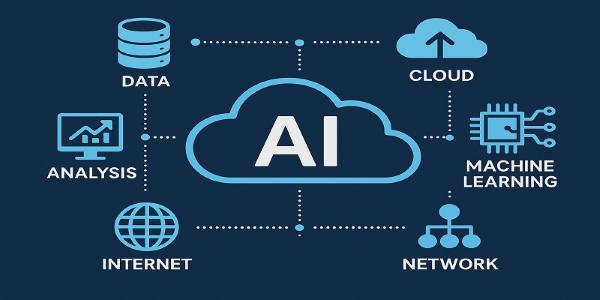
Artificial Intelligence is no longer confined to research labs—it is actively shaping the way businesses, consumers, and societies interact with technology. Among the most transformative innovations are AI agents, AI voice agents, and AI virtual agents, which are redefining customer service, automation, and personalized user experiences. At the same time, fine tuning, including LLM fine tuning, fine tuning AI models, and AI fine tuning, has emerged as the essential practice for customizing large language models (LLMs) to deliver domain-specific intelligence.
Together, these technologies represent the building blocks of the next generation of intelligent systems. But what exactly do they mean for enterprises, and how can businesses harness them effectively? Let’s explore.
Understanding AI Agents
At their core, AI agents are software entities capable of perceiving their environment, processing information, and taking action to achieve goals. Unlike traditional automation scripts, AI agents can adapt to new inputs, learn from interactions, and optimize decisions over time.
AI voice agents: These specialize in speech-based interactions, powering applications like smart assistants, call center automation, and voice-enabled search.
AI virtual agents: These often combine natural language understanding, conversational AI, and multimodal capabilities to simulate human-like interactions, whether via chatbots, avatars, or enterprise service desks.
By integrating voice recognition, natural language processing (NLP), and reasoning capabilities, AI agents are enabling seamless, human-like conversations across industries.
Why Fine Tuning Matters
While pre-trained LLMs are powerful, they are general-purpose. Enterprises need domain-specific intelligence—legal firms need models trained on legal texts, healthcare providers require compliance with medical protocols, and e-commerce platforms need conversational fluency around products and services.
This is where AI fine tuning comes into play. Fine tuning involves adjusting pre-trained models on specific datasets to align them with organizational needs.
LLM fine tuning: Focused on large language models like GPT, LLaMA, or Falcon, this allows enterprises to customize outputs while preserving the model’s broad knowledge.
Fine tuning AI models: Applied across different modalities (text, image, speech), it ensures accuracy and relevance in specialized domains.
AI fine tuning: A broader concept that encapsulates the ongoing process of tailoring models for precision, compliance, and performance.
Through fine tuning, businesses can achieve higher accuracy, reduce hallucinations, and create models that better reflect their brand tone, compliance rules, and contextual nuances.
The Intersection of AI Agents and Fine Tuning
The synergy between AI agents and fine tuning is where the real transformation occurs. AI agents provide the interactive, decision-making layer, while fine tuning ensures these agents operate with domain expertise and contextual intelligence.
For example:
A voice agent fine-tuned on insurance-specific datasets can handle claims queries with accuracy and empathy.
A virtual agent in healthcare, fine-tuned on HIPAA-compliant datasets, can provide reliable, safe patient interactions.
An enterprise AI agent fine-tuned on internal knowledge bases can serve as a digital co-worker, assisting employees in complex workflows.
This integration ensures that AI agents are not just reactive but strategically aligned with business goals.
Actionable Insights for Enterprises
1. Start with Clear Use Cases
Before deploying AI agents, identify high-value scenarios: customer support automation, sales assistance, HR queries, or IT help desks. Aligning use cases with business goals ensures measurable ROI.
2. Prioritize Data Quality for Fine Tuning
The performance of fine-tuned models depends on the quality and relevance of training data. Invest in data cleaning, annotation, and compliance to ensure reliable outcomes.
3. Adopt a Human-in-the-Loop Approach
AI agents should complement, not replace, human expertise. Human oversight in LLM fine tuning and deployment ensures ethical and accurate performance.
4. Leverage Multi-Agent Systems
Future-ready organizations will deploy multiple AI agents collaborating to solve complex tasks—voice agents for front-end interactions and virtual agents for back-office processes.
5. Ensure Governance and Compliance
With growing scrutiny around AI, enterprises must ensure their fine-tuned models comply with industry standards, privacy laws, and security protocols.
Forward-Thinking Perspectives
The trajectory of AI agents and fine tuning AI models indicates three major shifts on the horizon:
Hyper-Personalization: AI voice agents fine-tuned with customer interaction histories will deliver personalized recommendations and empathetic support at scale.
Autonomous Enterprise Operations: AI virtual agents will move from being assistants to orchestrators, managing workflows, and decision-making processes with minimal human intervention.
Continuous Fine Tuning: Instead of one-time adjustments, AI fine tuning will evolve into an ongoing lifecycle, ensuring models stay relevant in dynamic industries.
Challenges to Address
Despite the promise, enterprises must address certain barriers:
Bias and fairness: Fine tuning must mitigate biases in training data.
Scalability: Running multiple fine-tuned models requires efficient infrastructure.
Trust and transparency: AI agents must remain explainable to gain user trust.
These challenges call for strong AI governance frameworks, transparency in model design, and ongoing monitoring.
Conclusion
The future of intelligent systems lies at the intersection of AI agents and AI fine tuning. AI voice agents and AI virtual agents bring natural, conversational interfaces to businesses, while LLM fine tuning and fine tuning AI models ensure these agents deliver precise, context-aware intelligence.
Enterprises that strategically embrace these technologies today will not only enhance efficiency but also unlock new possibilities in personalization, customer engagement, and autonomous operations.
The question is no longer whether AI agents will transform industries—but how effectively organizations can fine tune them to serve their unique vision. Those who act now will define the intelligent enterprises of tomorrow.