What Is Pachamanca? A Traditional Andean Earth-Cooked Feast Explained
By Good Food and More 27-01-2026 35
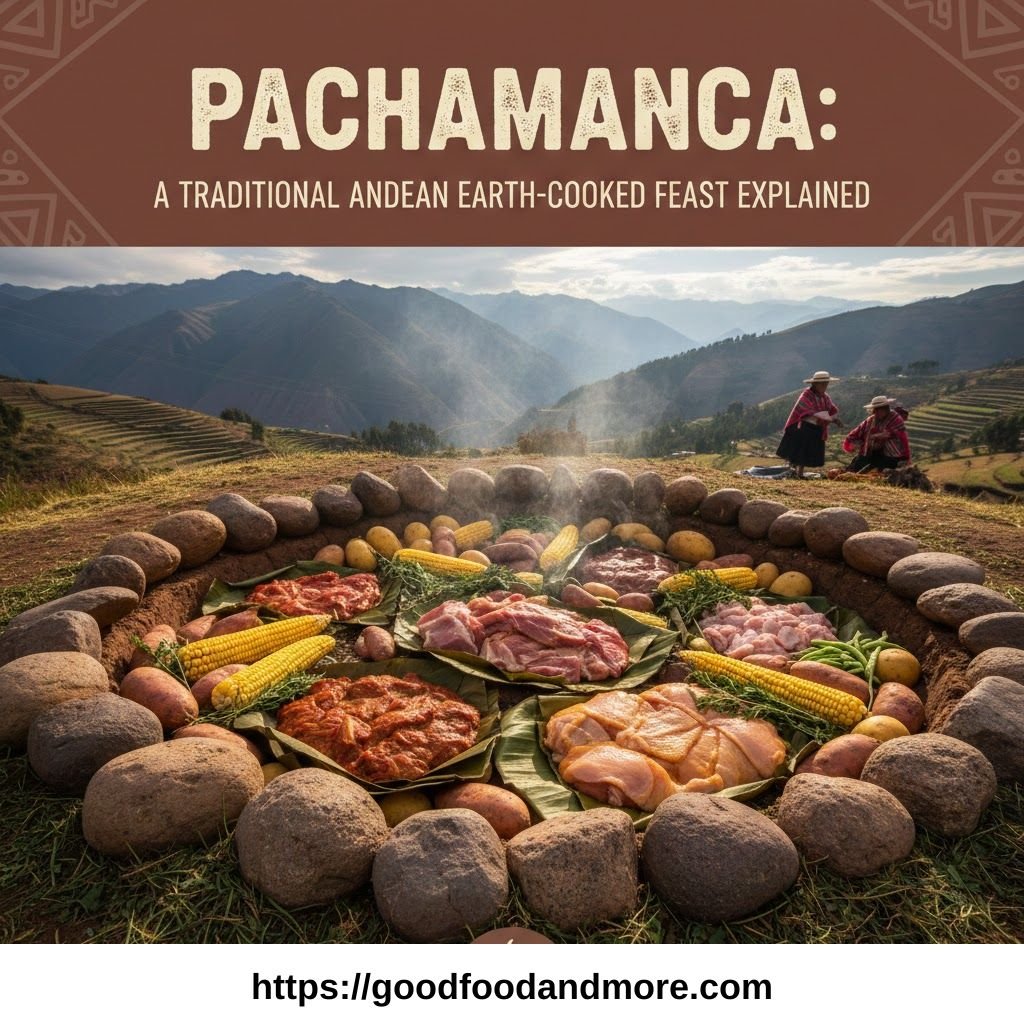
Pachamanca is considered to be one of the oldest and culturally important foods of the Andean world, especially in Peru. Pachamanca is not just a recipe but a symbolic bond between food, land, and people. It is simply called the Quechua words pacha (earth or world) and manka (pot), which together translate to "earth pot". This is an ideal scenario of the traditional way of cooking: food cooked in the ground by the use of hot stones.
Origins and Cultural Significance
Pachamanca was thousands of years old. The indigenous people of the Andes created this technique to pay some respect to Pachamama, Mother Earth, which is the main figure of Andean spirituality. The food is a traditional one cooked on festive occasions, harvest seasons, family reunions, and group rites. Pechamanca cooking is a common event that brings social cohesion and culture.
How Pachamanca Is Traditionally Prepared
Pachamanca is made by first preparing a shallow hole in the ground. The stones are heated and placed over a fire until very hot, and then put in the pit. There are numerous types of ingredients stacked on the stones, usually encircled by leaves to preserve moisture and taste. The food is then buried in soil, enabling it to cook gradually through the heat and steam that is trapped.
The earth cooking method produces tender meats and vegetables that are smoky and herb-flavored, which is not easily achieved by modern kitchen appliances.
Key Ingredients
While recipes vary by region and season, traditional Pachamanca commonly includes:
- Meats such as lamb, pork, chicken, or guinea pig (historically)
- Native Andean tubers like potatoes, sweet potatoes, and yuca
- Corn and fava beans
- Herbs such as huacatay (Peruvian black mint) and chincho
The ingredients are often marinated beforehand with spices and herbs, enhancing both flavor and aroma.
Regional Variations
Pachamanca varies in the highlands of Peru. Some regions value certain meats more than others, and some that value vegetables and legumes more. Adaptations to the coast can make things easier in a modern context, though the nature of the dish, which is earth-based and involves public involvement, does not change.
Nutritional Value
Pachamanca is a balanced meal in terms of nutrition. It is a mixture of protein, in the form of meats and legumes, complicated carbohydrates, in the form of tubers and corn, and micronutrients, in the form of herbs and vegetables. Some of the natural nutritional content is preserved in the food since it is not fried, but steamed.
Pachamanca in Modern Times
Pachamanca is still made in the traditional way in the rural regions of the country; however, it has also become part of the modern Cuisine of Peru. The recipe is frequently modified in restaurants and by home cooks with the use of ovens or large pots without changes in the traditional flavor. Irrespective of the modernization, Pachamanca still represents the value of nature, tradition, and communal food.
In Good Food and More, we put our emphasis on such dishes as Pachamanca to preserve and celebrate the food traditions of the world, where the culture, history, and nutrition meet each other on the plate.
Frequently Asked Questions (FAQ)
What does Pachamanca mean?
Pachamanca means “earth pot” in Quechua, referring to its underground cooking method.
Is Pachamanca still cooked traditionally today?
Yes. In many Andean communities, Pachamanca is still prepared using hot stones and earth, especially during festivals and family events.
Can Pachamanca be made at home without digging the ground?
Modern adaptations use ovens or covered pots to recreate the flavors, though the traditional method offers a unique taste and cultural experience.
What meats are used in Pachamanca?
Common meats include lamb, pork, and chicken. Historically, the guinea pig was also used in certain regions.
Is Pachamanca a healthy dish?
Yes. It is a nutrient-rich, balanced meal made with whole foods and minimal processing.
Tags : .....