Professional landscape construction is a critical stage in commercial and civil developments. It transforms engineered designs into functional, durable, and compliant outdoor environments that integrate seamlessly with built infrastructure. For large-scale projects, landscape construction is not decorative—it is structural, technical, and performance-driven.
In commercial and civil settings, landscape construction supports safety, accessibility, drainage, environmental outcomes, and long-term asset value. Every element must align with construction drawings, engineering requirements, and regulatory standards.
Better View Landscapes delivers professional landscape construction services exclusively for commercial, government, and infrastructure projects, ensuring landscapes perform reliably under heavy use and environmental stress.
What Is Landscape Construction in a Civil Context?
Landscape construction refers to the physical implementation of approved landscape designs on commercial and civil sites. It follows earthworks and civil construction and involves installing hard and soft landscape elements according to detailed specifications.
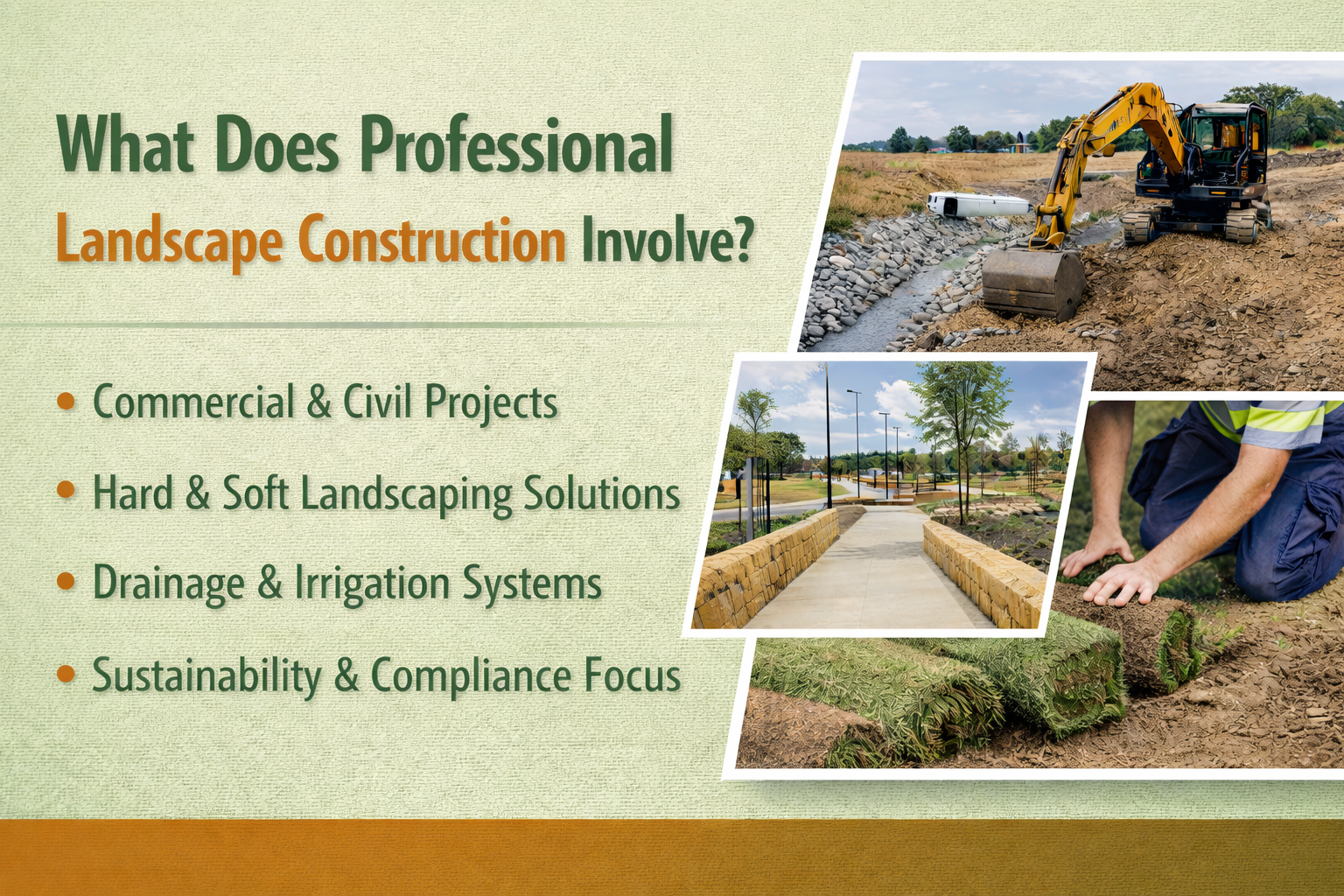
Civil and commercial landscape construction typically includes:
Ground preparation and final trim
Structural and hard landscaping
Soft landscaping and planting
Drainage and irrigation systems
Erosion control and stabilisation
Unlike residential landscaping, civil landscape construction prioritises compliance, longevity, and integration with infrastructure.
Why Landscape Construction Is Critical for Commercial Projects
Landscape construction plays a vital role in the overall success of infrastructure and commercial developments. Poorly executed works can lead to drainage issues, surface failures, safety risks, and increased maintenance costs.
Professional landscape construction services ensure:
Safe and accessible public environments
Long-term durability of outdoor assets
Compliance with Australian standards
Reduced lifecycle and maintenance costs
Improved environmental performance
For developers and councils, landscape construction is a functional asset—not an aesthetic add-on.
Core Elements of Landscape Construction Services
Ground Preparation and Final Trim
Accurate ground preparation ensures correct levels, compaction, and surface stability. This stage is essential for long-term performance.
Hard Landscaping Construction
Hard landscaping includes retaining walls, paths, kerbs, stairs, seating, and structural elements. These features are engineered for durability and heavy traffic.
Soft Landscaping Installation
Soft landscaping stabilises soil, supports drainage, and enhances environmental outcomes. Plant selection focuses on resilience and sustainability.
Drainage and Water Management
Drainage systems protect landscape and civil assets from erosion and water damage. Integration with stormwater infrastructure is critical.
Irrigation Systems
Large-scale irrigation infrastructure supports plant establishment while ensuring water efficiency and compliance.
Compliance and Quality in Landscape Construction
Civil landscape construction projects must comply with Australian standards, council specifications, and environmental regulations. Quality control and safety management are essential throughout delivery.
Professional landscape construction ensures:
Alignment with construction drawings
Correct material selection
Safe work practices on active sites
Documentation and quality assurance
Smooth project handover
A compliance-focused approach reduces risk and supports long-term asset performance.
Sustainability in Commercial Landscape Construction
Sustainability is a core requirement in modern landscape construction services. Water-sensitive urban design (WSUD), erosion control, and appropriate planting strategies support environmental and operational goals.
Sustainable commercial landscaping practices help:
Reduce water usage
Improve biodiversity
Enhance site resilience
Meet government sustainability targets
Landscape construction now plays a key role in responsible infrastructure delivery.
Who Requires Professional Landscape Construction?
Professional landscape construction services are essential for:
Commercial developments
Government and council projects
Transport and road infrastructure
Industrial and logistics facilities
Educational and healthcare sites
Public open spaces and civic precincts
These environments require landscapes designed for safety, performance, and longevity.
Choosing the Right Landscape Construction Contractor
Selecting the right contractor is critical to project success. Landscape construction must be delivered in coordination with civil works and construction schedules.
An experienced provider offers:
Proven civil and commercial expertise
Strong project coordination
Compliance-driven delivery
High-quality workmanship
Reliable timelines and reporting
A professional landscape construction contractor becomes a trusted construction partner.
Conclusion
Professional landscape construction is a vital component of commercial and civil developments. By combining engineering awareness, environmental responsibility, and construction expertise, landscape construction delivers functional, compliant, and sustainable outdoor environments.
For developers, councils, and contractors, investing in expert landscape construction services ensures projects perform safely, efficiently, and reliably for decades.
Frequently Asked Questions (FAQ)
What is the difference between landscape construction and landscaping?
Landscape construction focuses on building engineered landscape elements for commercial and civil projects, not maintaining or decorating spaces.
Is landscape construction part of civil construction programs?
Yes. Landscape construction is staged alongside civil works and final project delivery.
Do landscape construction projects require council approval?
Most landscape construction projects must comply with council and regulatory requirements.
Why is drainage important in landscape construction?
Drainage protects infrastructure from erosion, flooding, and long-term damage.
Can landscape construction reduce maintenance costs?
Yes. Proper construction improves durability and reduces ongoing maintenance