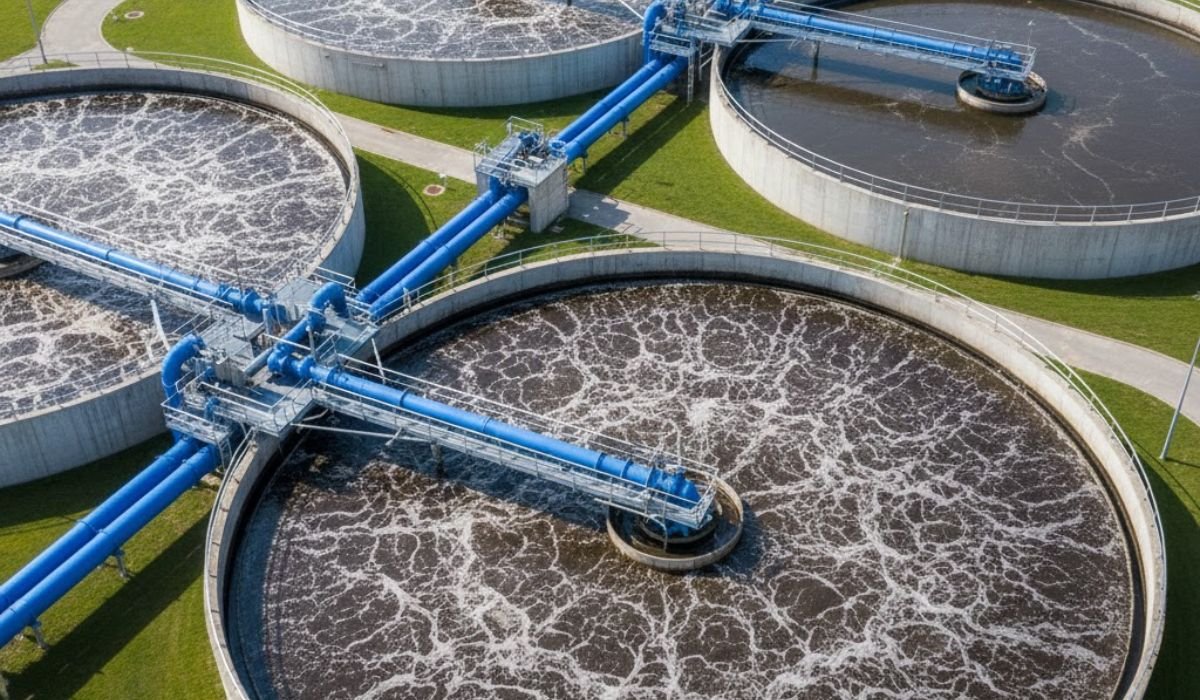
Weltreat Systems is involved in the design and implementation of wastewater and sewage treatment solutions for industrial, commercial, and residential facilities. The company follows an engineering-driven approach, where treatment systems are planned based on actual wastewater characteristics, site conditions, and long-term operational requirements rather than standard assumptions or generic system layouts.
Wastewater treatment is a critical requirement for facilities that generate domestic sewage or industrial effluent as part of their daily operations. Effective treatment systems require a clear understanding of influent quality, flow variations, and performance expectations. Weltreat Systems emphasizes technical evaluation and process understanding before finalizing any treatment configuration. This approach helps ensure that treatment systems perform reliably under real operating conditions and remain stable over extended operational periods.
The scope of work includes sewage treatment plants designed for domestic and sanitary wastewater generated from residential societies, commercial buildings, hospitals, hotels, educational institutions, and other similar facilities. Sewage treatment systems typically rely on biological treatment processes supported by appropriate pre-treatment and clarification stages. These systems are designed to manage fluctuations in sewage load, occupancy patterns, and daily flow variations commonly observed in urban facilities.
Effluent treatment systems are developed to treat industrial wastewater generated from manufacturing and processing activities. Industrial effluent often contains varying concentrations of organic matter, suspended solids, chemicals, and dissolved contaminants. The design of effluent treatment systems requires careful consideration of parameters such as pH variation, chemical oxygen demand, biological oxygen demand, total dissolved solids, and oil or grease content. Treatment processes are selected based on these characteristics to achieve stable performance and predictable treatment outcomes.
Weltreat Systems focuses on integrating physical, chemical, and biological treatment processes in a coordinated manner. Treatment units are designed to function as part of an integrated system rather than as isolated components. This integration supports smoother operation, reduces process disruptions, and improves overall system reliability. Proper sequencing of treatment stages helps protect downstream units and enhances long-term performance.
Another important aspect of wastewater treatment design is sludge management. Sludge generation and handling play a significant role in system performance and operational costs. Treatment systems are planned with clear provisions for sludge stabilization, dewatering, and removal. Proper sludge management helps maintain treatment efficiency and reduces the risk of operational challenges.
Operational reliability is a key consideration in treatment system design. Facilities often experience variations in wastewater generation due to changes in occupancy, production schedules, or seasonal factors. Systems designed without accounting for these variations may face frequent breakdowns or inconsistent treatment quality. Weltreat Systems considers these practical factors during the design stage to support stable operation under varying conditions.
The company also places emphasis on ease of operation and maintenance. Complex treatment systems that require constant manual intervention often become difficult to manage over time. Engineering decisions are made to simplify operation where possible while maintaining treatment efficiency. This approach helps facilities manage treatment systems with available resources and technical capabilities.
Scalability and future requirements are also considered during system planning. Facilities may expand operations or experience increased wastewater generation over time. Treatment systems can be designed with modular configurations or provisions for capacity enhancement. This forward-looking approach helps reduce the need for major system modifications in the future and supports long-term wastewater management planning.
In addition to treatment system design, Weltreat Systems supports process optimization and engineering integration. Treatment performance can often be improved through adjustments in process configuration, aeration control, or chemical dosing strategies. Optimization efforts focus on improving efficiency while minimizing excessive energy or chemical consumption.
The company works closely with clients, consultants, and facility teams throughout the planning and implementation stages. Clear communication and technical evaluation form the basis of project execution. Understanding operational challenges and performance expectations allows treatment systems to be aligned with actual facility needs rather than theoretical design targets.
Wastewater and sewage treatment systems are long-term infrastructure investments. Their success depends not only on installation but also on sustained performance over time. An engineering-focused approach helps address practical challenges and supports consistent treatment outcomes. Weltreat Systems aims to contribute to effective wastewater management by focusing on system reliability, treatment efficiency, and operational stability across different applications.
Through its emphasis on engineering evaluation, process understanding, and practical execution, Weltreat Systems supports wastewater and sewage treatment requirements for a wide range of facility types. The objective remains to deliver treatment systems that align with real operating conditions and support long-term wastewater management goals.