Vehicle Tracking Software: Smarter Fleet Visibility and Better Transportation Management
By Varsha 05-08-2026 85
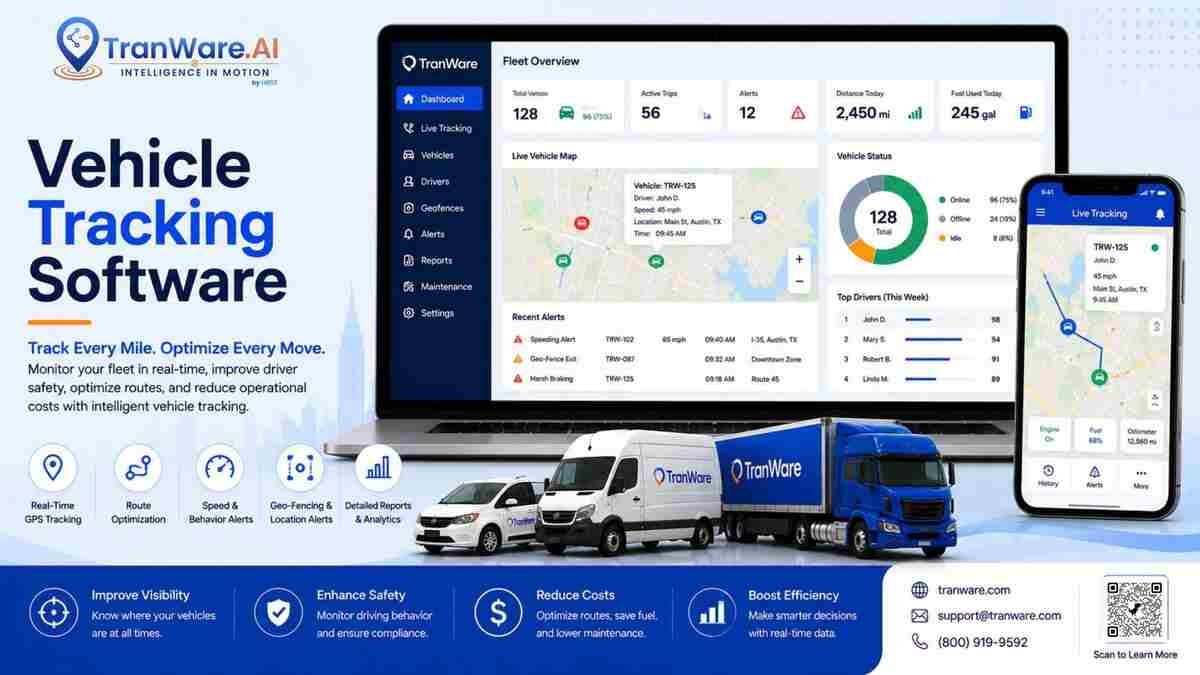
Keeping track of vehicles is a key part of running a safe, reliable, and efficient transportation operation. When vehicles are moving between pickup points, facilities, customer locations, or service areas, fleet managers need clear visibility into where they are and how they are performing. This is where vehicle tracking software can make a major difference.
Modern transportation companies use a vehicle tracking system to monitor fleet activity, improve communication, support dispatch teams, and make better operational decisions. Instead of depending only on phone calls or manual updates, managers can use real-time vehicle information to understand fleet activity from a central location.
What Is Vehicle Tracking Software?
Vehicle tracking software is a digital solution that helps transportation companies monitor the location and movement of their vehicles. Depending on the system, fleet managers can view vehicle locations, monitor status, review trip activity, and use location data to improve daily operations.
For businesses operating multiple vehicles, fleet vehicle tracking can provide a clearer picture of fleet activity. Dispatchers can see which vehicles are available, where they are operating, and how their movements relate to scheduled transportation services.
A modern tracking platform can also work alongside scheduling, dispatching, routing, maintenance, and other transportation management functions.
Why Is Vehicle Tracking Important for Fleet Operations?
Without accurate vehicle information, fleet managers may spend valuable time calling drivers, checking schedules, or trying to estimate arrival times.
A reliable vehicle tracking system for fleet management can help teams:
- Monitor vehicle locations
- Improve dispatch visibility
- Support better trip coordination
- Provide more accurate arrival information
- Identify vehicle movement and status
- Improve communication between drivers and dispatchers
- Support fleet planning
- Connect vehicle activity with transportation operations
- Create better operational records
For NEMT, paratransit, public transportation, and other passenger transportation providers, visibility can be especially useful because trips often involve multiple vehicles, passengers, pickup locations, and time-sensitive schedules.
How Does Fleet Vehicle Tracking Work?
Most modern tracking systems combine GPS technology, communication networks, and fleet management software.
A GPS-enabled vehicle can provide location information to the tracking platform. The software then processes that information and displays it through a dashboard or other interface.
A basic tracking workflow looks like this:
Vehicle → GPS/location data → Tracking platform → Fleet dashboard → Dispatch and management decisions
This gives fleet teams a central view of vehicle activity instead of relying entirely on manual communication.
How to Track a Vehicle in Transit?
If you are wondering how to track a vehicle in transit, the process generally starts with a GPS-enabled vehicle or tracking device connected to fleet tracking software.
A typical process includes:
- Install or activate a GPS tracking device in the vehicle.
- Connect the device to the tracking platform.
- Assign the vehicle to the appropriate fleet record.
- Monitor location information through the software dashboard.
- Review vehicle movement as the trip progresses.
- Use tracking information to support dispatch, customer communication, and fleet decisions.
The exact tracking frequency and features depend on the hardware, connectivity, software configuration, and provider.
GPS Tracking Devices for Fleet Vehicles
GPS tracking devices for fleet vehicles provide the location data needed by many vehicle tracking platforms.
Depending on the solution, tracking devices may provide information such as:
- Current vehicle location
- Vehicle movement
- Trip activity
- Location history
- Vehicle status
- Route-related information
The best device and tracking frequency depend on the type of fleet, vehicle usage, coverage area, and operational needs.
For transportation businesses, the goal is not simply to know where a vehicle is. The bigger goal is to turn location data into useful information for dispatchers and fleet managers.
Vehicle Tracking and Fleet Dispatch
Vehicle tracking becomes more valuable when it works with dispatch operations.
Imagine a dispatcher needs to assign a vehicle to a new passenger pickup. Instead of checking every driver's location manually, the dispatcher can use available vehicle information to identify a suitable vehicle.
This can help reduce unnecessary communication and support faster decisions.
For NEMT providers, tracking can also support coordination between scheduled trips and vehicle availability. When combined with scheduling and route planning, location information becomes part of a larger transportation workflow.
Vehicle Tracking and Vehicle Maintenance Software
Tracking should not be viewed as a standalone fleet function.
Vehicle location and usage information can also support vehicle maintenance software and fleet maintenance planning.
For example, a fleet manager may use operational information to understand:
- Which vehicles are actively being used
- Which vehicles are available
- How vehicles are being deployed
- Which vehicles may need maintenance planning
- How vehicle activity affects availability
Combining vehicle tracking with maintenance processes can help organizations create a more complete picture of fleet performance.
Tracking data alone does not replace maintenance inspections or preventive maintenance schedules. Instead, it can complement the information fleet managers already use when planning maintenance.
Benefits of Vehicle Tracking System for Fleet Management
A well-designed vehicle tracking system for fleet management can offer several practical benefits.
Better Fleet Visibility
Managers can gain a clearer view of where vehicles are operating and how the fleet is being used.
More Efficient Dispatching
Dispatchers can make decisions based on current vehicle information rather than relying only on scheduled locations.
Improved Communication
When teams have better visibility, they can communicate more accurately with drivers, customers, facilities, and other stakeholders.
Better Trip Coordination
Tracking can help transportation companies compare vehicle movement with scheduled trips and operational plans.
Improved Customer Service
Accurate vehicle information can help companies provide more useful arrival and trip-status updates.
Stronger Fleet Planning
Historical and current vehicle information can help managers understand fleet utilization and make better operational decisions.
Fleet Management Vehicle Tracking: Beyond Location
Fleet management vehicle tracking is not simply about placing vehicles on a map.
The real value comes from connecting location data with other transportation processes.
For example:
Scheduling → Dispatching → Route Planning → Vehicle Tracking → Trip Completion → Reporting
When these functions work together, fleet managers can gain better operational visibility from the beginning of a trip through completion.
This is particularly important for transportation businesses that manage large fleets or coordinate many daily trips.
Vehicle Tracking System vs. Manual Tracking
Manual methods may work for a small operation with only a few vehicles. However, as fleets grow, a digital tracking platform can make vehicle information easier to access and use.
What Should You Look for in Vehicle Tracking Software?
Before selecting vehicle tracking software, consider your company's operational requirements.
Important factors include:
- Real-time or near-real-time tracking
- Easy-to-use fleet dashboard
- Vehicle location history
- Driver and vehicle identification
- Dispatch integration
- Scheduling integration
- Route planning capabilities
- Mobile accessibility
- Reporting tools
- GPS compatibility
- Scalability
- Data security
- Customer notification capabilities
It's also important to consider whether the platform can connect with other systems your company already uses.
How TranWare Supports Vehicle Tracking
TranWare provides vehicle tracking capabilities designed to help transportation companies improve visibility across their operations.
Its vehicle tracking solution can support transportation providers that need better insight into vehicle activity and fleet operations. By bringing tracking into a broader transportation management environment, businesses can connect vehicle visibility with other operational processes.
For NEMT, paratransit, public transportation, and mixed-use fleets, this type of connected approach can help dispatch and management teams make better-informed decisions.
Rather than treating tracking as a separate tool, TranWare's approach allows vehicle visibility to work alongside other transportation functions, helping create a more connected fleet management workflow.
Who Can Benefit From Vehicle Tracking?
Vehicle tracking can be useful for many transportation organizations, including:
- NEMT providers
- Paratransit operators
- Public transit agencies
- Medical transportation companies
- Fleet operators
- Transportation service providers
- Mixed-use fleets
- Contract transportation providers
The benefits may vary depending on fleet size, vehicle types, operating area, and service model.
Common Vehicle Tracking Mistakes to Avoid
1. Choosing Software Based Only on Price
The cheapest solution may not provide the integrations or functionality your fleet needs.
2. Ignoring Integration
A tracking system that cannot connect with scheduling, dispatch, or other fleet tools may create another isolated source of information.
3. Focusing Only on the Map
A map is useful, but fleet managers should also consider reporting, history, dispatch support, and operational workflows.
4. Not Training Dispatch Staff
Even good tracking technology provides limited value if dispatchers do not know how to use the information effectively.
5. Forgetting About Data Security
Location data should be handled responsibly, with appropriate access controls and security practices.
Final Thoughts
Vehicle tracking software gives transportation companies a practical way to improve visibility across their fleets. By combining GPS-based location information with dispatch, scheduling, routing, maintenance, and reporting workflows, fleet managers can make more informed decisions throughout the day.
For organizations looking beyond basic location tracking, a connected vehicle tracking system can become an important part of broader fleet management. TranWare provides transportation-focused vehicle tracking capabilities that can help NEMT, paratransit, public transit, and mixed-fleet operators bring vehicle visibility into their wider transportation operations.
As fleets become more complex, having accurate and accessible vehicle information can help transportation teams stay organized, coordinate trips more effectively, and provide better service.