Transport Scheduling Software: A Complete Guide to Smarter Transportation Operations
By Varsha 16-09-2026 12
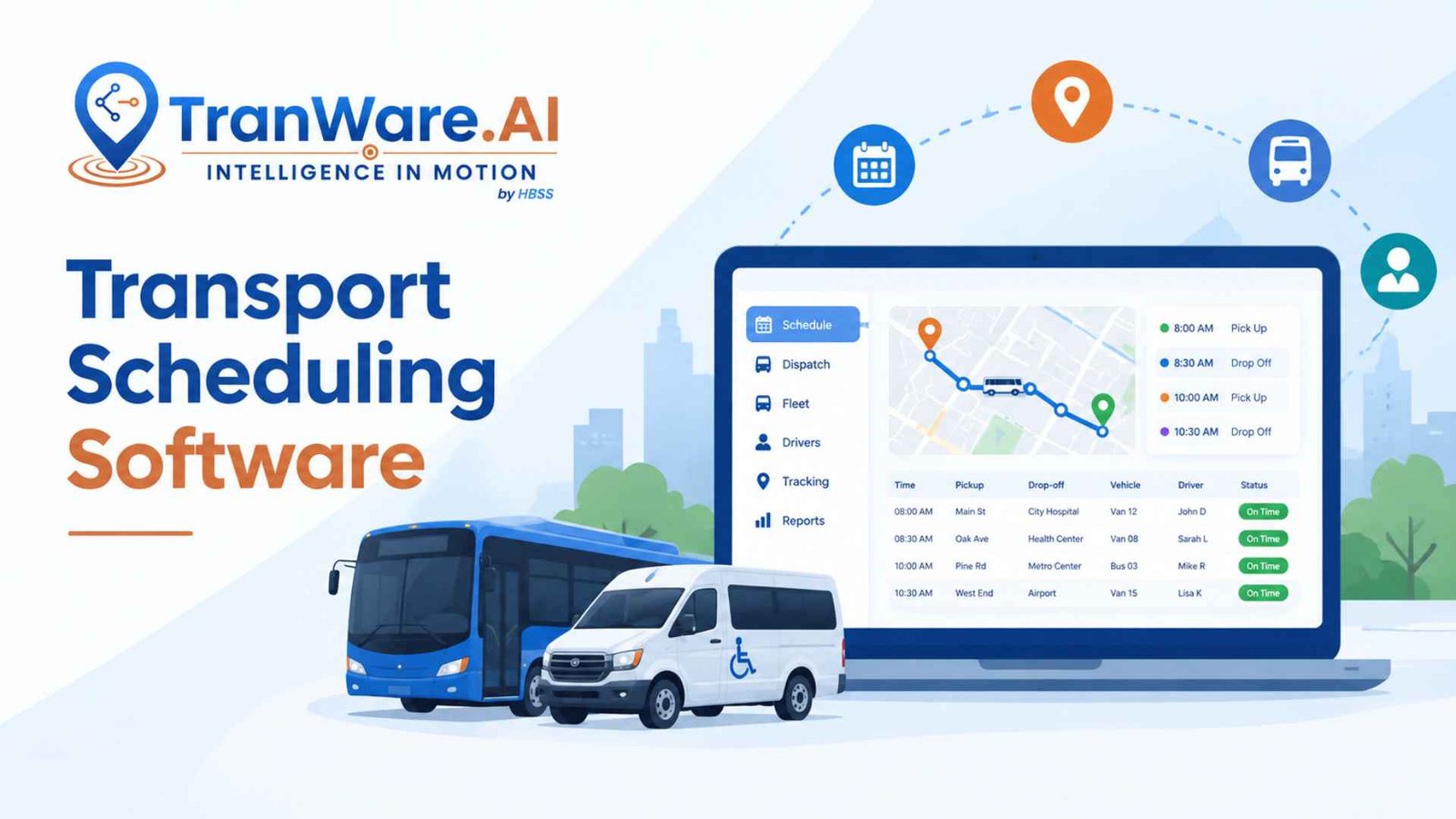
Transportation businesses manage many moving parts every day, including passengers, drivers, vehicles, routes, schedules, dispatching, and customer requests. When these activities are handled manually, even a small change to a trip can create additional work for dispatchers and drivers.
Transport scheduling software provides a centralized way to organize transportation activities, automate repetitive tasks, and improve visibility across daily operations. It can be used by NEMT providers, paratransit operators, transit agencies, shuttle services, and other transportation companies.
What Is Transport Scheduling Software?
Transport scheduling software is a digital system designed to help transportation providers create, manage, and update trips. It can connect scheduling with dispatching, route planning, vehicle assignment, driver management, GPS tracking, and customer information.
A modern transportation scheduler software platform can help dispatchers view available vehicles and drivers, assign trips, manage recurring transportation, and respond to schedule changes.
Instead of maintaining separate spreadsheets, phone calls, and paper records, transportation teams can manage important information through a centralized platform.
Why Transportation Businesses Need Scheduling Software
Transportation schedules can change throughout the day. A customer may cancel a trip, a driver may become unavailable, or a vehicle may require maintenance. Manual processes make it difficult to update all affected information quickly.
A software for transportation scheduling system can help teams manage these changes more efficiently.
Common benefits include:
- Centralized trip scheduling
- Driver and vehicle assignment
- Automated dispatching
- Route planning
- Real-time vehicle visibility
- Recurring trip management
- Customer information management
- Trip status updates
- Reporting and analytics
- Reduced manual data entry
For organizations managing large numbers of daily trips, these capabilities can help create a more organized workflow.
Key Features of Transport Scheduling Software
The features required depend on the type and size of a transportation operation. However, several capabilities are particularly useful.
1. Trip Scheduling
Schedulers can create trips based on pickup and drop-off locations, requested times, passenger requirements, and service types.
Recurring trips can also be scheduled for customers who need transportation regularly.
2. Driver and Vehicle Assignment
The system can help dispatchers match trips with available drivers and appropriate vehicles. This is especially important for paratransit and NEMT operations where passengers may have specific transportation requirements.
3. Automated Dispatching
Automated dispatching can reduce the amount of manual work required to distribute trips to drivers. Depending on the system configuration, dispatching can consider vehicle location, driver availability, service area, and other operational factors.
4. Route Planning
Transportation scheduling works closely with routing. A scheduling platform with route optimization capabilities can help organize trips into practical routes and respond when trips are added, canceled, or changed.
5. Real-Time Tracking
GPS integration provides visibility into vehicle locations and trip progress. Dispatchers can use this information to monitor active transportation services and respond to operational issues.
6. Customer and Trip Management
A centralized system can store customer profiles, trip history, service requirements, and other important information. This can help customer service teams respond to inquiries more quickly.
Transport Network Software for Connected Operations
Transport network software can provide a broader operational environment where scheduling, dispatching, tracking, routing, and customer management work together.
For example, when a new transportation request is received, the workflow may include:
Customer Request → Trip Scheduling → Vehicle Assignment → Driver Assignment → Route Planning → Dispatch → GPS Tracking → Trip Completion
Connecting these stages can reduce duplicate data entry and give transportation managers greater visibility into daily operations.
Paratransit Dispatch Software
Paratransit services often manage trips for passengers who require accessible transportation or additional assistance. Scheduling may involve wheelchair-accessible vehicles, specific pickup windows, recurring trips, and other passenger requirements.
Paratransit dispatch software can help dispatchers organize these requirements while coordinating drivers and vehicles.
A centralized system can also make it easier to modify trips when schedules change. This is particularly useful for operations that handle a high number of trips each day.
Transit Management System for Public Transportation
A transit management system can support public transportation operations by connecting scheduling, vehicle tracking, dispatching, passenger information, and reporting.
Transit agencies may need to monitor vehicles while also maintaining planned schedules and service information.
Modern transit software can provide tools for:
- Vehicle location tracking
- Schedule management
- Dispatching
- Route planning
- Ridership reporting
- Driver management
- Passenger information
- Operational analytics
TranWare's scheduling and dispatching solution also includes fixed-route functionality with live vehicle locations, stop information, schedules, and ridership reporting capabilities.
Can Free Transportation Scheduling Software Meet Business Needs?
Many businesses search for free transportation scheduling software or transportation scheduling software free options when starting a transportation operation.
Free tools may be useful for simple scheduling or testing basic workflows. However, growing transportation operations often require more advanced capabilities such as automated dispatching, GPS tracking, route optimization, billing, driver applications, reporting, integrations, and customer management.
Before selecting software, transportation providers should consider the total operational requirements rather than focusing only on the initial software cost.
Transloading Operations Software and Tracking
Transportation technology is not limited to passenger transportation. Businesses involved in freight and logistics may also use transloading operations software to coordinate the movement of goods between transportation modes.
Transloading tracking software can provide greater visibility into shipments, transfers, locations, and operational activities.
Although freight and passenger transportation have different requirements, both depend on accurate scheduling, timely communication, resource management, and real-time information.
Auto Transport Dispatch Software
Vehicle transportation companies also have specialized scheduling requirements. Auto transport dispatch software can help companies coordinate vehicle pickups, deliveries, drivers, routes, and customer information.
The appropriate software should match the company's operational model. A passenger transportation provider may prioritize customer scheduling and accessibility requirements, while an auto transportation company may focus more heavily on vehicle movements, loads, pickup locations, and delivery schedules.
Transit Software Solutions for Growing Fleets
As a transportation company grows, disconnected tools can become difficult to manage. Transit software solutions can bring multiple transportation functions into a connected system.
TranWare provides scheduling and dispatching capabilities alongside route optimization, vehicle tracking, mobile applications, billing, payment processing, automated call handling, and other transportation management functions.
Its scheduling platform supports automated and manual dispatching, customizable views, customer trip history, standing orders, driver scheduling, and cloud-based access.
Choosing the Right Transportation Scheduling System
Before selecting software transportation companies can rely on, decision-makers should evaluate several factors.
Scalability
The system should be able to support additional vehicles, drivers, customers, and trips as the organization grows.
Automation
Look for features that reduce repetitive scheduling, dispatching, notification, and administrative tasks.
Integration
The platform should be able to work with GPS, maps, payment systems, mobile applications, APIs, and other required technologies.
Ease of Use
Dispatchers and drivers interact with transportation software throughout the day. A clear interface can make training and daily use easier.
Reporting
Operational reports can help managers monitor trip activity, vehicle utilization, service performance, and other key metrics.
Industry Support
NEMT, paratransit, public transit, microtransit, and commercial transportation operations have different requirements. Selecting a system that supports the organization's specific workflow is important.
Conclusion
Transportation scheduling has become increasingly connected to dispatching, routing, GPS tracking, driver management, and customer service. Transport scheduling software can bring these activities into one centralized workflow and help transportation teams manage daily operations more efficiently.
Whether a company needs transport network software, paratransit dispatch software, transit software, auto transport dispatch software, or a transportation scheduling system, the right platform should match its operational requirements and future growth plans.
TranWare provides scheduling and dispatching technology designed for transportation operations, including NEMT, paratransit, public transportation, microtransit, and mixed-use fleets. Its platform combines scheduling, dispatching, route optimization, GPS tracking, fleet management, billing, mobile applications, and automation within a broader transportation management environment.