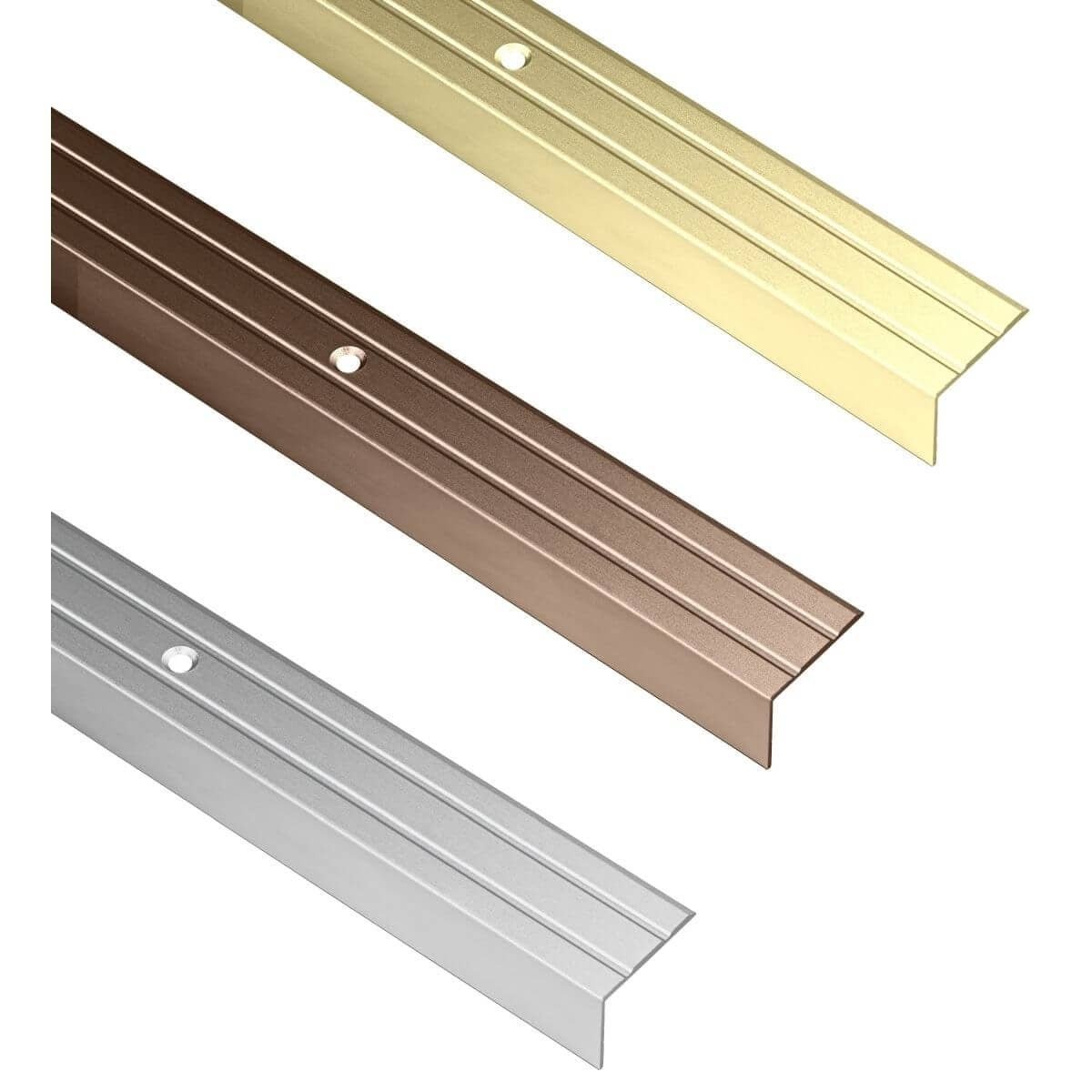
When it comes to constructing safe, durable, and aesthetically pleasing staircases, Stair Nosing is paramount. It's an unobtrusive yet powerful feature that provides added safety, guards against stair edges, and provides a sophisticated finish to commercial and domestic properties alike. Although stair nosing exists in many different materials ranging from rubber to PVC, wood, and brass Aluminium Stair Nosing is the most dependable, long-lasting, and economical choice for contemporary use.
In this article, we’ll explore the top reasons to choose Aluminium Stair Nosing over other materials, covering its durability, versatility, design benefits, and suitability for the demanding conditions often found in Stair Nosing UK installations.
What Is Stair Nosing and Why Is It Important?
Before diving into the specifics of aluminium, it’s essential to understand what Stair Nosing actually does.
Stair nosing refers to the protective strip or edging that resides at the front edge of every stair tread. It serves three functions:
- Safety: It offers a non-slip edge to avoid trips and falls.
- Protection: It protects stair edges from wear and tear due to heavy foot traffic.
- Aesthetics: It provides stairs with a clean, professional finish that complements flooring and décor.
Without nosing, stair edges become chipped and damaged, especially in busy areas like schools, offices, shopping malls, and factories. Making the right selection of nosing material is hence a critical choice for any construction or build project.
1. Greater Durability and Strength
One of the strongest arguments in favor of using Aluminium Stair Nosing is that it is the most durable. As a light metal with very high tensile strength, aluminium can perform well over the long term even in harsh environments.
Unlike PVC or rubber, aluminium does not crack, warp, or lose shape with age. Its impact and pressure resistance make it particularly suitable for areas with high traffic, like train terminals, public facilities, and office buildings.
Even when compared with other Metal Stair Nosing alternatives such as brass or steel, aluminium finds the ideal balance between its strength and lightness. It offers all of metal's strength without proving too heavy or hard to install.
In short: if you desire a stair nosing which can take years of everyday wear and tear without degrading, aluminium is the most dependable option.
2. Outstanding Slip Resistance and Safety
Safety is the most important reason for the use of stair nosing, and Aluminium Stair Nosing bests the competition in this area. Contemporary designs frequently feature anti-slip inserts crafted from rubber, PVC, or grit-filled materials that provide grip and inhibit the possibility of slipping, even on wet or oily surfaces.
In public areas or business premises, this is especially so for UK health and safety compliance. Stair Nosing UK regulations highlight the requirements for anti-slip surfaces, visibility strips, and robust edges to avoid accidents. Aluminium nosing not only complies but tends to surpass these regulations.
Additionally, aluminium can be anodised or powder-coated with contrasting colours to make it more visible, allowing users to easily view stair edges in low-visibility or high-contrast conditions. This additional visual warning also minimises trip hazards and maximises accessibility for all users, including visually impaired individuals.
3. Low Maintenance and Corrosion Resistance
While wood or steel is subject to corrosion, rusting, and moisture, aluminium provides outstanding protection against these. This renders Aluminium Stair Nosing very suitable for both indoor and outdoor applications.
Wooden nosing, as beautiful as it may be, needs constant sealing and maintenance to avoid rot or humidity damage. Steel rusts when untreated, and PVC discolours or loses adhesion with the passage of time. Aluminium, on the other hand, remains in top condition with little maintenance.
A quick wipe with a moist cloth or mild soap usually is enough to maintain aluminium nosing in its new condition. In facilities like hospitals, schools, and public buildings where longevity and cleanliness are a top concern this low-maintenance property is a huge plus.
4. Lightweight Yet Strong
Among aluminium's most significant engineering benefits is that it has a very high strength-to-weight ratio. What this implies is that it provides the strength of heavier metals such as steel but at a fraction of their weight.
Such lightness makes Aluminium Stair Nosing much less difficult to handle, move around, and install. Building contractors and maintenance personnel prefer working with aluminium because it can be cut, drilled, and fitted with standard tools without the need for special equipment.
The payoff? Reduced installation times, reduced labour expenses, and reduced physical stress in the process of building all without sacrificing performance or security.
5. Design and Application Versatility
Aluminium Stair Nosing comes in a broad range of profiles, finishes, and sizes to meet the needs of every kind of staircase. From fitting carpeted stairs in an office, tiled steps in a retail environment, or concrete stairs in a warehouse, there is a design that is tailored to perfection.
Some of the standard types include:
Bullnose profiles: To provide sleek, curved edges and refined transitions.
Square-edge profiles: Suitable for contemporary, minimalist looks.
Retro-fit nosing: Specifically created to be retro-fitted to existing stairs for rapid upgrading.
Recessed profiles: Installed into the floor for a flush look.
Aluminium's flexibility also allows it to be anodised in a range of colours silver, black, bronze, or gold to match flooring or increase safety contrast. With Stair Nosing UK installations, this flexibility ensures that both aesthetic and accessibility standards are met.
6. Cost-Effective Long-Term Investment
Though the up-front investment in Aluminium Stair Nosing may be a little greater than for simple PVC or rubber, it's considerably less expensive in the long run. Its very long lifespan, low maintenance needs, and durability result in fewer replacements and lower total expenses.
Wood or PVC nosing typically requires replacement every few years due to wear or discoloration. Aluminium, by contrast, can withstand decades before losing its strength or its appearance. This is why it's the preferred material for huge commercial projects or public spaces where long-term performance and value are a concern.
In short, aluminium provides the best of both worlds in terms of affordability and durability making it a wise investment for builders, architects, and homeowners.
7. Contemporary, Professional Finish
In addition to its functional value, Aluminium Stair Nosing provides a contemporary, professional look to any staircase. Its metal gleam is an added visual beauty for modern and industrial-interior designs.
For companies, appearance is important. Finishing staircase steps in a neat, clean way not only portrays professionalism but also is a part of maintaining a clean, integrated design. Aluminium has a neutral color that suits a variety of flooring surfaces, such as tile, vinyl, wood, and carpet.
In high-traffic public areas, it maintains its polished look even under constant use a subtle but significant contribution to the overall aesthetics of a building.
8. Environmentally Friendly Choice
Sustainability is an increasingly important factor in construction and renovation projects. Aluminium is one of the most environmentally friendly materials available because it’s 100% recyclable.
In contrast to PVC, made from non-renewable materials, or hardwood, which requires deforestation, aluminium is recyclable for an unlimited number of times without degrading. This renders Aluminium Stair Nosing a sustainable option for environmentally friendly projects and adheres to green building codes throughout the Stair Nosing UK industry.
9. Fire and Heat Resistance
In fire-critical environments, fire resistance is also a critical consideration. Aluminium does not burn and has a high melting point, so it is a much safer choice than PVC or rubber, which will melt or release toxic gases when subjected to high temperatures.
For this reason, Metal Stair Nosing, especially aluminium, is well suited to use in public buildings, transport terminals, and industrial locations where fire safety regulations are tight.
10. Ideal for Indoor and Outdoor Installation
Not all materials are equally suitable for outdoor use. Wood can warp, and PVC can crack when there is temperature variation. Aluminium, on the other hand, excels indoors as well as outdoors due to its corrosion resistance and durability for all weather conditions.
Whether applied to exterior staircases, loading bays, or office internal staircases, Aluminium Stair Nosing delivers year-round consistency in protection and performance perfect for the varying climate conditions found throughout the UK.
Conclusion
When comparing various materials for stair edging, Aluminium Stair Nosing outshines the rest in almost every aspect maintenance, safety, visual appeal, and affordability.
It provides the strength of protection of a Metal Stair Nosing, the light weight advantage of simple installation, and the contemporary style that enhances today's design trends. To facility managers, builders, and homeowners, it is an investment for years to come in safety, functionality, and aesthetics.
Whether you're refitting a set of stairs or embarking on a new construction project, selecting Aluminium Stair Nosing guarantees you'll receive the ideal balance of strength, safety, and sophistication. And with so many different options open to you across Stair Nosing UK suppliers, selecting the ideal profile for your scheme has never been more convenient.
In a nutshell: Aluminium is more than just another nosing material for stairs it's the gold standard for performance, dependability, and style.