Top 10 HR Management Software Solutions for 2025 | Stackerbee
By Stackerbee Technologies 20-11-2025 134
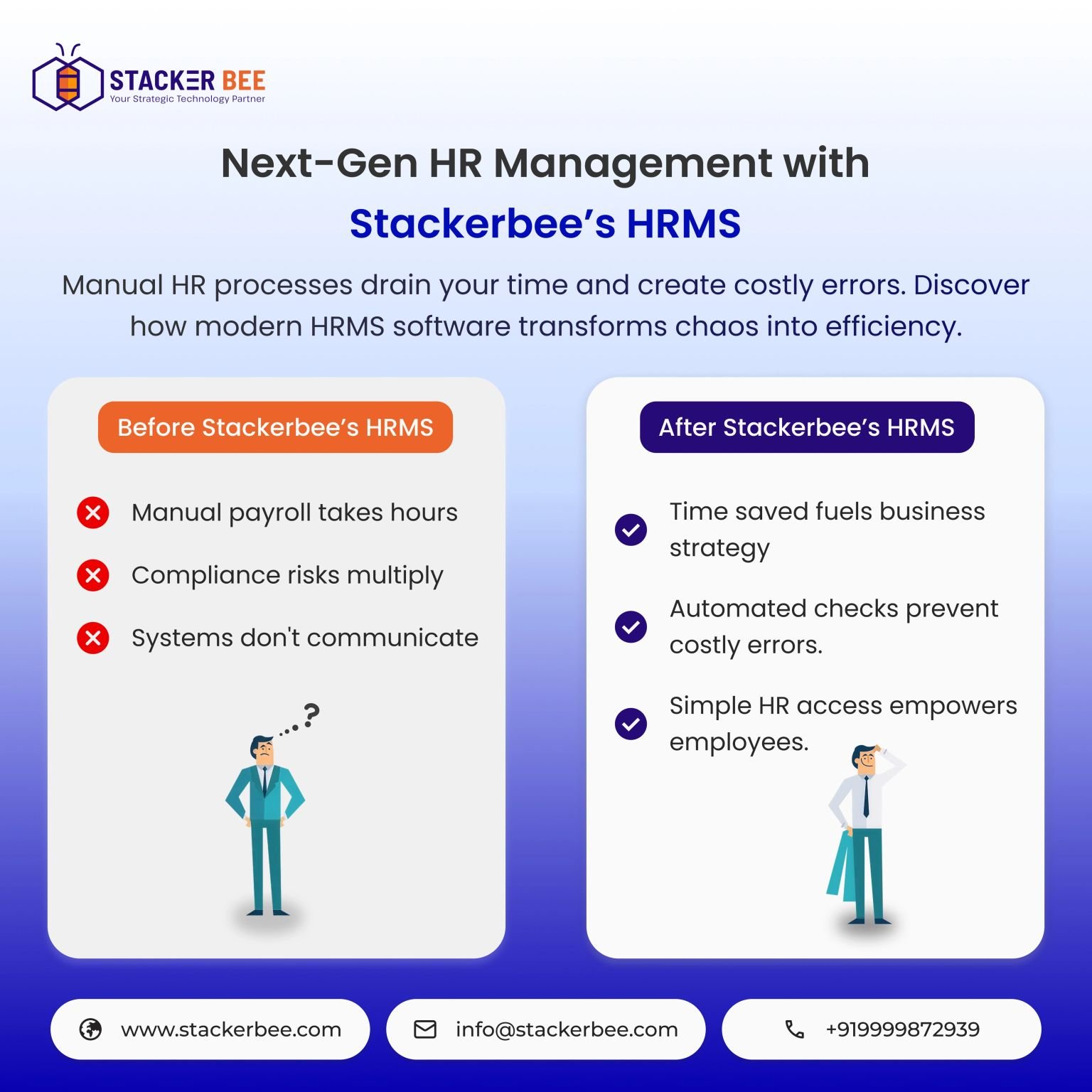
Human Resource Management has undergone drastic changes over the last decade. As organizations embrace digital transformation, traditional HR operations once handled through spreadsheets, emails, and manual processes are rapidly shifting to automated and intelligent systems. This evolution is being driven strongly by HRMS software, an all in one platform that centralizes HR functions and empowers organizations to create smarter, more efficient, and more strategic HR processes.
In this comprehensive guide, we will explore what an HRMS system is, how it works, the essential features it must include, its business benefits, and how to choose the right HRMS solutions for your company. Whether your business is a start up, mid size organization, or large enterprise, understanding HRMS software will help you build a more productive and data driven HR department.
What is an HRMS Software
HRMS stands for Human Resource Management System. It is a digital platform that automates, manages, and optimizes a wide range of HR functions. It serves as the backbone of HR operations by offering tools for:
Payroll management
Attendance and leave tracking
Talent acquisition and onboarding
Employee management and records
Performance evaluation
Benefits and compliance
Employee engagement and self service
Unlike traditional systems that handle only one HR function, an HRMS system integrates everything into a single interface. This ensures data accuracy, improves collaboration across departments, and reduces repetitive manual work.
Why Modern Businesses Need HRMS Solutions
Today’s business environment is shaped by hybrid workplaces, distributed teams, high employee expectations, and constantly changing compliance requirements. Relying on outdated or manual HR processes creates delays and errors. Organizations need HRMS solutions that offer automation, real time visibility, and strategic insights.
Here is why HRMS software is essential for modern businesses:
1. HR Tasks Are Becoming More Complex
From managing remote teams to handling diverse workforce needs, HR departments face more responsibilities than ever. HRMS software automates administrative tasks so HR professionals can focus on engagement, culture building, and strategic workforce planning.
2. Businesses Need Data Driven Decision Making
With built in dashboards and analytics, a modern HRMS system provides valuable insights into attendance patterns, employee performance, hiring needs, attrition risks, and training effectiveness.
3. Employees Expect Digital Convenience
Employees want self service features such as online payslips, mobile leave applications, and easy access to personal information. HRMS solutions help organizations deliver this convenience.
4. Remote and Hybrid Work Require Better Systems
With employees working from different locations, companies need centralized tools to track attendance, manage productivity, and streamline communication.
5. Compliance Needs Are Increasing
HRMS software helps organizations follow labor laws, tax rules, overtime regulations, and internal company policies which reduces risk and prevents penalties.
Key Features of an Effective HRMS System
Not all HRMS solutions offer the same features. The best platforms include a wide range of interconnected modules that support the full employee lifecycle. Below are the essential features:
1. Employee Data Management
A centralized database stores all employee information such as documents, work history, certifications, and personal details. This ensures accuracy and quick access to important data.
2. Payroll Management
Payroll is one of the most sensitive HR responsibilities. An HRMS system automates:
Salary calculations
Tax rules and deductions
Allowances
Overtime
Bonuses
Direct salary transfers
This reduces errors and ensures payroll is processed on time.
3. Attendance and Leave Management
Modern HRMS solutions often support biometric or GPS based attendance. These tools accurately track:
Working hours
Shift timings
Overtime
Leave and holidays
Remote or field attendance
Employees can request leave online and managers can approve with ease.
4. Recruitment and Onboarding
A reliable HRMS software simplifies hiring by managing job postings, resume screening, interview scheduling, and offer letters. Automated onboarding ensures new employees receive training materials, access permissions, and company policies without delay.
5. Performance Management
HRMS platforms make performance evaluations more effective with features like:
Goal setting
Continuous feedback
360 degree reviews
Automated appraisal cycles
Skill development tracking
Managers and employees gain clarity on expectations and progress.
6. Employee Self Service Portal
A self service portal allows employees to:
Check payslips
Request leave
Update personal information
Access HR policies
Download forms
This reduces HR workload and increases overall efficiency.
7. Learning and Development
Some advanced HRMS solutions include training and development modules that help track skill progress and support career growth.
8. Analytics and Reporting
HRMS software provides reports and dashboards that support strategic decision making. Predictive analytics can identify patterns related to performance, attendance, and attrition.
Benefits of Implementing HRMS Software
Implementing an HRMS system delivers major benefits for both HR teams and the entire organization.
1. Increased Efficiency Through Automation
Tasks that once required hours such as payroll, data entry, and performance reviews can now be completed in minutes. Automation reduces errors and improves accuracy.
2. Improved Employee Experience
Digital processes make work easier and faster for employees. When HR functions run smoothly, employee satisfaction and engagement increase.
3. Better Communication and Collaboration
HRMS solutions offer a single platform for announcements, policies, feedback, and scheduling. This improves communication across departments.
4. Real Time Insights for Better Decisions
Analytics provide insights into productivity, attendance trends, hiring performance, training effectiveness, salary distribution, and employee turnover.
5. Better Compliance and Security
HRMS systems store sensitive data securely and ensure compliance with laws and regulations. Role based access and audit trails reduce risk.
6. Cost Savings
By reducing manual work and preventing errors, HRMS software helps companies save on administrative costs.
How to Choose the Right HRMS Solutions
Selecting the right HRMS system depends on your organization’s goals, size, and industry. Here are key factors to consider:
1. Identify Your HR Challenges
Assess the biggest problems your HR team faces such as payroll inaccuracies or attendance issues. Choose an HRMS solution that addresses these issues.
2. Check for Scalability
Your HRMS should grow as your company grows. Ensure it supports expanding teams, new locations, and additional features.
3. Evaluate User Experience
A simple and user friendly interface is essential for employee adoption. Complicated systems lead to frustration and low usage.
4. Look for Mobile Accessibility
A mobile friendly HRMS allows employees to:
Mark attendance
Request leave
Check payslips
Receive alerts
This is important for remote and field teams.
5. Integration Capabilities
Your HRMS should integrate with accounting tools, biometric systems, ERP software, and other business applications.
6. Vendor Support and Training
Strong customer support is essential for smooth implementation, updates, and troubleshooting.
7. Cost and Long Term Value
Focus on value rather than price. Consider the features, support quality, and long term ROI.
The Future of HRMS Technology
HRMS solutions continue to evolve. Here are important trends shaping the future:
1. AI Powered Automation
Artificial intelligence will support tasks like resume screening, employee queries, predictive analytics, and performance suggestions.
2. Employee Wellness Integration
Future HRMS systems will include wellness tools, burnout alerts, and mental health support.
3. Advanced Analytics and Predictive Models
Predictive insights will help companies anticipate hiring needs, performance trends, and turnover risks.
4. Fully Remote HR Operations
Cloud based HRMS platforms will manage all HR tasks for remote and distributed teams.
5. Personalized Employee Experiences
HR processes such as onboarding, training, and appraisals will be personalized based on employee role and needs.
Conclusion
HR teams are the foundation of every organization, and equipping them with efficient and scalable tools is essential. A strong HRMS system streamlines HR tasks, enhances the employee experience, supports compliance, and improves overall business performance.
With the right HRMS solutions, your organization can unlock higher productivity, smarter decision making, and a more engaged workforce.