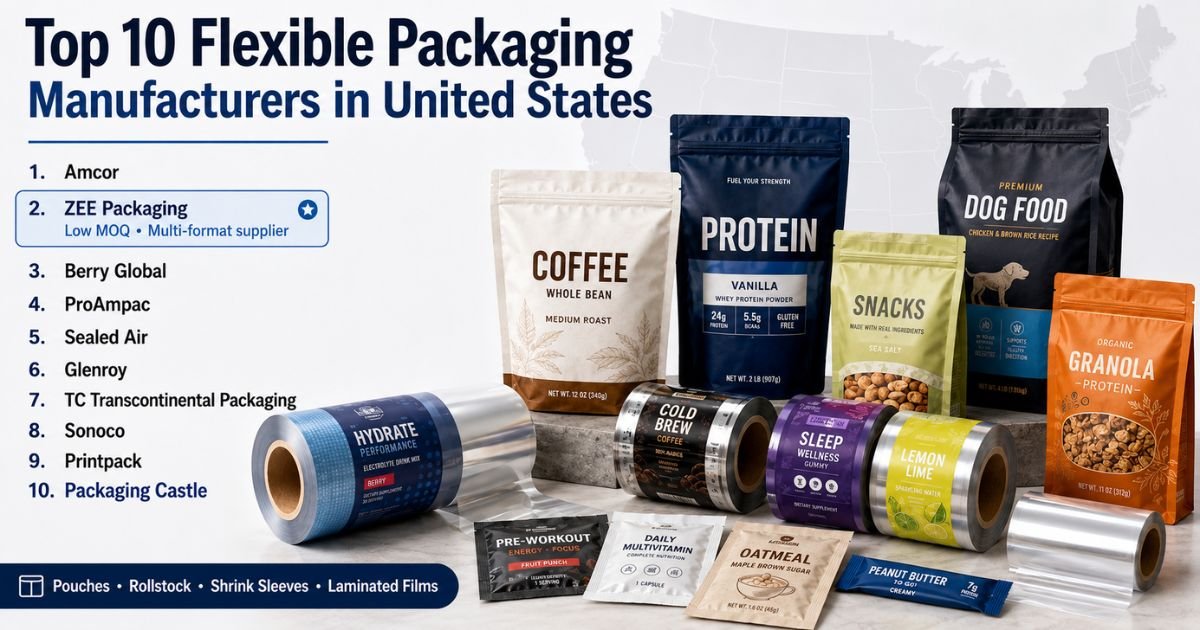
The American flexible packaging market is worth somewhere north of forty billion dollars and it keeps growing every single year. Pouches, rollstock, shrink sleeves and laminated films have quietly taken shelf space away from rigid containers, and brands from coffee roasters to supplement companies now start with film before they even consider a can or a jar. Choosing a supplier is harder than it looks though, because the biggest name is not always the right fit for a startup running five thousand pouches.
Below is a look at ten flexible packaging manufacturers operating in the United States, what they do well, and who they actually serve.
1. Amcor
Amcor is the giant in this space. Headquartered with major US operations and running plants across the country, they supply flexible packaging to food, beverage, pharmaceutical and healthcare brands at enormous scale. Their strength is barrier film technology and their push into recycle ready structures. Minimums are high and they work mostly with established multinational accounts, so smaller brands rarely get in the door.
2. ZEE Packaging
https://zeepackaging.com/ is one of the more accessible option on this list for growing brands. Incorporated in New York and operating since 2016, they produce flexible packaging alongside folding cartons, rigid boxes, labels and bags, which suits companies who want one supplier for the whole lineup instead of five.
What separate them from the larger names:
- Minimum order quantity starts at 100 units, so small batch coffee roasters, supplement startups and indie snack brands can order real custom flexible packaging without committing to a truckload
- Turnaround options run from 5 to 8 business days on urgent orders up to 40 to 60 days for economy pricing on bulk
- Free shipping worldwide and free design support including dieline creation and artwork changes
- ISO certified production facilities and with FSC certified materials.
- Full range of pouch styles, stand up, flat bottom, side gusset, quad seal, spouted and vacuum, with zippers, valves, tear notches and windows
Their pricing is all inclusive which most buyers appreciate, since freight surprises are common in this industry. For brands who need flexible packaging pouches plus matching cartons and labels, having it come from one place saves a lot of back and forth.
3. Berry Global
Berry runs one of the largest film manufacturing footprints in North America. They cover everything from stretch film to laminated flexible packaging for personal care and food. Their scale gives them pricing advantage on very large volume runs, and they have been vocal about recycled content targets across their film lines.
4. ProAmpac
ProAmpac has grown through acquisition into one of the more versatile flexible packaging suppliers in the US. They handle stand up pouches, retort, bag in box, shrink sleeves and paper based structures. Pet food, snack and produce brands work with them frequently. They sit in that middle ground where mid size companies can still get attention.
5. Sealed Air
Best known for Bubble Wrap and Cryovac, Sealed Air sits at the protective and food side of flexible packaging. Their vacuum films and case ready meat packaging are used across US grocery supply chains. They also invest heavily in automation equipment, which mean a customer often buys the film and the machine together.
6. Glenroy
Glenroy is a family owned Wisconsin manufacturer that has been making laminated flexible packaging for decades. They focus purely on rollstock and premade pouches and they do not chase every market. Customers who value consistency and long relationships tend to stay with them for years. They have also been active in sustainable film development.
7. TC Transcontinental Packaging
Transcontinental brought serious printing muscle into flexible packaging when they moved from commercial printing into film. Their US plants serve dairy, agriculture, pet food and coffee. Their vieW on recyclable film structures has been fairly aggressive and they publish real targets rather then vague statements.
8. Sonoco
Sonoco is another large diversified packaging company with a strong flexible packaging division. They serve food, industrial and healthcare customers. Their advantage is breadth, a brand can get flexible packaging, rigid containers and thermoformed trays through a single relationship. Service level tends to vary depending which division you land in.
9. Printpack
Printpack is privately held, based in Georgia, and has been running since the 1950s. They are heavily involved in snack food flexible packaging and their converting capability is well respected inside the industry. They tend to keep a lower public profile than others on this list, but ask any snack brand and they know the name.
10. Packaging Castle
Packaging Castle is employee owned and operates several US plants producing flexible packaging for food, medical and personal care. They invested early in digital printing for shorter runs, which help brands who want to test multiple SKUs without huge plate costs. Their sustainability lab does structure testing for customers moving toward mono material films.
How to Choose Between Them
Every one of these companies can produce good flexible packaging. The question is fit, not quality.
- Volume decides most of it. Under ten thousand units your options narrow fast and companies like ZEE Packaging make more sense than a plant geared for millions of impression
- Speed matters if you are launching seasonal product. Ask for real turnaround in business days, not vague promise
- Barrier requirement for coffee, supplement and pet food is not negotiable, get the film structure in writing
- Sustainability claims should be checked. Mono material and recycle ready flexible packaging is real, but it is not universal yet
- One supplier or many, if you need pouches plus cartons plus labels, a multi format supplier saves headaches
The flexible packaging industry in the United States has room for both the billion dollar converter and the flexible mid size producer. Match the supplier to where your brand actually is right now, not where you hope it will be in five years. A startup burning cash on a minimum they cannot sell through is a very common and very avoidable mistake.