Huntsville is no longer Alabama’s "best-kept secret." As the fastest-growing city in the state and a burgeoning hub for tech and aerospace, the "Rocket City" is seeing a retail and small business explosion. Whether you are opening a boutique in Clinton Row, a brewery at Campus 805, or a professional office in the high-growth West Huntsville corridor, your storefront sign is your most important physical handshake with the community.
This guide explores the essentials of commercial signage in Huntsville—from navigating the local "Sign Control Regulations" to choosing materials that survive the Alabama humidity.
1. Why Your Signage Strategy Matters in the Rocket City
In a city that prides itself on being "The Star of Alabama," your business can’t afford to be invisible. Strategic signage in Huntsville serves three primary roles:
Navigation: Helping customers find you amidst the rapid new construction in areas like MidCity or Town Madison.
Branding: Communicating whether you are a high-tech "New Huntsville" startup or a "Deep Roots" local staple.
Compliance: Meeting the specific aesthetic standards set by the City of Huntsville to avoid fines or forced removals.
2. Popular Types of Storefront Signs in Huntsville
Huntsville’s diverse architecture—ranging from the historic brick of Twickenham to the modern glass of Cummings Research Park—requires different signage styles.
Channel Letter Signs
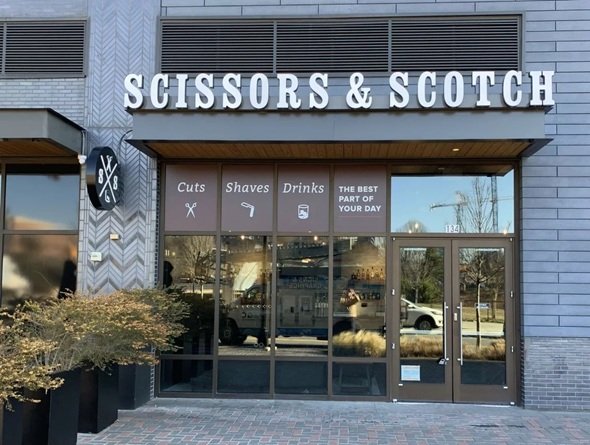
These are 3D, individually cut letters, usually illuminated with LEDs. They are the gold standard for shopping centers like Bridge Street Town Centre.
Best for: Retailers and restaurants that need high nighttime visibility.
Pro Tip: "Halo-lit" channel letters (where the light glows from behind the letter) offer a sophisticated, upscale look perfect for downtown law firms or boutiques.
Blade & Projecting Signs
Mounted perpendicular to the building, these signs are designed for pedestrians walking along the sidewalk.
Best for: Downtown Huntsville, where foot traffic is high.
Requirement: In Huntsville, projecting signs typically require a minimum 8-foot clearance from the sidewalk to ensure pedestrian safety.
Monument Signs
Low-profile, freestanding signs usually built from stone, brick, or high-density foam that mimics masonry.
Best for: Professional offices and businesses set back from the road.
Design Note: These are frequently required in North Huntsville and Research Park to maintain a "landscaped" feel rather than a cluttered "billboard" look.
Awnings and Canopies
Combining branding with utility, awnings provide shade for customers during the sweltering Alabama summers.
Best for: Cafés and bakeries on Jefferson Street.
Bonus: They help reduce cooling costs by blocking direct sunlight from entering your storefront windows.
3. Navigating Huntsville’s Sign Ordinances
Huntsville’s Zoning Administration manages all sign permits. Before you fall in love with a 20-foot neon rocket, you need to know the rules.
The Permit Process
In Huntsville, almost every permanent sign requires a permit. The process generally follows these steps:
Application: Submit your design, dimensions, and mounting plan to the Zoning Office (located on the 4th Floor of City Hall).
Review: The city checks for "Sign Area" (the total square footage allowed based on your building's frontage).
Inspections: If your sign is illuminated, you will likely need an electrical permit and a follow-up inspection to ensure it’s wired safely.
Common Restrictions
Prohibited Signs: Typically, Huntsville prohibits "off-premise" signs (advertising your business on someone else's lot) and certain types of flashing or distracting animated signs.
Downtown Guidelines: If you are in the Downtown Huntsville District, the city encourages materials that complement historical architecture, such as wood, metal, or high-quality glass.
Important Note: In 2026, the City of Huntsville continues to emphasize "walkability." If your business is in a designated "Arts & Entertainment District," you may have more flexibility with creative lighting, but stricter rules on sign size to prevent sidewalk obstruction.
4. Designing for Impact: Best Practices
The 75% Rule: A good rule of thumb is to ensure your lettering does not occupy more than 75% of the sign’s total area. White space (or "negative space") makes the sign much easier to read at a glance.
Contrast is King: Use dark letters on a light background (or vice versa). Avoid low-contrast pairings like red on orange, which become illegible under Huntsville’s bright summer sun.
Font Choice: While a script font might look "cute," it is often unreadable from a car moving at 45 mph on Memorial Parkway. Stick to bold, clean sans-serif fonts for your primary name.
5. Maintenance: Keep Your "Star" Shining
A flickering LED or a peeling vinyl logo tells customers that you don't pay attention to detail.
Annual Cleaning: Gently wash your sign with mild soap to remove the ubiquitous Alabama pollen and road grime.
LED Retrofitting: If you have an older "neon" or fluorescent sign, consider retrofitting it with LEDs. You’ll save significantly on your Huntsville Utilities bill and reduce maintenance visits.
Conclusion
Your storefront sign is the silent salesman that works 24/7. In a competitive market like Huntsville, it is the bridge between a passerby and a paying customer. By choosing the right style, adhering to local zoning laws, and selecting weather-resistant materials, you ensure your business remains a permanent part of the Rocket City skyline.