The Role of Turnstiles in Controlled Entry Points Practical System Design
By sunilkumar housysgroup 25-04-2026 533
Where Most Access Control Systems Quietly Fail
Most access control systems are designed to answer one question:
Who is allowed to enter?
But they often ignore a more critical one:
How is that entry physically controlled?
This gap between authorization and actual movement is where many real-world security failures occur.
In many facilities, access is verified digitally—but not enforced physically.
And that’s exactly where systems begin to break down.
Entry Points: The True Control Layer
Every access control system ultimately depends on how well entry points are managed.
Even with advanced authentication technologies, poorly controlled entry points can result in:
- Tailgating and unauthorized access
- Congestion during peak hours
- Inconsistent movement tracking
Security doesn’t fail at authentication—it fails at execution.
And execution happens at the entry point.
Turnstiles: Turning Permission Into Control
Turnstiles exist to close the gap between approval and enforcement.
They ensure that every access decision is physically carried out by:
- Allowing only one person per authorization cycle
- Structuring movement into controlled flow
- Eliminating reliance on manual supervision
Unlike open gates or monitored entry points, turnstiles create consistent, repeatable control.
Why Tripod Turnstiles Are the Practical Choice
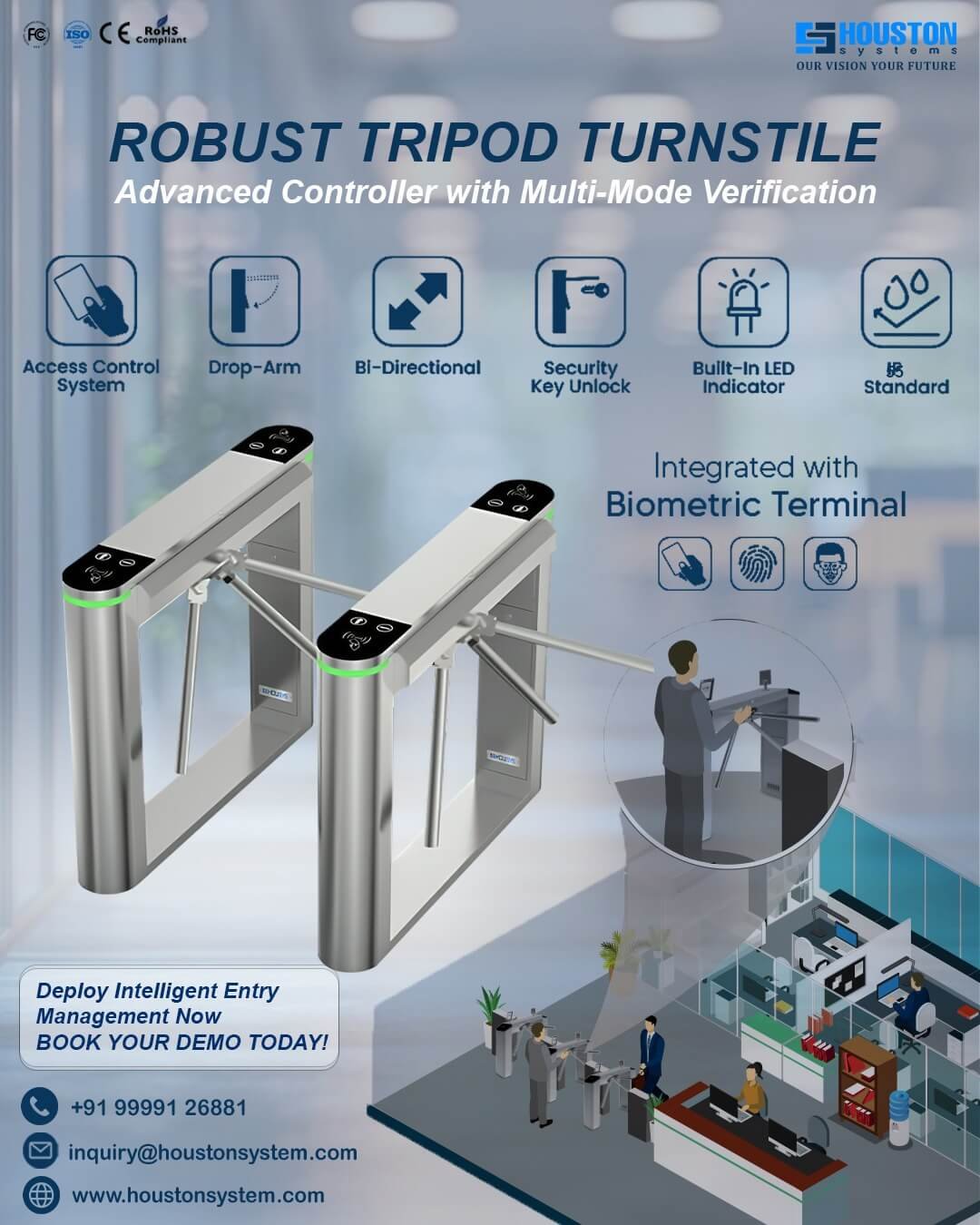
Among various turnstile types, tripod systems are widely used because they strike a balance between simplicity and performance.
They are particularly effective in environments where:
- Continuous movement needs to be regulated
- Space is limited
- Reliability is more critical than complexity
Their mechanical design ensures durability, while their compact structure makes them adaptable across multiple environments.
Integration: Where Turnstiles Deliver Real Value
Turnstiles are not standalone devices—they are part of a larger system.
When integrated correctly, they align seamlessly with:
- RFID and smart card systems
- Biometric authentication platforms
- Visitor and employee management systems
This integration ensures that access is not just granted—but controlled, recorded, and enforced.
Many organizations today rely on a tripod turnstile access control system to ensure that authentication and physical entry operate as a single, unified process.
Real-World Conditions: Where Design Is Tested
Access control systems don’t fail under normal conditions—they fail during peak moments.
Consider:
- Morning rush in corporate offices
- Shift changes in manufacturing facilities
- High-density movement in transit environments
Without structured entry control, these situations often lead to:
- Entry bottlenecks
- Reduced security enforcement
- Operational inefficiencies
Turnstiles are designed specifically to handle continuous, high-volume movement without losing control.
The Most Common Design Mistake
A recurring issue in many facilities is this:
- Access is approved digitally
- But movement is not physically enforced
This creates a dangerous illusion of security.
A system that verifies identity but doesn’t control entry is incomplete.
Designing Entry Systems That Actually Work
Effective entry management requires alignment between:
- Authentication systems
- Physical control mechanisms
- Movement flow design
Turnstiles act as the execution layer that connects all three.
They ensure that every access decision translates into controlled, measurable movement.
Final Perspective: Control Begins Where Movement Is Regulated
Access control is not just about granting permission—it’s about enforcing it.
Without physical control at entry points, systems remain theoretical rather than practical.
Turnstiles transform access control from a digital process into a real-world, enforceable system.
They don’t just improve security—they define how movement is managed within a space.