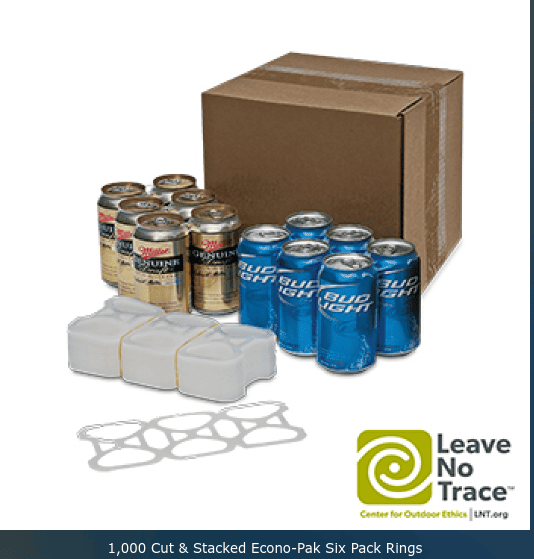
Walk down the beverage aisle of almost any store and you'll notice something most shoppers never think twice about: how the cans are held together. Behind every neatly bundled set of cans sits a packaging decision that affects everything from shelf presentation to how easily a case survives the trip from warehouse to store to home. Plastic can carriers are one of the most common solutions to that problem, and understanding how they work says a lot about how the beverage industry balances speed, cost, and practicality.
A Simple Problem With a Surprisingly Complex Solution
At first glance, holding a few cans together seems like a minor detail. In practice, it's a packaging challenge that touches almost every part of the supply chain. Cans need to stay grouped together tightly enough to survive palletizing, shipping, and repeated handling, but the packaging also has to come apart easily enough that a customer isn't fighting with it at home. It needs to be lightweight, since added weight adds shipping cost across thousands of cases. And it needs to work at speed, since most beverage producers are running packaging lines that move far faster than any manual process could match.
Plastic ring carriers solve this problem efficiently. Their design is straightforward: a set of connected rings, each one stretching slightly to snap over a can's rim and hold it in place. That simplicity is exactly what makes them useful at scale. A design with fewer moving parts is easier to manufacture consistently, easier to apply on a fast-moving line, and easier for a customer to understand without instructions. It's also part of why this format has remained a standard across the beverage industry for decades, even as packaging technology in other areas has changed considerably.
Why Format and Fit Matter More Than They Seem To
Not all cans are the same size, and that detail matters more in packaging than most people realize. Can lid sizes vary slightly between brands and beverage categories, and a carrier that's a fraction of an inch off in either direction either grips too loosely to hold the can securely, or too tightly to apply without slowing the line down. Manufacturers typically produce carriers in a handful of standardized sizes to match the most common lid diameters used across the beer, soda, and hard seltzer categories, which is why sourcing the correct size is one of the first decisions any packaging team has to get right.
Pack count is the other major variable. Four-packs and six pack rings serve different purposes in the market — four-packs are common for higher-alcohol or premium products sold in smaller quantities, while six-packs remain the standard format for everyday beer and soda sales. Each pack size requires its own carrier configuration, since the ring spacing and overall structure has to match the number of cans it's holding. Getting this wrong isn't just a cosmetic issue; a mismatched carrier can lead to cans shifting in transit or falling loose on a store shelf, which creates problems for retailers as much as producers.
Manual Versus Machine Application
How a can carrier gets applied depends heavily on the scale of the operation. Small breweries, taprooms, and specialty packagers often apply carriers by hand, snapping each ring over a can one at a time. It's a workable approach for lower volumes, but it doesn't scale well once production increases.
Larger operations rely on packaging machines built specifically for this task. These machines pull carriers from a stack or roll, position them over a set of cans moving down the line, and press them into place in a fraction of a second per case. The speed difference is significant: a machine can apply carriers to hundreds of cases per hour, a pace no manual process could sustain for an entire shift. For breweries and beverage producers scaling up production, investing in the right application equipment often matters as much as choosing the right carrier material.
This is also where packaging formats start to interact with each other. A carrier that's cut and pre-stacked, for example, is designed specifically to feed into a machine without manual separation first, which removes one more manual step from a line that's otherwise trying to run as continuously as possible. Producers moving from manual to machine application often find that the transition changes not just their output speed, but how they think about ordering and storing packaging supplies in the first place, since machine-fed formats are typically supplied in larger continuous quantities than hand-applied packs.
Material Considerations in Today's Market
Plastic remains a practical choice for can carriers because of a combination of properties that are hard to match elsewhere: it's lightweight, holds its shape under tension, resists moisture, and can be produced in the high volumes that beverage packaging demands. For an industry that packages billions of cans annually, those properties translate directly into lower shipping costs and fewer damaged products in transit.
At the same time, material sourcing has shifted noticeably over the past several years. A growing share of plastic ring carriers on the market today are manufactured using post-consumer recycled (PCR) content, often in the range of 50% or more, without any change to how the carriers perform on the line or hold up in transit. This shift reflects a broader trend across packaging categories, where manufacturers are working to reduce the amount of new plastic entering the supply chain while keeping the functional properties that make the material useful in the first place. For beverage brands evaluating suppliers, PCR content has become one more factor worth asking about alongside price and lead time.
What Packaging Teams Typically Look For
For anyone responsible for sourcing packaging materials, a few factors tend to come up consistently in supplier conversations. Fit and sizing accuracy is usually first, since a carrier that doesn't match a brand's can lid size correctly creates problems on the line before it ever reaches a shelf. Application compatibility is next — carriers need to work with whatever equipment a facility already has, whether that's a manual station or a high-speed packer machine. Lead time and order minimums matter for smaller producers who can't commit to massive volume purchases upfront, particularly for seasonal or limited-run products where overordering ties up cash unnecessarily. And increasingly, material sourcing and recycled content are part of the conversation as brands respond to retailer and consumer expectations around packaging.
None of these considerations are unique to any one supplier. They're simply the practical realities of choosing packaging that has to perform consistently, day after day, across a production run that might involve tens of thousands of cans. Getting them right the first time tends to save far more in downtime and reordering than it costs to evaluate options carefully upfront.
A Small Detail With a Large Footprint
It's easy to overlook can carriers entirely, precisely because they do their job so quietly. A well-designed carrier doesn't draw attention to itself; it just holds a set of cans together long enough for a customer to get them home. But across an industry that packages an enormous volume of canned beverages every year, that quiet functionality adds up to a meaningful part of how beverage packaging actually works, from the production line to the shelf. As packaging teams continue to weigh cost, speed, and material sourcing against one another, the humble plastic carrier remains one of the more consistent, dependable choices in the category.
For anyone digging deeper into packaging specifications, sizing charts, or supplier options, resources like sixpackrings.com offer additional detail on can lid compatibility and carrier formats for teams evaluating their options.