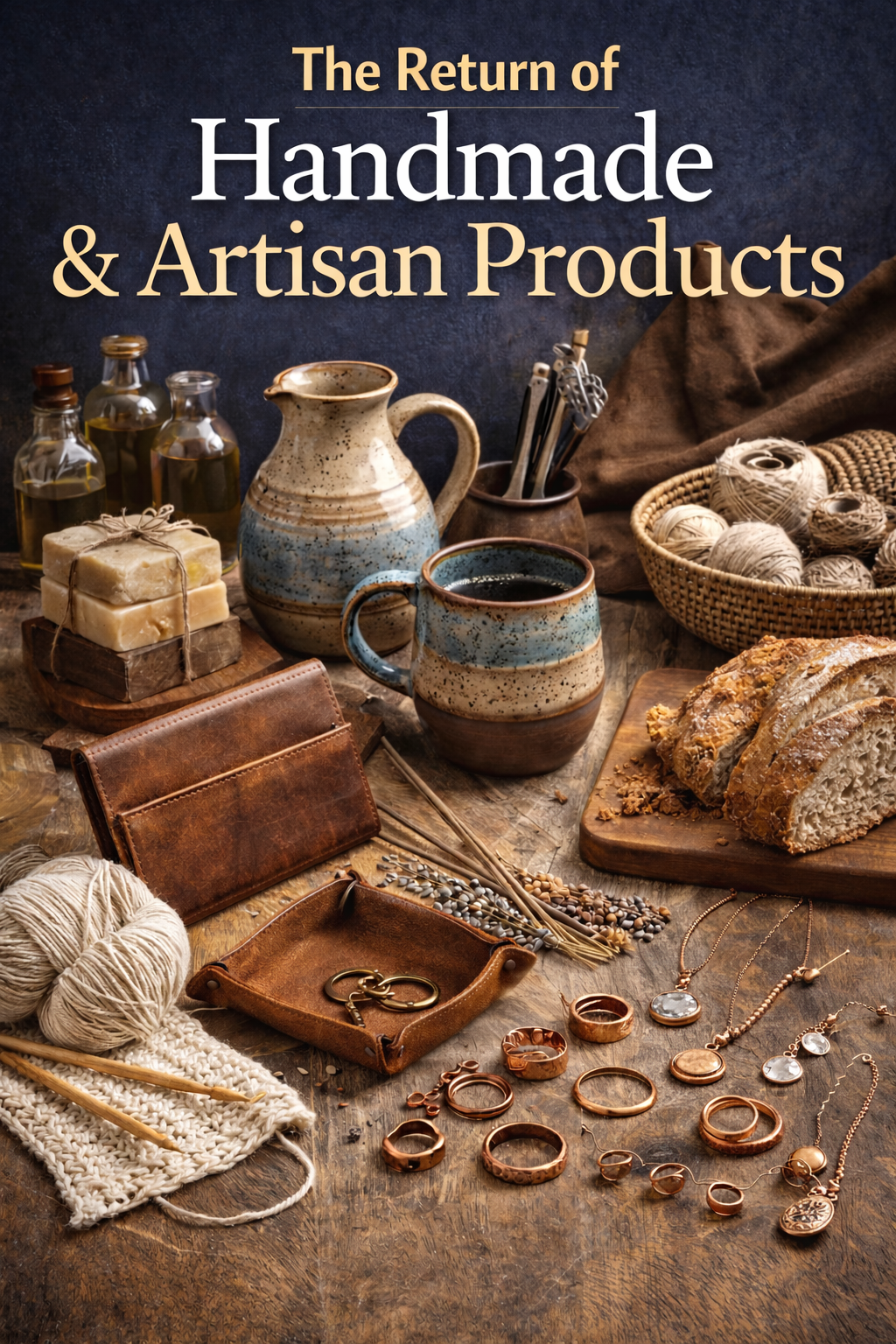
The boom of the Industrial Revolution nearly extinguished the traditional artisan handmade product industry. This was due to the fact that mass-produced machine-made items were significantly cheaper and produced at lightning speed. But after almost three centuries, people are again returning back to artisan craftsmanship. Where products are made from hand using traditional methods passed on by generations. Local artisans focus on quality over quantity. Hence, producing high-quality and unique products while using sustainable ways. The most appealing thing about artisan products is that each handcrafted product tells a folk story or displays important aspects of their cultural heritage. In this blog, we will dig into the facts that reveal the aspects behind the return of handmade and artisan products.
Why is Handmade Making a Global Comeback
The handmade products are making a global comeback as a silent movement. This movement directly stems from environmental concerns and saving the meaningful cultural creations from extinction. People around the world are preferring ethical and sustainable utilization. These handmade products can be handmade jewelry, clothing, beautifully crafted art products like vases, handmade jewelry boxes, home decors and food. People have become fully aware of the fact that industrial producers are disrupting independent creators who are preserving hundreds of year old traditional craftsmanship. These local artisans use sustainable and eco-friendly materials, which do not add to the environmental waste. Undoubtedly, handmade items produced from sustainable material is a commitment towards cultural and environmental preservation.
The Shift from Mass Production to Meaningful Creation
The shift from mass production to meaningful creation is human longing for personal connection, authenticity and sustainability. Let's look into the drivers of this shift.
- Sustainability
The large-scale manufacturing practices are exploiting the environment in various ways, such as pollution, ecosystem destruction and resource depletion. The local artisan makes products with natural and upcycled sources. This eco-friendly design is causing no harm to Mother Earth. Overall, it's prioritizing sustainability.
- Human Connection
Another driver is the feeling of human touch. The artisanal product is a personal connection. So when someone buys a handcrafted product, they are actually investing in that meaningful creation. This meaningful creation revolves around the passion and skill of the artist. A simple handmade object becomes nostalgia,c creating a sense of mutual respect.
- Quality and Longevity
Handmade products are always made by prioritizing quantity over quality. Unlike mass-produced products, the artisan makes sure each product ensures quality and longevity.
- Desire for Authenticity and Uniqueness
The mass-produced items are always identical. Factory-made items can never depict personal style. Whereas the handmade items have a unique identity and character. Consumers are today actively seeking handmade, unique style products that reflect authenticity and uniqueness.
- Cultural Safeguarding
Mass-produced items lack cultural significance. An artisan product always values cultural heritage through its unique making and designing. Such as woodcraved products. These design patterns preserve the cultural heritage that has been passed on to them through generations.
The Art of Craftsmanship in Modern Markets
The traditional art of craftsmanship is attracting modern business owners and companies to create products that give uniqueness, quality and emotional human connection. The craftspeople had usually spent years in apprenticeship in order to perfect their art. This quality work cannot be replicated by mass production industries. Technology has uplifted the neglected local artisans. Now, artists from around the world can sell their products in the global market through digital platforms. Handmade products are today being sold at premium pricing in modern markets like exhibitions, gallery auctions and online platforms like Etsy. The modern marketplaces have given the true respect and place that these distinctive products deserve.
Sustainability and Local Artisanship
Social well-being is directly connected to sustainability. The making of handicrafts from eco-friendly materials and sustainable methods supports biodiversity. When local artists use recycled resources, natural dyes and locally sourced material, they eliminate the transportation emission. This not only safeguards the environment but also the traditional arts that survived hundreds of years. As consumers, we also have the responsibility to support local artisanship that supports sustainability.
Handmade Packaging Completes the Artisan Experience
Handmade packaging made from reusable and natural sources adds more value to the artist's sustainable product. The sensory effect of handmade packaging gives modern consumers a highly mesmerizing unboxing experience. Modern consumers are motivated to share unboxing videos, leading to positive reviews all over the internet. This consumer experience is an effective marketing tool to promote artisan craftsmanship. It gives brand status and value to the artist and his or her product. Many tourists love to bring back home with them custom jewelry packaging boxes. They usually get their name or picture engraved in it. These boxes can be made of wood or any other biodegradable material.
Conclusion: Handmade is timeless — in both products and packaging.
To conclude, handmade products are a growing cherishing and treasuring of sustainability and hard work. Artisans pour their labor, passion, skill and time into creating a meaningful product. It's a fact that you can never find two handmade products exactly the same. This uniqueness and individuality is what consumers pay a high price to claim the possession of a one of a kind of product. Similarly, packaging adds extra charm to the uniqueness of handmade items. Sustainable packaging that's made from recycled material like kraft or organic cotton further enhances the sustainable artisan nature of the product inside. The timelessness of handmade products and packaging drove the consumers to return back to celebrate and support local handmade artisan products. It requires a collective effort to preserve and nurture beauty and belonging to traditional art. And the best outcome will be passing down culturally rich heritage to future generations by our contribution.