The Catalysts at the Heart of Industrial Effectiveness: Learning a Market that is the engine of Global transformation
By johnryan 21-01-2026 53
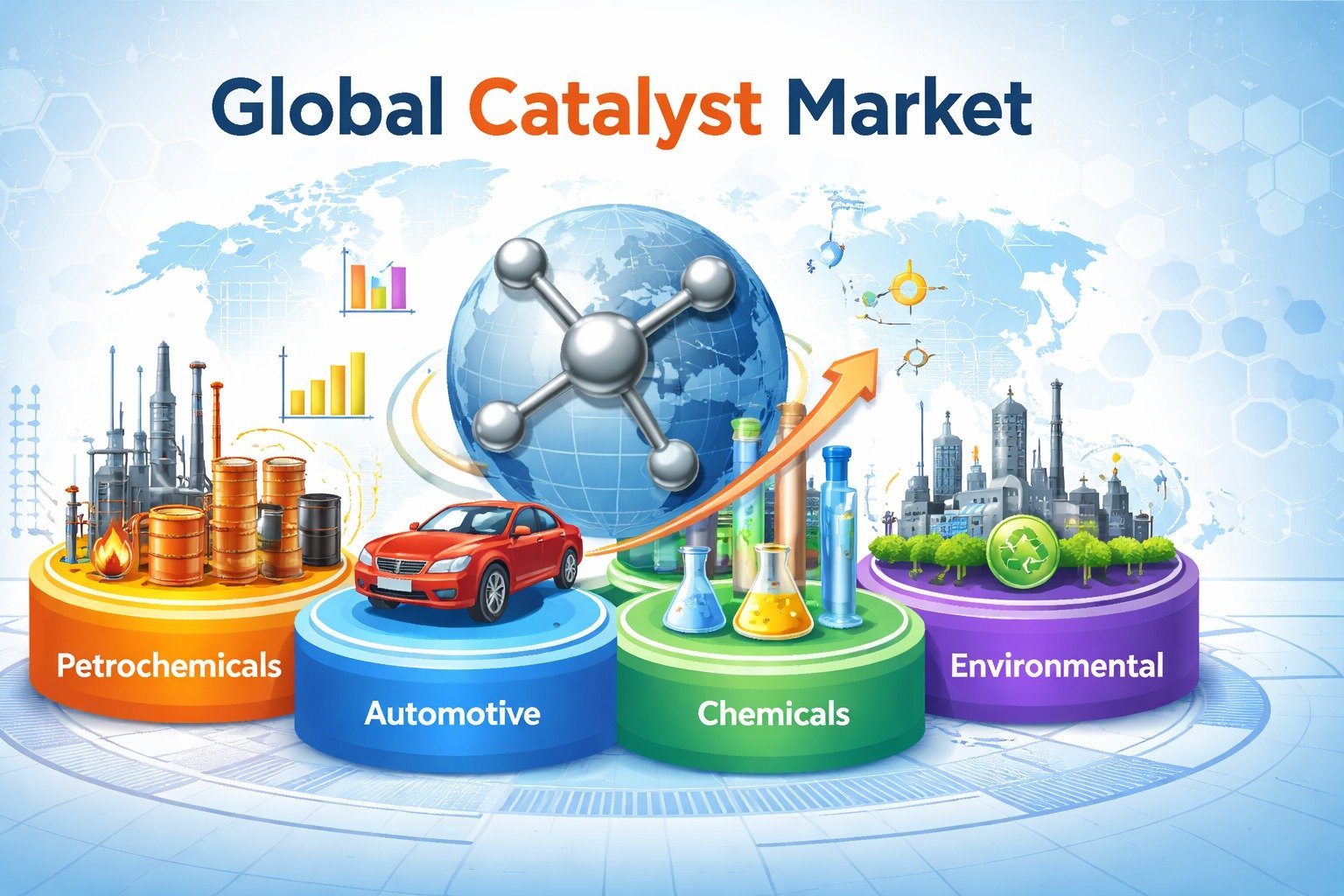
In the contemporary industry, it is very common that the advancement of a process is determined by what occurs behind the scenes. One such silent enabler is catalysts, or in other words, substances that enhance chemical reaction speed without being used. Catalysts are a key to efficiency, sustainability and cost control whether it is refining fuels and making chemicals, or managing emissions and promoting clean energy technologies.
As per the information given by MarkNtel Advisors, the Global Catalyst Market has been experiencing a consistent trend as industries seek to adjust to stricter environmental controls, increasing energy usage, and the worldwide trend of decarbonisation. Consequently, catalysts are progressing to be more strategic as opposed to being operational inputs.
The Reason Catalysts Are More Important Than Ever
There are many processes in the industry which depend on catalysts. They are used in petroleum refining to convert crude oil to cleaner fuels. In the chemical industry, they enhance storage as well as minimize energy usage. Catalysts are used in environmental functions to eliminate the harmful pollutants in the emissions of industries and automobiles.
The usefulness of catalysts in current times is seen in the fact that they can help in promoting sustainability. Catalysts also reduce emissions and operating expenses at the same time by lowering the temperatures in the reactions, minimizing wastes and enhancing selectivity. This two-fold advantage is strengthening the significance of the world market in catalytic materials in various industries.
Refining and Petrochemicals: The Support of Demand
The oil refining and petrochemical sectors are the major users of catalysts in the world. Fluid catalytic cracking (FCC), hydro processing, and reforming are processes that are dependent on sophisticated catalyst compositions to optimize production and stay within fuel quality standards.
This has seen a rise in the quantity of refiners upgrading their catalyst systems to enhance efficiency and lower the sulfur and nitrogen levels in their products due to the increasing demand of cleaner fuel and higher value petrochemical products. All these trends are still inclined towards a stabilized demand in the global catalyst industry though the global energy systems are slowly changing.
New refining and petrochemical units are also being taken on by emerging economies, a move that continues to strengthen the long-term market demand.
The Environmental Regulations driving the Catalyst Innovation
One of the strongest forces that is influencing the catalyst world has been environmental compliance. The emission norms of industries and vehicles are being stricter in the world and this is increasing the usage of emission control catalysts.
Another significant area of application is automotive catalytic converters that are used to minimize carbon monoxide, nitrogen oxide, and hydrocarbons. Simultaneously, industrial emission control systems are embracing the use of catalysts to control the emission of pollutants in power plants, manufacturing plants and waste incineration plants.
These regulatory forces are driving catalyst design innovation, such as longer life, better performance, and less dependence on costlier precious metals-trends that are transforming the global ecosystem of catalysts.
Catalysts in Energy Transition
In addition to conventional industries, catalysts are becoming very significant in the energy transition of the world. Advanced catalytic systems are used to make hydrogen, associate biofuel and capture carbon.
Biomass can be converted into fuels and chemicals with the assistance of electrolysis catalysts making it possible to generate a lot of hydrogen, and bio-refineries using catalysts. Emerging applications will offer new growth opportunities in the overall world market of catalysts as investment in renewable energy and low-carbon technologies grows faster.
Competitive Situation: Major Firms that are Productive
Catalyst industry is a highly technical industry that is always innovating. BASF, Johnson Matthey, Clariant and W. R. Grace and Co. are global leaders in the development of catalysts.
These firms conduct a lot of research and development to enhance performance of activity, selectivity and life of catalysts in refining, chemical synthesis and in environmental applications. Their market positions are also enhanced with strategic agreements with refiners, chemical producers and energy companies.
Regional Trend and Market Perspective
Asia-Pacific is also proving to be a relatively large proportion of catalyst usage, as rising industrialization, growing refining capacity and robust bases of chemical manufacturing in China and India all drive the consumption. The North American and European sectors are looking at catalyst upgrading and replacement demand, aided by high environmental requirements.
The resilience of supply chains, availability of raw materials which are of critical concern, and technology differentiation is growing to importance with increase in competition. Markntel Advisors opine that firms that integrate innovation with understanding of the regional market are well placed to exploit the changing demand trends.
Issues and Strategic Reflections
The catalyst industry, although showing good growth, is plagued by some of these challenges as the prices of raw materials, particularly precious metals, are constantly changing and adopted technology would have to be constantly adaptable to regulatory and performance standards.
Spending of used catalysts through recycling and regeneration is becoming a significant aspect in order to save costs and be sustainable. It is also true that companies that invest in circular economy practices will probably get a competitive advantage and solve environmental issues.
Conclusion
Catalysts can be working behind the scenes but their influence on the industry in the world is significant. Catalysts are part of the current economic and environmental objectives, be it facilitating cleaner fuels and efficient chemical manufacturing, cutting of emissions, or energy transition technologies.
With the Global Catalyst Market still developing, innovation, alignment of regulations and strategic understanding will be the key to success. Through rigorous research and prospective studies by MarkNtel Advisors, the industry stakeholders will be able to steer their way through the maze, and find opportunities and sustainable growth in this needed market.