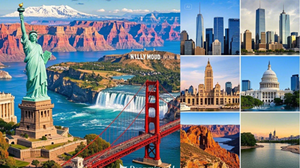
There is something undeniably magical about opening a digital map, dragging a tiny icon onto a road thousands of miles away, and instantly dropping down to street level. In a split second, you are no longer sitting at your desk; you are standing under the neon glow of the Las Vegas Strip, looking out over the red rock vistas of Sedona, Arizona, or peering at a quirky roadside diner on Route 66.
Street View has evolved from a simple navigation aid into one of the most powerful tools for virtual tourism, history tracking, and everyday planning. But why are we so universally obsessed with exploring our world through a digital lens?
The answer comes down to four distinct human motivations: travel planning, history and nostalgia, uncovering hidden secrets, and pure virtual tourism.
1. Scratching the "Virtual Tourism" Itch
Not everyone has the time or resources to jet off to a new destination every weekend. Virtual exploration functions as a window to the world for armchair travelers.
It also opens up hyper-specific subcultures. Movie buffs use street-level maps to find exact filming locations—like hunting down the iconic steps in Philadelphia from Rocky or finding the quiet suburban street in Illinois where Home Alone was filmed. It turns the entire globe into an open-world playground.
2. The Ultimate Travel & Relocation Safety Net
On the practical side, 360-degree street maps have completely revolutionized the way we travel and move. Reading reviews of a hotel or an apartment can only tell you so much. Dropping onto the street allows you to actively vet a location before you ever arrive:
For Travelers: You can preview confusing highway junctions, locate the exact entrance to a parking garage, or check if a hotel neighborhood is walkable at night.
For Home Buyers & Movers: It lets you scout a neighborhood without buying a plane ticket. Are the surrounding houses well-maintained? Is there a loud commercial zone just out of frame of the real estate photos? Maps don't lie.
3. Digital Time Travel & Nostalgia
One of the most fascinating, underrated features of modern street mapping is its ability to look backward. Because camera cars have been driving our roads for well over a decade, we now possess a massive visual archive of the recent past.
By toggling through historical imagery, you can watch a city block evolve in real time. You can view the exact year a historic building was demolished, watch a massive new skyscraper sprout from a vacant lot, or simply look back at the storefront of a beloved childhood diner that closed years ago. It is living history, preserved in high definition.
4. The Thrill of the "Hidden Gem"
Finally, humans love a mystery, and the world's roads are full of weird, beautiful, and unexpected things. Virtual map explorers have formed entire online communities dedicated to finding anomalies:
Ghost Towns: Wandering the dusty, abandoned desert roads of places like Glenrio on the Texas-New Mexico border.
Roadside Oddities: Spotting giant public art installations, like the famous Cadillac Ranch in Amarillo, Texas, where ten vintage cars are buried nose-first in the dirt.
Camera Blunders: Catching funny, photobombing pedestrians or local wildlife chasing the camera car down a country road.
The Takeaway: Whether you are meticulously mapping out your next cross-country road trip, researching your family's old neighborhood, or just curious about what the edge of the Grand Canyon looks like at ground level, street view technology bridges the gap between imagination and reality.
The next time you open up a map, don't just look at the lines and labels. Drop down to the pavement, look around, and see what stories the street has to tell.
Tags : .....