Screen Printing T-Shirts: Choosing the Right Ink and Fabric for Your Order
By Kirkwood Trading Company 24-06-2026 53
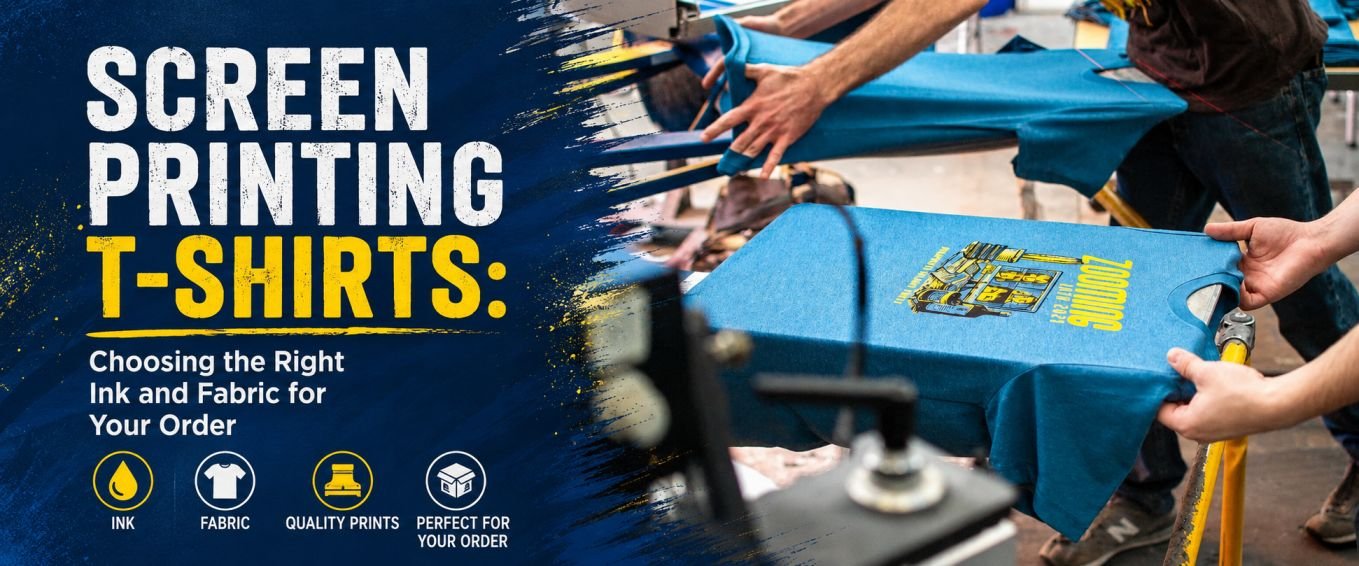
Getting a batch of custom shirts made sounds simple until the questions start piling up. Which fabric holds the ink best? What type of ink works on a dark shirt? Why does the same design look different on two different garment styles?
These are fair questions. Screen printing t-shirts involves more variables than most buyers expect, and the choices made before production begins directly affect how the finished product looks and how long it lasts. This guide breaks down the key decisions around ink and fabric so organizations in St. Louis can place smarter orders and get results they are satisfied with.
Why Ink and Fabric Selection Matter
Custom apparel printing is not a one-size-fits-all process. The ink type, the fabric composition, and the combination of the two all affect print quality, durability, and how the shirt feels to wear.
A design that looks sharp on a 100% cotton shirt may look dull or patchy on a polyester blend if the wrong ink is used. A soft-hand ink that feels great on a white shirt may not provide enough opacity on a dark garment. Getting these combinations right at the start avoids reprints, delays, and dissatisfied wearers.
Common Ink Types Used in Screen Printing T-Shirts
Plastisol Ink
Plastisol is the most widely used ink in screen printing t-shirts. It sits on top of the fabric rather than soaking into it, which produces bright, opaque colors that hold up through repeated washing. Plastisol works well on both light and dark garments and is the standard choice for most commercial orders.
Key characteristics:
- Strong color opacity, including on dark shirts
- Highly durable when properly cured at the correct temperature
- Available in a wide range of colors, including specialty options such as metallics and neons
- Works on cotton, polyester blends, and most standard apparel fabrics
- Produces a slightly raised feel on the fabric surface
Plastisol is the go-to option for custom apparel printing orders that prioritize durability and color accuracy.
Water-Based Ink
Water-based ink absorbs into the fabric fibers rather than sitting on top of them. The result is a softer feel, often called a "soft hand," and a more breathable print. This type of ink is well-suited for fashion-forward designs and garments where the texture of the print matters as much as the visual.
Key characteristics:
- Soft feel with no raised surface on the fabric
- Works best on light-colored garments, particularly 100% cotton
- Less opaque than plastisol, so it can struggle on dark shirts without added pigment
- Considered more environmentally friendly than plastisol
- Requires careful curing to achieve full durability
Water-based ink is a strong choice for retail-style apparel, fashion tees, and situations where wearability is the priority.
Discharge Ink
Discharge ink works differently from both plastisol and water-based options. Rather than adding color on top of the fabric, discharge ink chemically removes the dye from the garment and replaces it with a new pigment. The result is a print that is fully integrated into the fabric with no surface texture at all.
Key characteristics:
- Extremely soft feel because the print is part of the fabric, not on top of it
- Works only on garments dyed with reactive dyes, typically 100% cotton
- Not suitable for polyester fabrics or blends
- Produces a slightly vintage or worn-in appearance
- Requires specific garment sourcing to get predictable results
Discharge ink is popular for premium branded apparel and fashion lines where texture and softness are priorities.
Specialty Inks
Beyond the standard options, screen printing t-shirts can also use specialty formulations for specific visual effects:
- Metallic inks add a shimmery, reflective finish ideal for event shirts and brand merchandise
- Puff inks expand when heated to create a raised, three-dimensional effect
- Glow-in-the-dark inks are used for novelty apparel and certain event-specific applications
- Simulated process inks allow for photographic and full-color designs using a CMYK-style approach
Choosing the Right Fabric for Your Order
The garment is not just a canvas. It is part of the finished product. The fabric type affects how ink bonds to the surface, how the shirt drapes and feels, and how it holds up after washing.
100% Cotton
Cotton is the most common fabric used in custom apparel printing. It absorbs water-based and discharge inks well, holds plastisol prints reliably, and is comfortable for most wearers across a range of climates. Ringspun cotton, which uses a finer, smoother yarn, produces a softer feel than standard open-end cotton.
Best for:
- All-purpose event shirts, school wear, and uniform programs
- Water-based and discharge ink applications
- Buyers who want a soft, natural feel
Polyester and Performance Fabrics
Polyester fabrics are common in athletic wear and moisture-wicking garments. They require specific ink formulations to prevent dye migration, a process where the fabric's dye bleeds into the ink layer and shifts the color.
Best for:
- Sports jerseys, athletic uniforms, and performance shirts
- Sublimation printing when all-over coverage is needed
- Orders where moisture management is a functional requirement
Plastisol inks with a dye-blocker additive are typically used when screen printing t-shirts on polyester to prevent migration issues.
Cotton and Polyester Blends
Blended fabrics, typically 50% cotton and 50% polyester or similar ratios, offer a middle ground. They are lighter and softer than 100% cotton while still accepting most standard ink types. Heathered fabrics, which create a marled visual texture, are common in blended styles and add a fashion dimension to the design.
Best for:
- Lightweight event shirts and casual branded apparel
- Orders where a softer, more modern look is wanted
- Situations where plastisol ink is the preferred method
How Kirkwood Trading Company Approaches Each Order
Kirkwood Trading Company has been handling screen printing t-shirts and custom apparel printing in the St. Louis area since 1994. The team works with state-of-the-art equipment and industry-trusted inks to deliver consistent, vibrant results across a wide range of garment types and design styles.
Their client base covers schools, universities, sports teams, nonprofits, small businesses, and large corporations. Orders range from 12-piece minimums for smaller groups all the way to runs exceeding 10,000 pieces for large fulfillment programs. Standard turnaround runs 4 to 6 business days, with rush orders accepted when timelines require it.
For buyers who are unsure which ink type or fabric is right for their project, the team at Kirkwood Trading Company can review artwork, recommend garment options, and provide guidance on the combination that will produce the best result for the intended use.
5 Questions to Ask Before Placing Your Order
Before finalizing any screen printing t-shirt order, buyers should have clear answers to these questions:
- What fabric is the garment made of, and what color is it?
- How many colors does the design use?
- Will the shirts be worn regularly and washed frequently?
- Is softness of the print a priority, or is durability the main concern?
- What is the order quantity and the deadline?
These answers guide every ink and fabric decision that follows.
Get a Free Quote from Kirkwood Trading Company
Ready to place your order or just need help figuring out where to start? Kirkwood Trading Company makes the process straightforward.
Send your design, quantities, and deadline. The team will respond with options, pricing, and turnaround time. They can also help optimize artwork for screen printing to make sure the finished product matches the original vision.