Rubber Mold Manufacturing Explained: Processes, Materials & Uses
By Integrated Solutions 13-10-2026 11
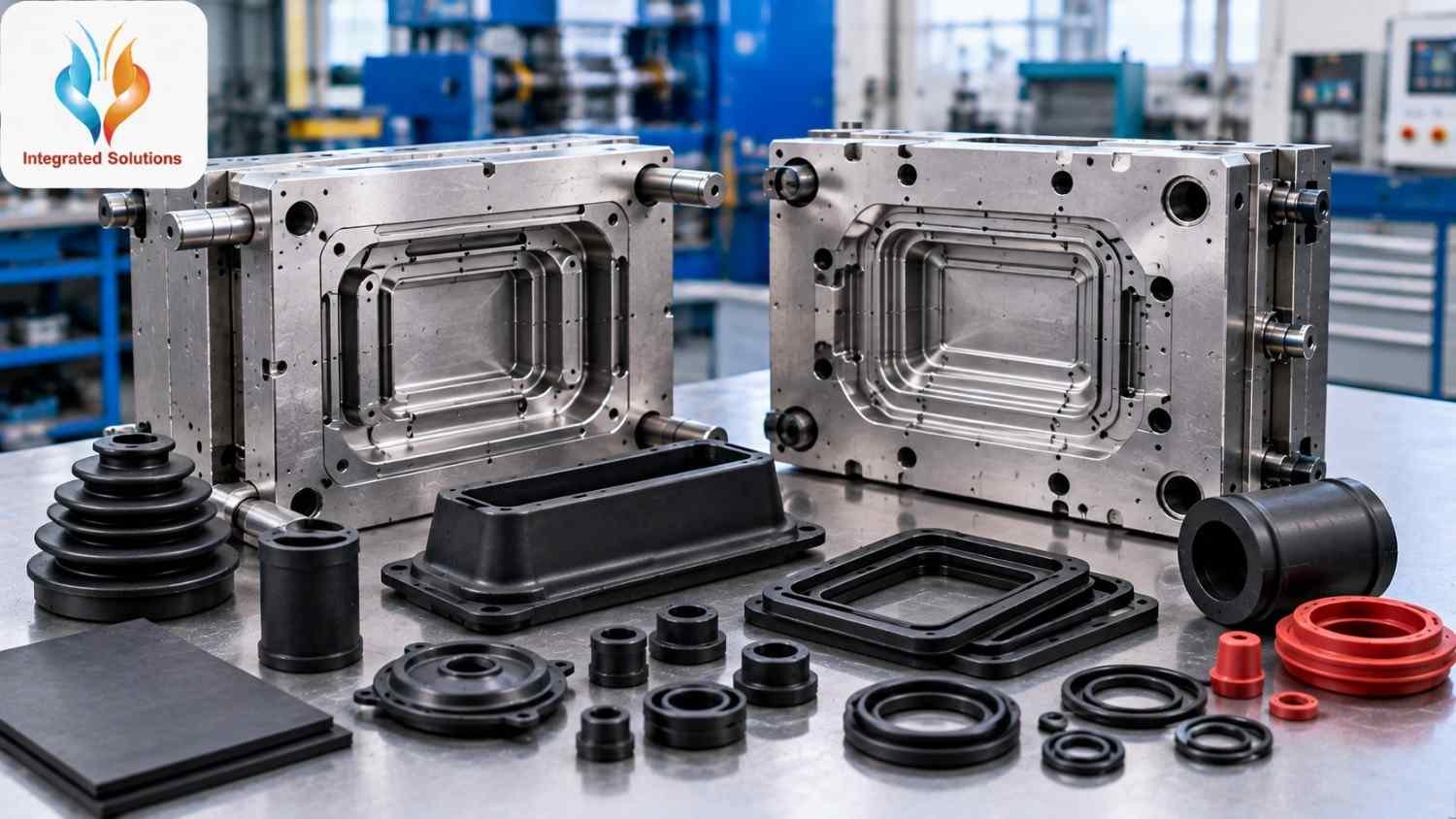
Why Rubber Mold Quality Matters More Than the Quoted Price
The first batch looks perfect. Then production begins, and suddenly the rubber seals have uneven edges, inconsistent dimensions, or flash that requires manual trimming. By the time the supplier identifies the problem, the buyer has already lost valuable production hours.
That's where proper Rubber Mold manufacturing makes a measurable difference.
A mold determines the shape, dimensional repeatability, and surface finish of a rubber component. Its design also influences how rubber flows, cures, and releases during production. Poor tooling can turn even a suitable rubber compound into an expensive manufacturing problem.
For automotive suppliers, machinery manufacturers, and industrial procurement teams, understanding the manufacturing process is essential before approving tooling expenditure.
Rubber Mold Specifications: Materials, Processes, and Design Requirements
A Rubber mold is typically manufactured using precision-machined metal tooling, often steel or aluminium, depending on production volume, molding temperature, component geometry, and expected tool life.
Three Manufacturing Processes Buyers Should Understand
1. Compression Molding
A measured quantity of rubber compound is placed inside a heated mold cavity. Pressure closes the mold, allowing the material to fill the cavity and cure.
Compression molding is commonly considered for gaskets, pads, bushings, and relatively simple components, particularly when production volumes do not justify more expensive automated tooling.
2. Injection Molding
Prepared rubber compound is injected into a closed, temperature-controlled mold. The process can offer efficient, repeatable production for appropriate part designs and higher quantities.
However, the higher tooling and machine investment must be justified by actual order volume.
3. Transfer Molding
Rubber is placed inside a transfer chamber and forced through channels into the mold cavity. This method is particularly useful for certain intricate geometries and rubber-to-metal insert applications.
Choosing injection molding for every project is a mistake. The right process depends on part complexity, material behaviour, volume, and cost.
Rubber Compounds Used in Industrial Applications
Common material options include:
- Natural Rubber (NR): Often selected for elasticity, resilience, and abrasion resistance.
- Nitrile Rubber (NBR): Suitable for many oil- and fuel-contact applications.
- EPDM Rubber: Commonly chosen for weathering, ozone, and certain water-related applications.
- Silicone Rubber: Used where temperature performance and flexibility are important.
- FKM Rubber: Considered for demanding chemical and high-temperature applications.
Material performance depends on the actual formulation and operating conditions, not the compound name alone.
The Tolerance Detail Most Buyers Forget
A drawing that specifies only dimensions is incomplete.
ISO 3302-1:2014 defines dimensional tolerance classes for relevant rubber products. Meanwhile, ASTM D2000-18(2024)e1 provides a classification system for vulcanized rubber materials, particularly in automotive applications.
Buyers should specify hardness, dimensional tolerances, operating temperature, fluid exposure, and acceptance criteria before tooling begins.
Five Checks That Separate Reliable Rubber Mold Manufacturers from Risky Suppliers
Selecting Rubber Mold Manufacturers requires more than comparing quotation amounts. Procurement teams should evaluate these five criteria before placing an order.
- Tooling capability: Ask whether the supplier can work from CAD drawings and define cavity construction, venting, and parting lines. A bad answer is, "Send a sample; we'll copy it."
- Material selection: Request the proposed rubber grade and relevant test requirements. A supplier offering the same compound for oil, steam, and outdoor exposure without further questions deserves scrutiny.
- Dimensional inspection: Ask which critical dimensions will be inspected and how results will be recorded.
- Production capacity: Confirm cavity count, molding cycle assumptions, and achievable output. A vague promise of unlimited production is meaningless.
- Tooling ownership and maintenance: Clarify who owns the mold, who pays for repairs, and how modifications are approved. Missing terms can become expensive disputes.
A proper supplier evaluation should examine technical capability and commercial accountability together.
Six Practical Benefits of Proper Rubber Mold Manufacturing
Lower Rejection Rates and Less Rework
Accurate cavity geometry and suitable venting reduce the likelihood of defects such as excessive flash, trapped air, and incomplete filling. Fewer rejected parts protect material costs and production schedules.
Better Dimensional Repeatability
Consistent tooling and controlled molding conditions help parts remain within agreed tolerances. This matters particularly for seals, gaskets, and assembled components.
Reduced Assembly Problems
A rubber bushing that does not fit its housing can delay an entire assembly line. Correct dimensional planning reduces the risk of such disruptions.
More Predictable Production Costs
Properly specified tooling helps buyers estimate usable output, maintenance requirements, and cost per accepted component instead of relying only on the initial mold price.
Longer Tooling Service Life
Selecting suitable tool materials, surface finishes, and maintenance procedures can reduce premature wear. Tool life still depends on operating conditions and production practices.
Better Material Compatibility
Matching rubber compounds to the actual application helps reduce premature swelling, hardening, cracking, or loss of elasticity.
The real benefit is not merely producing a rubber component. It is producing acceptable components consistently enough to protect manufacturing margins.
Rubber Mold Manufacturers in India: Availability and Supply Chain Considerations
India has established engineering and manufacturing clusters in Gurugram, Faridabad, Delhi NCR, Pune, Chennai, Rajkot, and other industrial centres.
For buyers evaluating Rubber Mold manufacturers in India, geographic location matters beyond freight charges.
Integrated Solutions operates from Gurugram, Haryana, and lists rubber molding capabilities for components up to 400 mm or customized dimensions. Its published delivery range is 5–30 days, depending on the order. These are company-listed capabilities, not guaranteed terms for every project.
For Delhi NCR buyers, proximity to engineering and tooling facilities can simplify sample inspections, design discussions, and trial corrections.
A nearby supplier is not automatically better. But repeated tool modifications become harder when every sample movement requires long-distance shipping.
About Integrated Solutions: Engineering Before Production
At Integrated Solutions, we approach rubber molding through design evaluation, material selection, manufacturing, and inspection.
We have operated since 2004, with engineering capabilities covering rubber components, mold design, and custom manufacturing requirements.
We understand that even a small change in cavity geometry or parting-line placement can affect flash formation and finishing requirements. That's why we encourage buyers to share technical drawings and application conditions early rather than approving tooling from appearance alone.
Our objective is to help industrial buyers establish practical specifications before committing to repeat production.
At Integrated Solutions, we invite procurement teams, OEMs, and industrial buyers to share their manufacturing requirements for technical review.
To prepare a quotation, we request:
- A 2D drawing or 3D CAD file, preferably with tolerances
- Rubber material grade and Shore hardness requirements
- Application temperature and fluid exposure conditions
- Estimated monthly or annual order quantity
- Sample requirements and expected delivery location
We confirm the applicable minimum order quantity (MOQ) and estimated response timeline after reviewing the project specifications; neither is published as a universal commitment.
Conclusion
A reliable Rubber Mold begins with correct tooling design, appropriate material selection, and measurable acceptance requirements. Choosing the cheapest supplier without reviewing these factors can increase rejection rates and production costs. Buyers who establish clear specifications and realistic production expectations put themselves in a stronger position for future orders.
Frequently Asked Questions
1. What is a Rubber Mold used for?
Rubber molds are used to manufacture components such as seals, gaskets, bushings, protective covers, and vibration-control parts. Applications include automotive manufacturing, industrial machinery, electrical equipment, and other engineered assemblies.
2. Which process is best for manufacturing rubber components?
Compression molding is often economical for simpler parts. Injection molding can be more suitable for high-volume production, while transfer molding is useful for certain complex components and inserts. The final choice depends on the part drawing and production quantity.
3. How do Rubber Mold manufacturers determine the correct material?
Reliable suppliers review temperature, chemical exposure, mechanical stress, hardness, and operating conditions. Material names alone are insufficient because different formulations of the same elastomer can behave differently.
4. What is the normal lead time for rubber mold manufacturing?
It varies with tooling complexity, raw-material availability, sampling, and approval stages. Integrated Solutions publishes a 5–30-day delivery range for its rubber molding offering, but individual tooling projects require confirmation.
5. What should buyers check before selecting Rubber Mold manufacturers in India?
Examine tooling capabilities, material documentation, dimensional inspection methods, manufacturing capacity, and commercial terms. Ask for sample approval before committing to substantial production quantities.
6. Can rubber molds be manufactured for custom components?
Yes. Custom tooling can accommodate specified component geometries, cavities, and material requirements. However, complicated undercuts, tight tolerances, and unusual materials may increase tooling cost and development time.
7. How can buyers reduce defects in rubber-molded products?
Start with a controlled drawing, appropriate compound, approved production samples, and clear inspection requirements. Also review cavity venting, cure conditions, and demolding. Even a precisely manufactured mold cannot compensate for every processing error.