Revit Model from Point Cloud: Transforming Reality Capture into Accurate BIM Models
By Spark BIM 21-06-2026 116
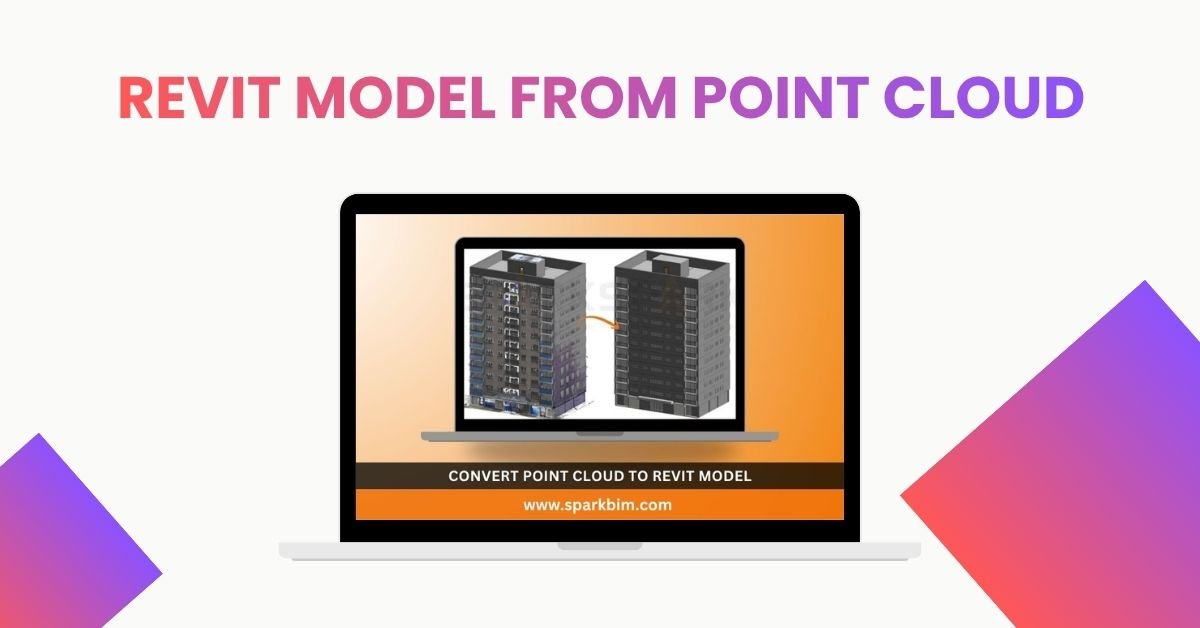
The construction and architecture industries are rapidly adopting advanced technologies to improve project accuracy and efficiency. One of the most effective methods is creating a Revit Model from Point Cloud data. This process converts laser-scanned information into an intelligent Building Information Modeling (BIM) model that can be used for design, renovation, facility management, and construction planning.
A point cloud is a collection of millions of data points captured using laser scanners or LiDAR technology. These points represent the exact dimensions and geometry of an existing building or structure. By converting this data into a Revit model, project teams gain a detailed digital representation of the physical environment.
What is a Revit Model from Point Cloud?
A Revit Model from Point Cloud is a 3D BIM model developed using point cloud data collected from laser scans. The point cloud serves as a reference for creating architectural, structural, and MEP components within Autodesk Revit.
The process involves importing the scanned data into Revit and accurately modeling walls, floors, ceilings, columns, beams, doors, windows, and other building elements. The result is a highly precise digital model that reflects the actual conditions of the existing structure.
Why is Point Cloud to Revit Conversion Important?
Traditional measurement methods can be time-consuming and prone to errors. Point cloud technology provides a faster and more accurate way to capture existing site conditions. When this data is converted into a Revit model, it offers several advantages:
Improved Accuracy
Laser scanners capture millions of measurements within a short period, reducing human errors. A Revit model created from this data reflects the exact dimensions and conditions of the building.
Better Renovation Planning
For renovation, retrofit, and restoration projects, having an accurate BIM model is essential. A Revit Model from Point Cloud helps architects and engineers understand the existing structure before making design changes.
Enhanced Collaboration
Revit models enable seamless collaboration among architects, engineers, contractors, and project stakeholders. Everyone can work from the same accurate model, minimizing conflicts and misunderstandings.
Time and Cost Savings
Accurate existing-condition models reduce the need for repeated site visits and design revisions. This helps save both project time and costs.
Applications of Revit Model from Point Cloud
Point cloud to Revit conversion is widely used across various industries. Some common applications include:
- Building renovations and remodeling projects
- Historic building preservation
- Facility management
- Infrastructure projects
- Industrial plant documentation
- Structural analysis and planning
- MEP system upgrades
The ability to create reliable BIM models from real-world data makes this process valuable for both new and existing construction projects.
The Point Cloud to Revit Workflow
The workflow for creating a Revit Model from Point Cloud typically includes the following steps:
1. Data Collection
Laser scanners capture detailed information about the building or site. The collected data is stored as point cloud files.
2. Data Processing
The scanned data is cleaned, registered, and organized to ensure accuracy and remove unnecessary information.
3. Import into Revit
The processed point cloud is imported into Autodesk Revit as a reference model.
4. BIM Modeling
Experienced BIM professionals create architectural, structural, and MEP elements based on the point cloud data.
5. Quality Review
The final model is checked for accuracy and compliance with project requirements before delivery.
Conclusion
A Revit Model from Point Cloud is a powerful solution for converting reality capture data into intelligent BIM models. It provides unmatched accuracy, supports efficient project planning, and improves collaboration among stakeholders. Whether for renovation, facility management, or construction projects, point cloud to Revit conversion helps professionals make informed decisions and reduce costly errors. As BIM adoption continues to grow, this technology will remain a vital tool for delivering successful and data-driven building projects.
Tags : Revit Model from Point Cloud